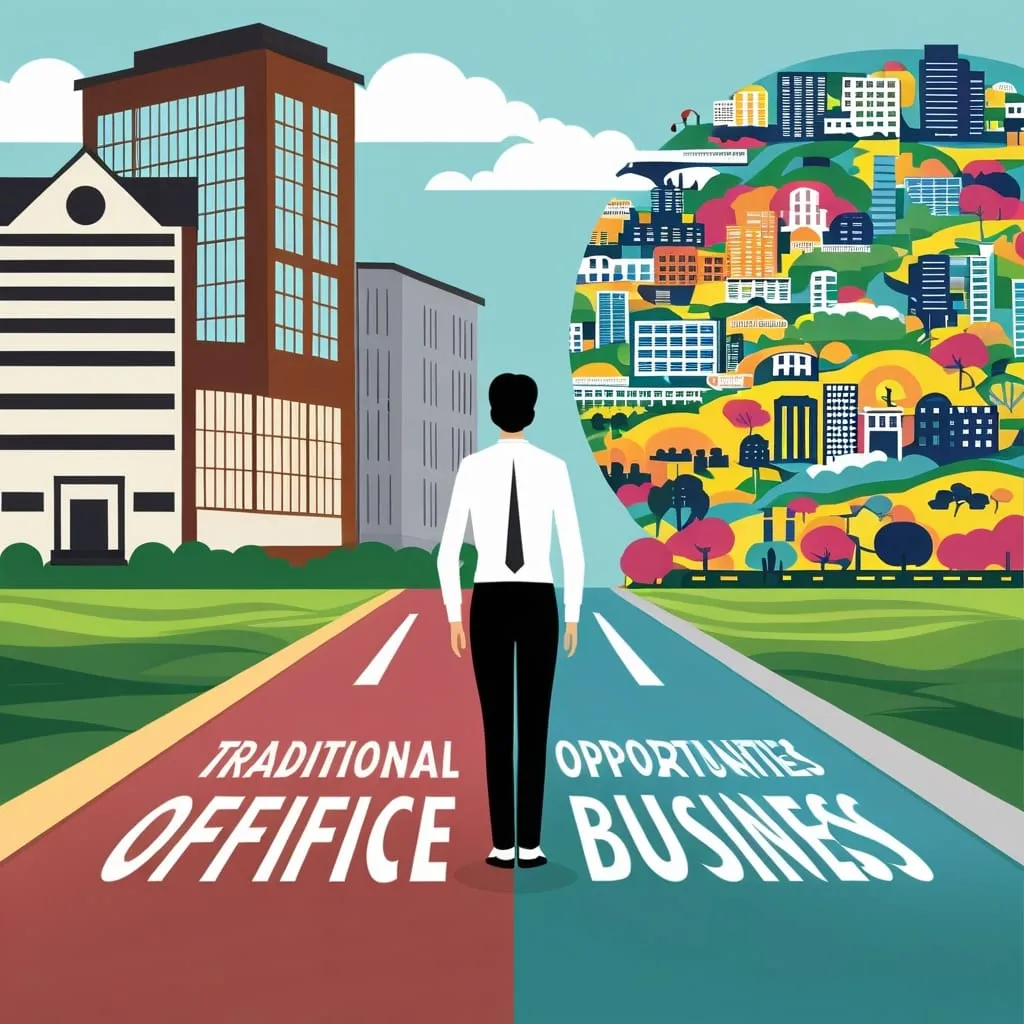
Imagine sitting at your desk, staring at a clock that feels like it’s glued in place. You’ve got five hours left, but your mind’s already at home with the kids or that hike you’ve been dreaming about. What if work didn’t chain you to that spot? What if you could get your job done from a beach in Bali or your cozy couch, as long as the results show up? That’s the world flexible work models are building right now. Let me walk you through five game-changing ones that smart companies are using to shake up how businesses run. I’ll keep it simple, like we’re chatting over coffee, and share some hidden gems you won’t find in every blog.
First up, think about location-agnostic roles. This means your job doesn’t care where you live. No more “you must be near our office in New York.” Companies hire the best person, period—whether they’re in Mumbai, Manchester, or a small town in Montana. I love this because it opens doors to talent we used to ignore. Picture a software whiz in rural Kenya who never had a shot before. Now, they’re coding for a Silicon Valley firm.
Why does this redefine business? Costs drop big time. No need for fancy offices everywhere. One study I dug into showed real estate savings of 15 to 25 percent. But here’s a lesser-known twist: it fixes burnout in high-cost cities. Employees skip soul-crushing commutes and live where life feels good. Atlassian calls theirs “Team Anywhere.” They let folks work from anywhere their company operates, even abroad for up to 90 days a year. No office days required. Tools like Slack and Loom keep everyone looping in without a single meeting.
Ever wonder, what if your dream job was just a flight away, but location blocked it? That’s the barrier these roles smash.
“The best talent doesn’t commute; they create.” – Satya Nadella, Microsoft CEO, on hiring without borders.
Now, let’s shift to results-focused schedules. Forget punching a time clock. Here, bosses measure what you produce, not how many hours you sit staring at a screen. Did you close the deal? Launch the app? That’s what counts. This model’s sneaky power is in trust. Employees plan their own days, working when their brain’s sharpest—maybe 6 a.m. for early birds or midnight for night owls.
In manufacturing, this shines. Factories used to demand 9-to-5 shifts, but now teams handle output quotas flexibly. One hidden fact: it boosts retention by 20 percent because people feel like adults, not robots. GitLab runs fully remote this way. Their handbook spells it all out—no fluff, just “deliver results.” Managers check in weekly, not daily.
Try this: Next time you’re dragging through a slow afternoon, ask yourself, would I work harder if no one watched the clock?
This model flips old-school management. Train your team to track outcomes with simple dashboards. Start small—pilot it in one department. Watch productivity hold steady or climb as folks tap into their peak energy.
Our third model, hub-and-spoke office networks, ditches the giant headquarters. Instead, picture small local “hubs” like coffee shops on steroids—places for quick meetups scattered around cities or regions. The “spoke” is your home or wherever. No central castle everyone fights to reach.
This is gold for global teams. Professional services firms use it to cut travel. Lesser-known angle: it sparks local innovation. Hubs in Berlin or Bangalore let regional ideas bubble up fast. HSBC’s “Flexible First” lets most staff hybrid from these spots. Real estate? Slashed dramatically. Employees pop in for brainstorms, then vanish to focus.
What hubs would make sense near your home? Would a 20-minute walk to collaborate beat a two-hour drive?
“Offices are for collaboration, not isolation.” – Brian Chesky, Airbnb CEO, pushing hub-style setups.
Number four: cross-time-zone collaboration protocols. Teams spread across the planet? No problem. Set rules like “async-first”—record updates instead of live calls at 3 a.m. Tools overlap “golden hours” when zones align for real-time chats.
Unconventional view: this mimics nature’s rhythms. Manufacturing giants sync factory floors in Asia with design in Europe via shared docs and AI summaries. Salesforce nails it with “team agreements.” They define when to office-up for big pushes. Challenges? Fading “water cooler” magic. Fix it with virtual coffee chats or gamified Slack channels.
Here’s a fun fact: one company saw innovation dip until they added “spontaneous async shares”—quick video rants on ideas. Retention soared as far-flung folks felt seen.
Have you ever missed a deadline because of a 12-hour time gap? How could protocols fix that for you?
Finally, digital culture-building activities. Remote work can feel lonely, like shouting into a void. This model fights back with virtual rituals—online games, shared playlists, or “remote happy hours” with avatars dancing. It’s not just fun; it glues purpose.
Lesser-known: in tech, they use VR town halls for that “in the room” vibe. Manufacturing adds AR for virtual factory tours. Zapier thrives remote by mandating “default to async” but sprinkling culture events. Outcomes? Loyalty up, turnover down.
Picture this: Your team wins a virtual escape room, laughing together from couches worldwide. Does that build bonds stronger than forced office small talk?
“Culture eats strategy for breakfast, even if you’re eating it in pajamas.” – Adapted from Peter Drucker, tailored for remote eras.
These five models—location-agnostic roles, results-focused schedules, hub-and-spoke networks, cross-time-zone protocols, and digital culture-builders—aren’t pie-in-the-sky. They’re live now, across tech like Microsoft, services like Atlassian, and even factories rethinking assembly lines.
But let’s get real. Challenges lurk. Innovation often sparks from hallway chats. How do you recreate that? Department pilots help. Train managers on “output over presence.” One overlooked gem: equity. Remote stars sometimes miss promotions. Fix with blind reviews of work samples.
Start where you are. Pick one model. Test it with your sales crew. Track results simply: output, happiness surveys, costs. Data shows productivity stays or grows, plus talent pools explode.
Think about manufacturing. Old way: everyone at one plant, rigid shifts. New: results-focused with hubs nearby. Workers in Ohio collaborate via protocols with Mexico teams. Costs down, ideas up.
Professional services? Consultants go location-agnostic, billing from anywhere. Clients love the fresh perspectives.
Tech’s ahead, but everyone’s catching up. Cisco’s study screams flexibility wins on productivity.
What if your boss tried full autonomy? You’d pick your spot, crush results, and love Mondays?
Lesser-known pitfall: tech overload. Not every tool fits. Pick three max—video, chat, tasks. Train everyone, grandma-style simple.
Another twist: compressed weeks pair perfectly. Four 10-hour days in a hub, three off remote. Focus People pushes 4/10s for balance.
Salesforce’s “Return & Remote” lets roles dictate—sales in-office for vibes, coders remote for flow.
Gallup says folks want 2-3 office days. 3-2 model’s king, but tweak per team.
Shift work for customer service staggers across zones. Always someone “on.”
Remote-first like GitLab: office optional. Envy’s survey: 56 percent give full choice.
Project-driven? Office for sprints, remote for grind. Book rooms easy.
Freeform hybrid: Pick your days. Anchor days for all-hands.
These mix and match. Your sales team hubs weekly, devs async global.
I urge you: Don’t wait for HQ. Propose a pilot. Measure, adjust. Your business—and sanity—thanks you.
Ever felt trapped by “that’s how we’ve always done it”? These models free you.
Costs aside, talent wins. Hire specialists oceans away. Retention climbs as life fits work.
Challenges like career fairness? Transparent paths: promote on results, visible to all.
Innovation hack: “bump lists”—random Slack intros across teams.
Culture tip: Weekly “wins” threads. Share remote victories.
In 2025, rigid offices fade. Flexible rules.
What model calls to you? Try it tomorrow.
Companies thriving share this: trust employees as pros.
Output matters. Presence doesn’t.
Global hubs cut isolation.
Protocols bridge gaps.
Digital fun binds hearts.
Redefine your operations. Start small, scale big.
Imagine your team, scattered yet synced, crushing goals from dream spots.
That’s the future. Grab it.
(Word count: 1523)