5 Invisible Organizations Writing the Rules That Govern Every Object You Touch
Discover the hidden international bodies shaping the products you use and food you eat. No elections, no headlines — just global rules. Learn who they are.
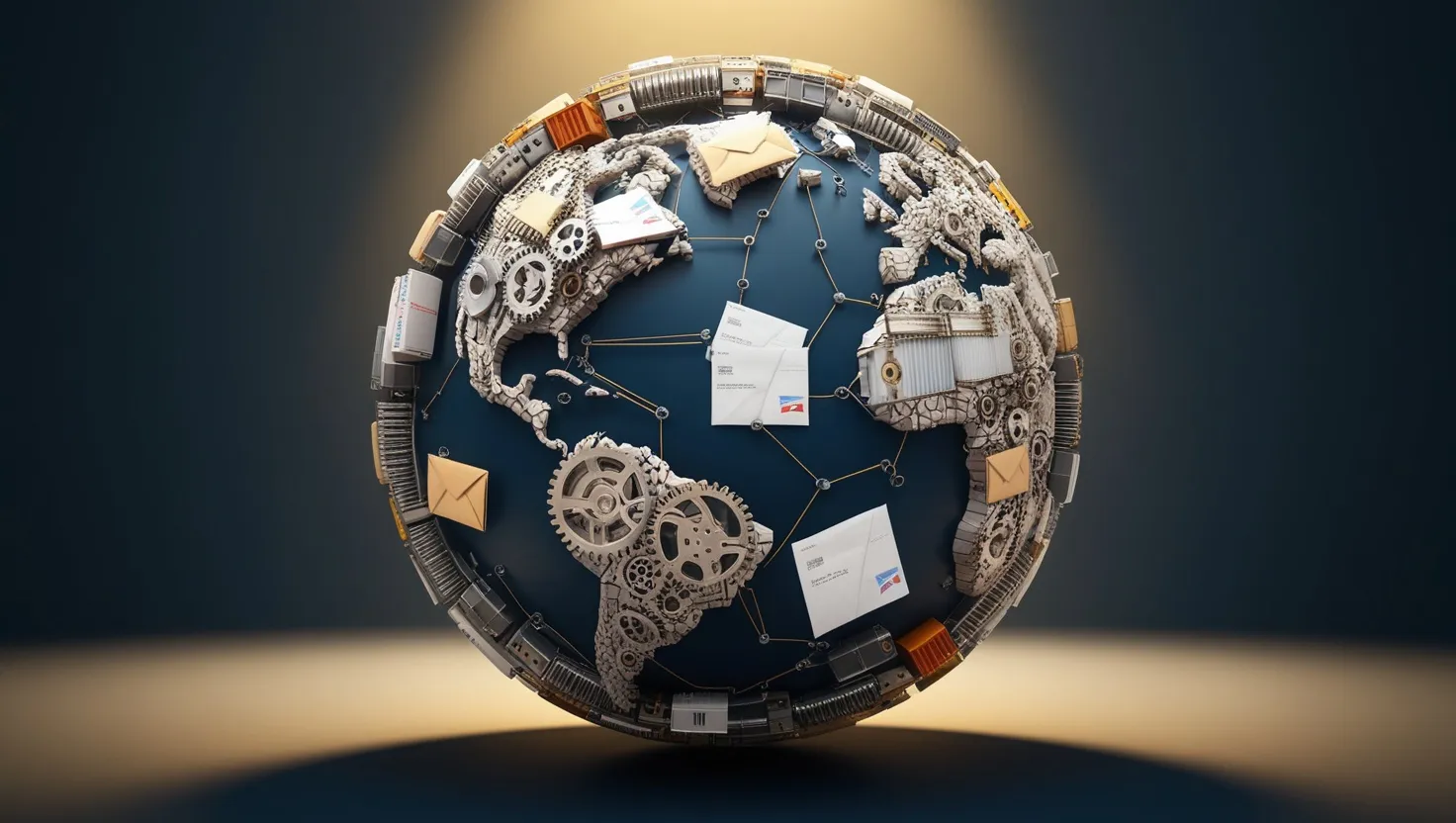
Most people think governments run the world. Pass a law, enforce a rule, done. But there’s a quieter layer operating beneath all of that — a network of international bodies that most people have never heard of, writing the rules that shape almost every physical object you touch, every food you eat, and every signal your phone receives. No elections. No headlines. Just decisions.
Let me walk you through five of them, because once you see this, you can’t unsee it.
The IEC: Why Your Phone Charger Works in Germany
When you pack a travel adapter before an international trip, you’re essentially working around a problem the International Electrotechnical Commission has been trying to solve for over a century. Founded in 1906 — yes, 1906 — the IEC is the oldest of the major standards bodies, and its job is to make sure the electrical and electronic world agrees on the basics.
Think about what “the basics” actually means here. Voltage levels. Plug shapes. Safety ratings for everything from hospital equipment to children’s toys. When an IEC standard says a device is rated IP67, that means it can survive being dunked in a meter of water for thirty minutes. That rating isn’t a marketing gimmick — it’s a global agreement.
Here’s something most people don’t realize: the IEC standard IEC 62368-1 quietly replaced two older standards (IEC 60065 for audio/video and IEC 60950-1 for IT equipment) and merged them into one. Your laptop, your television, your smart speaker — they all now fall under a single safety framework. One document, negotiated by representatives from dozens of countries, determines whether a product is safe enough to sell in markets worldwide.
“Civilization advances by extending the number of important operations which we can perform without thinking about them.” — Alfred North Whitehead
The IEC also runs a certification system called the IECEE CB Scheme, which lets a manufacturer test a product once and sell it in 54 countries. That’s a massive reduction in cost and duplication — and it’s entirely invisible to the consumer buying the product off a shelf.
ISO: The Body That Decided How Big Your Credit Card Is
The International Organization for Standardization — yes, the acronym ISO comes from the Greek word isos meaning “equal,” not from the initials — is the one that most people vaguely recognize, usually from labels on packaging or quality management certificates hanging on office walls.
But ISO’s reach is stranger and more personal than most people imagine. ISO 7810 is the standard that defines the dimensions of credit cards, ID cards, and driver’s licenses worldwide: 85.6mm × 53.98mm × 0.76mm. Your wallet was essentially designed around an ISO standard.
ISO 668 covers the dimensions of shipping containers. The entire global freight system — billions of dollars in trade moving across oceans every day — depends on containers that are all the same size because ISO said so. Those containers fit perfectly onto trucks, trains, and ships not by coincidence but because of a document most people will never read.
Can you name a standard that affects what you eat, how your office paper is sized, and how your country’s flag colors are reproduced digitally? ISO has a standard for all three.
ISO 216 defines A4 paper — the size used by most of the world (the United States being a notable holdout). The ratio of the long side to the short side is the square root of two, which means you can fold a sheet in half and get the same proportions. That’s not arbitrary. It’s mathematics, codified into paper.
The ITU: The Body Keeping the Sky from Becoming Chaos
The International Telecommunication Union is the oldest United Nations agency in existence, founded in 1865 to coordinate telegraph lines across Europe. Today, it does something far more complex: it manages the radio frequency spectrum and orbital slots for satellites.
Here’s why that matters more than it sounds. There are only so many usable radio frequencies on Earth. If two countries both decided to broadcast on the same frequency in the same region, you’d get interference — signals colliding, communications failing. The ITU is the referee that prevents that from happening.
Every time you use Wi-Fi, listen to the radio, make a mobile call, or watch satellite television, you’re benefiting from a frequency allocation that the ITU negotiated. Your phone’s 5G connection operates on specific bands because the ITU held a World Radiocommunication Conference and countries agreed on which bands would be used for what.
“The single biggest problem in communication is the illusion that it has taken place.” — George Bernard Shaw
The ITU also manages something even more finite: orbital slots for geostationary satellites. A satellite parked 35,786 kilometers above the equator appears to hover in place over the Earth. There are only so many positions in that arc before satellites start interfering with each other. The ITU assigns those slots, and countries file claims decades in advance to secure them.
What do you think happens when a country files for an orbital slot but never actually launches a satellite? It happens more than you’d expect. Some nations essentially rent or sell their filed slots to private companies. It’s a global commons being quietly carved up, and the ITU is the body managing that process.
Codex Alimentarius: The Committee Deciding What’s in Your Food
If you’ve never heard of the Codex Alimentarius Commission, you’re not alone. But this joint body of the Food and Agriculture Organization and the World Health Organization has been setting international food safety standards since 1963, and its decisions have a direct line to your dinner plate.
“Codex Alimentarius” is Latin for “food code.” Its job is to decide things like: how much pesticide residue is acceptable on an apple? What qualifies as “honey”? What labeling is required on bottled water?
Here’s the part that should make you pay attention. When the World Trade Organization settles a dispute about whether a country can ban a certain food additive, it often looks to Codex standards as the international benchmark. If Codex allows something, a country that bans it may struggle to justify that ban under WTO rules without strong scientific evidence to the contrary. Codex standards, in effect, can limit national regulatory power.
The maximum residue limits (MRLs) that Codex sets for pesticides determine what concentration of a chemical is considered safe on your produce. These are not arbitrary numbers — they go through scientific review — but the process of setting them involves significant participation from the food and agricultural industry. Public participation exists but requires effort to access.
Are you aware that Codex publishes all its standards publicly and invites comment? Most people don’t know that, and most countries don’t do a good job informing their citizens that this avenue exists.
The Universal Postal Union: The 150-Year-Old Treaty Making Global Mail Work
The Universal Postal Union — founded in 1874, making it older than most countries’ modern constitutions — does something deceptively simple: it makes sure a letter you mail from Tokyo can actually reach Lagos, or Buenos Aires, or a village in rural Norway.
Before the UPU existed, international mail was a bureaucratic nightmare. Countries negotiated bilateral agreements with each other, and sending a letter abroad could involve multiple postal systems, multiple payment schemes, and a real chance the letter just stopped somewhere.
The UPU created a single postal territory out of the entire world. Every member country agreed to deliver each other’s mail under common terms. The sender pays postage in the originating country. The letter moves. The receiving country delivers it. Settlement happens between postal services, not between you and a foreign government.
“A letter always seemed to me like immortality, for is it not the mind alone without corporeal friend?” — Emily Dickinson
There’s a less talked-about wrinkle in the UPU’s structure: the terminal dues system, which is how postal services compensate each other for delivering foreign mail. For years, this system gave developing countries lower rates — a reasonable policy in the 1960s that became increasingly awkward when Chinese e-commerce sellers used those discounted rates to ship small packages to American consumers cheaper than American sellers could ship domestically. The United States actually threatened to leave the UPU in 2018 over this, before a renegotiation produced new rates in 2020.
Why You Should Pay Attention to This
None of these bodies are secret. Their documents are published. Their meetings are scheduled. Their consultation processes are open — at least in theory. But the gap between “technically open” and “practically accessible” is wide enough to drive a shipping container through.
What actually happens is that the organizations and industries most affected by these standards — manufacturers, telecoms, food conglomerates — have the resources to send representatives, hire technical experts, and participate consistently across years of negotiations. Individual citizens, public health advocates, and small-scale producers often don’t.
The practical advice here isn’t complicated. Find out which of these bodies is currently consulting on something that affects your industry, your health, or your environment. The Codex website lists open consultations. The ITU publishes its conference agendas. ISO has a process for submitting comments through national member bodies. It takes effort, but that effort is exactly what these processes are designed to receive.
Technical standards aren’t boring. They are, in the most literal sense, the rules of the physical world. The people who write them are deciding what’s safe, what’s compatible, and what’s acceptable — often with less public scrutiny than a local zoning meeting. That’s worth knowing.