Analyzing Financial Statements: The Pro’s Guide to Picking Winning Stocks!
Financial statement analysis unlocks stock market success. Study income statements, balance sheets, and cash flow statements. Use ratios like P/E, PEG, ROE, and debt-to-equity. Combine quantitative and qualitative analysis for comprehensive understanding.

Unlocking the Secrets of Stock Analysis: A Guide to Financial Statement Mastery
Ever wondered how the big players in the stock market seem to have a crystal ball? Well, they don't. What they do have is a keen understanding of financial statements. It's like having a superpower in the investing world, and guess what? You can have it too.
Let's dive into the world of financial statement analysis. Don't worry, we're not going to drown in numbers. Think of it as detective work, where you're uncovering the story behind a company's financial health.
First up, we've got the three musketeers of financial statements: the income statement, balance sheet, and cash flow statement. Each one tells a different part of the company's story.
The income statement is like a report card for the company. It shows how much money they're making, how much they're spending, and what's left over. Imagine if your friend told you they made $100 mowing lawns, spent $20 on gas for the mower, and kept $80. That's basically what an income statement does, but for big companies.
Next, we have the balance sheet. It's like a snapshot of the company's financial health at a specific moment. On one side, you've got what the company owns (assets), and on the other, what it owes (liabilities) plus what the shareholders own (equity). If the company were a person, the balance sheet would show their net worth.
Last but not least, there's the cash flow statement. This one's all about the money moving in and out of the company. It's crucial because a company can look profitable on paper but still struggle if it can't pay its bills. It's like having a great job but always being broke because you can't manage your spending.
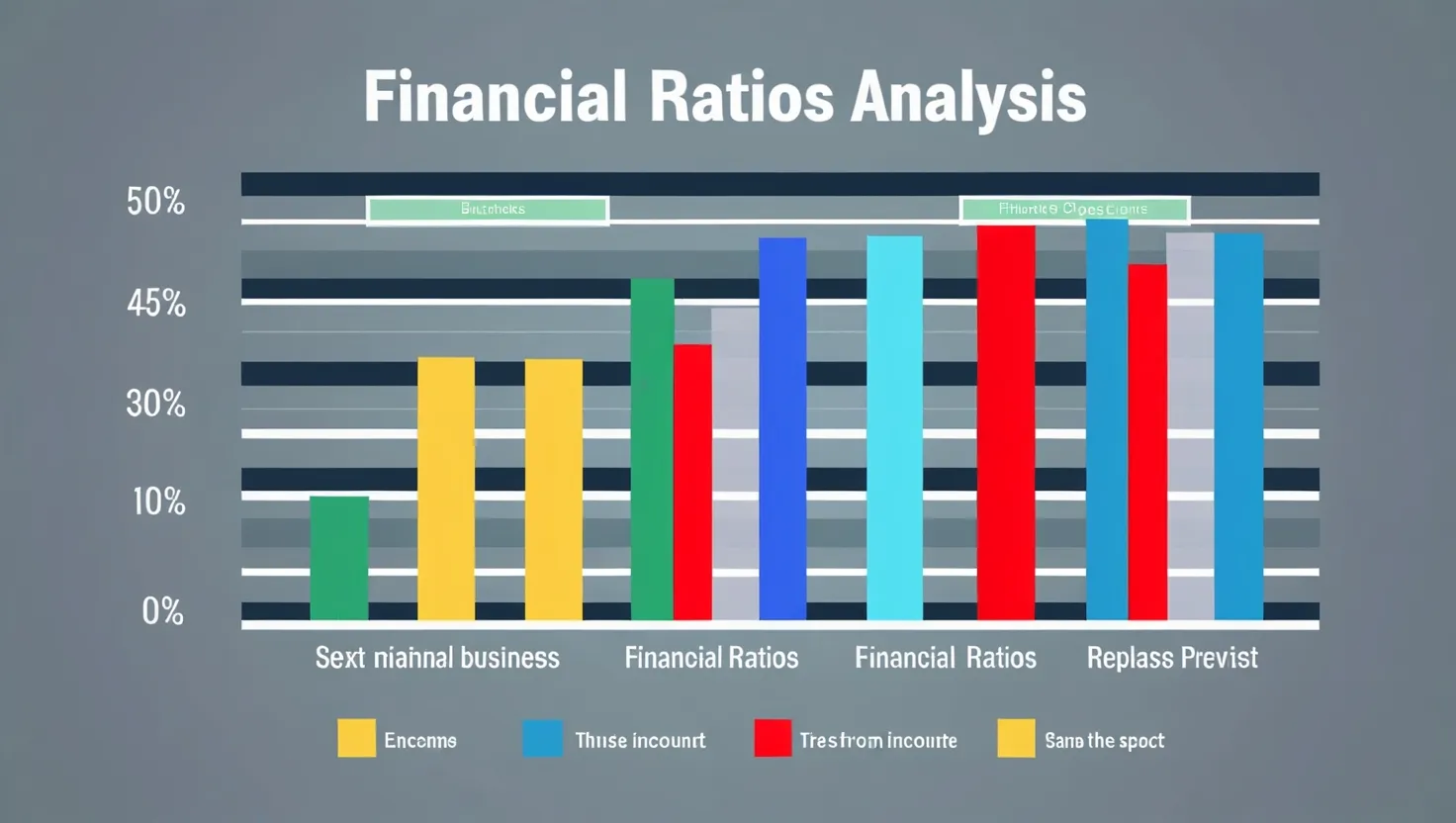
Now, let's talk about financial ratios. These are like the secret codes of the investing world. They help you make sense of all those numbers and compare companies to each other.
One of the most famous is the Price-to-Earnings (P/E) ratio. It's like asking how much you're paying for each dollar of the company's earnings. A lower P/E might mean you're getting a bargain, but it's not always that simple.
Then there's the Price-Earnings-Growth (PEG) ratio. It's like the P/E ratio's cooler, more insightful cousin. It takes into account how fast the company is growing. A PEG ratio below 1 is generally considered good, but again, it's not a hard and fast rule.
Return on Equity (ROE) is another important one. It tells you how good the company is at making money from the shareholders' investments. The higher, the better, usually.
And don't forget about the Debt-to-Equity ratio. It's like checking how much of the company's funding comes from loans versus its own money. Lower is generally better, but some industries naturally have higher debt levels.
Now, here's a cool tip from investing legend Peter Lynch: invest in what you know. If you're a tech whiz, you might have a better understanding of tech companies. Use that knowledge to your advantage!
But remember, ratios aren't everything. They're like pieces of a puzzle. You need to look at multiple ratios together to get the full picture. It's like trying to understand a person - you wouldn't judge them based on just one characteristic, right?
And don't forget about the stuff that doesn't show up in the numbers. Things like the quality of the company's leadership, how good their products are, and how they stack up against competitors. This qualitative analysis is just as important as crunching the numbers.
Some investors also like to look at stock charts to spot trends. This is called technical analysis. It's like trying to predict the weather by looking at patterns in the clouds. It can be useful, but it's not foolproof.
Let's put all this together with a real-world example. Say you're thinking about investing in a company like Tesla. You'd look at their income statement to see if they're making money, their balance sheet to check their financial health, and their cash flow statement to make sure they can pay their bills.
You'd calculate ratios like P/E and PEG to see if the stock price makes sense given their earnings and growth. You'd look at their ROE to see how efficiently they're using shareholders' money, and their debt levels to make sure they're not over-leveraged.
But you wouldn't stop there. You'd also consider factors like Elon Musk's leadership, the quality and popularity of their cars, and how they're positioned in the electric vehicle market.
By combining all these pieces of information, you'd get a comprehensive view of Tesla as an investment opportunity. And that's the real power of financial statement analysis - it gives you a holistic understanding of a company's potential.
Now, don't expect to become Warren Buffett overnight. This stuff takes practice. Start by picking a company you're interested in and dig into their financial statements. Calculate some ratios, compare them to competitors, and see what story the numbers tell you.
Remember, investing is a journey, not a destination. The more you learn and practice, the better you'll get at spotting great investment opportunities. And who knows? Maybe one day you'll be the one with the investing superpower, picking winning stocks like it's no big deal.
So go ahead, dive into those financial statements. They might look intimidating at first, but with a little practice, you'll be reading them like a pro. And when you make that first successful investment based on your own analysis? Well, that feeling is priceless.
Happy investing, folks! May your portfolios always be green and your financial statement analysis skills always on point.