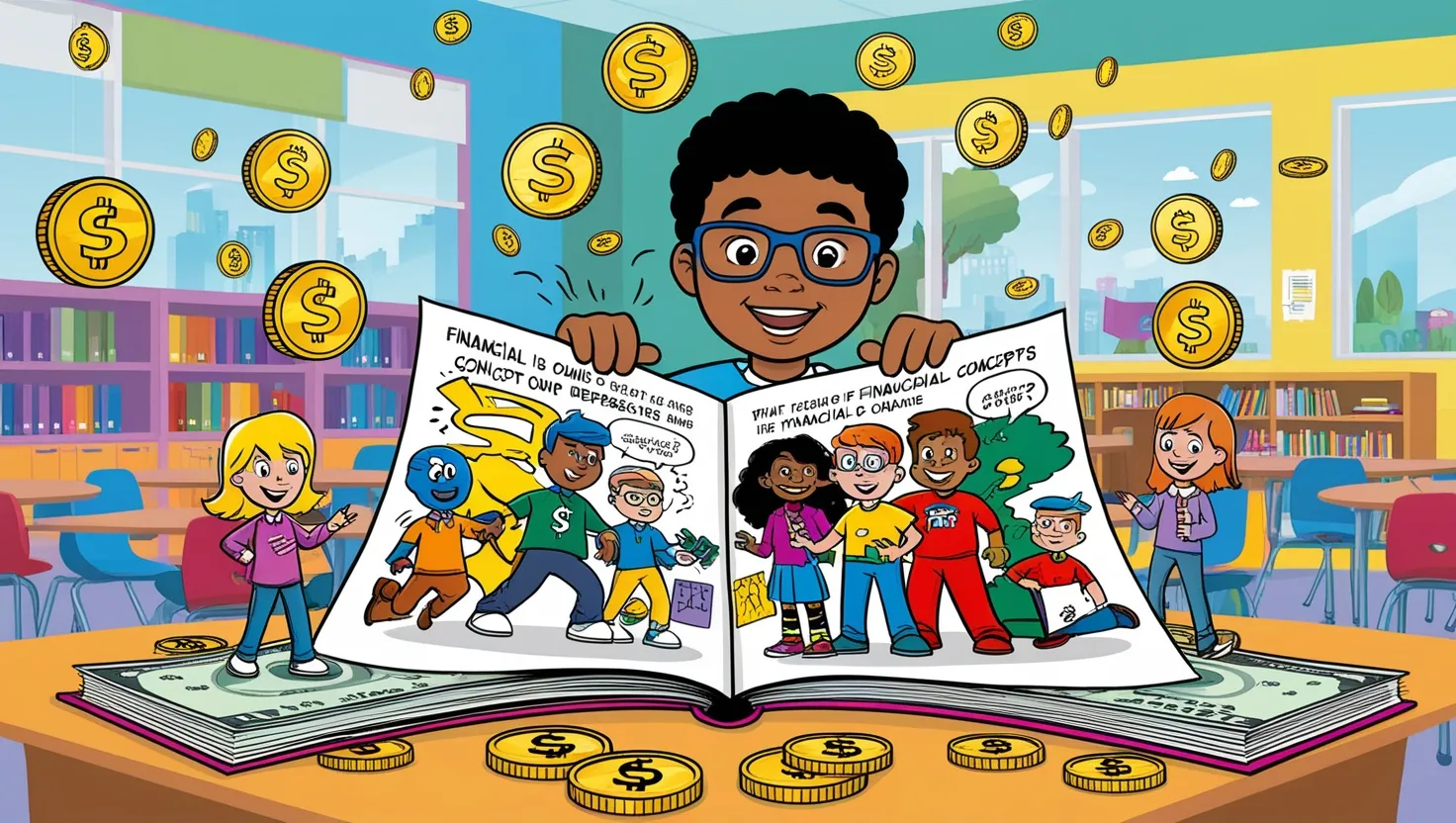
In a world where financial literacy is often shrouded in complexity, a dyslexic teen named Ethan decided to take a different approach. He created a comic book that not only teaches kids about money management but also reflects his own journey of overcoming challenges and discovering the power of visual storytelling.
Ethan’s story begins with a simple yet profound realization: traditional methods of teaching financial literacy often fall short, especially for those who learn differently. As someone who has navigated the complexities of dyslexia, Ethan understood the importance of making information accessible and engaging. His comic book, filled with quirky characters and relatable scenarios, was more than just a tool for teaching; it was a reflection of his own experiences.
“Financial literacy is not just about numbers; it’s about understanding how money impacts our lives,” Ethan explains. This perspective is echoed by the words of Warren Buffett, “Price is what you pay. Value is what you get.” For Ethan, the value lay in creating a resource that could resonate with a wide range of learners.
At the heart of Ethan’s comic book are characters like Sammy the Saver, Katrina the Voice of Reason, Cash Money Carl, and The Spendthrift. Each character represents a different aspect of financial decision-making, from the importance of saving to the dangers of impulsive spending. These characters are not just fictional entities; they are avatars of real-life financial dilemmas that kids and teens face every day.
As Ethan delved deeper into the world of comic book creation, he discovered the art of visual storytelling. “Comics are a powerful medium because they combine text and images in a way that makes complex ideas simple and engaging,” he notes. This is a principle that has been leveraged by various educational initiatives, including those by Marvel Comics and Visa, which use iconic superheroes to teach financial literacy.
But Ethan’s journey was not without its challenges. As a dyslexic individual, he faced unique obstacles in both creating and publishing his work. However, these challenges also became opportunities for growth. “Dyslexia is not a limitation; it’s a different way of seeing the world,” Ethan says, reflecting on how his condition influenced his creative process.
One of the lesser-known facts about dyslexia is its connection to creative thinking. Many successful artists, writers, and entrepreneurs are dyslexic, and they often attribute their innovative thinking to their condition. For Ethan, this meant approaching financial literacy from angles that others might overlook.
As he worked on his comic book, Ethan also learned about the economics of publishing. He discovered that creating a book is not just about writing and drawing; it involves understanding the market, managing finances, and making strategic decisions. This experience was invaluable, teaching him that financial literacy is not just for personal use but also for professional success.
“Inclusive education is about more than just accommodating different learning styles; it’s about creating a system that values diversity,” Ethan emphasizes. His comic book is a testament to this principle, designed to be accessible to kids of all abilities. By using visual storytelling, Ethan made financial literacy more approachable and fun, breaking down the barriers that often make this subject seem daunting.
The impact of Ethan’s work extends beyond the pages of his comic book. It challenges traditional educational methods and encourages a more inclusive approach to learning. As the renowned educator, Howard Gardner, once said, “The idea that there can be a single ‘best’ way of teaching flies in the face of everything we know about children and learning.”
So, what can we learn from Ethan’s journey? First, that financial literacy is not just about numbers; it’s about understanding how money impacts our lives. Second, that visual storytelling can be a powerful tool for education. And third, that inclusive education is essential for creating a system that values diversity.
As we reflect on Ethan’s story, we are reminded of the words of Maya Angelou, “Do the best you can until you know better. Then when you know better, do better.” Ethan’s comic book is more than just a resource; it’s a call to action – a reminder that we can always do better in how we teach and learn.
How can we apply these lessons in our own lives? By embracing creativity and diversity, we can make complex subjects like financial literacy more accessible. By valuing different learning styles, we can create a more inclusive educational system. And by sharing stories like Ethan’s, we can inspire others to take on their own challenges and create meaningful change.
In the end, Ethan’s comic book is not just about teaching kids about money; it’s about showing them that they have the power to create, to innovate, and to overcome any obstacle. As Ethan himself puts it, “The real magic happens when you combine passion with purpose.” For him, that magic was in the pages of his comic book, and it continues to inspire others to find their own unique paths to success.