Five Ocean Treaties Secretly Controlling Your Seafood: Why Global Fishing Agreements Decide What's Left to Catch
Discover how 5 global fisheries agreements shape seafood prices, ocean health, and coastal livelihoods. Learn what's at stake and how you can help.
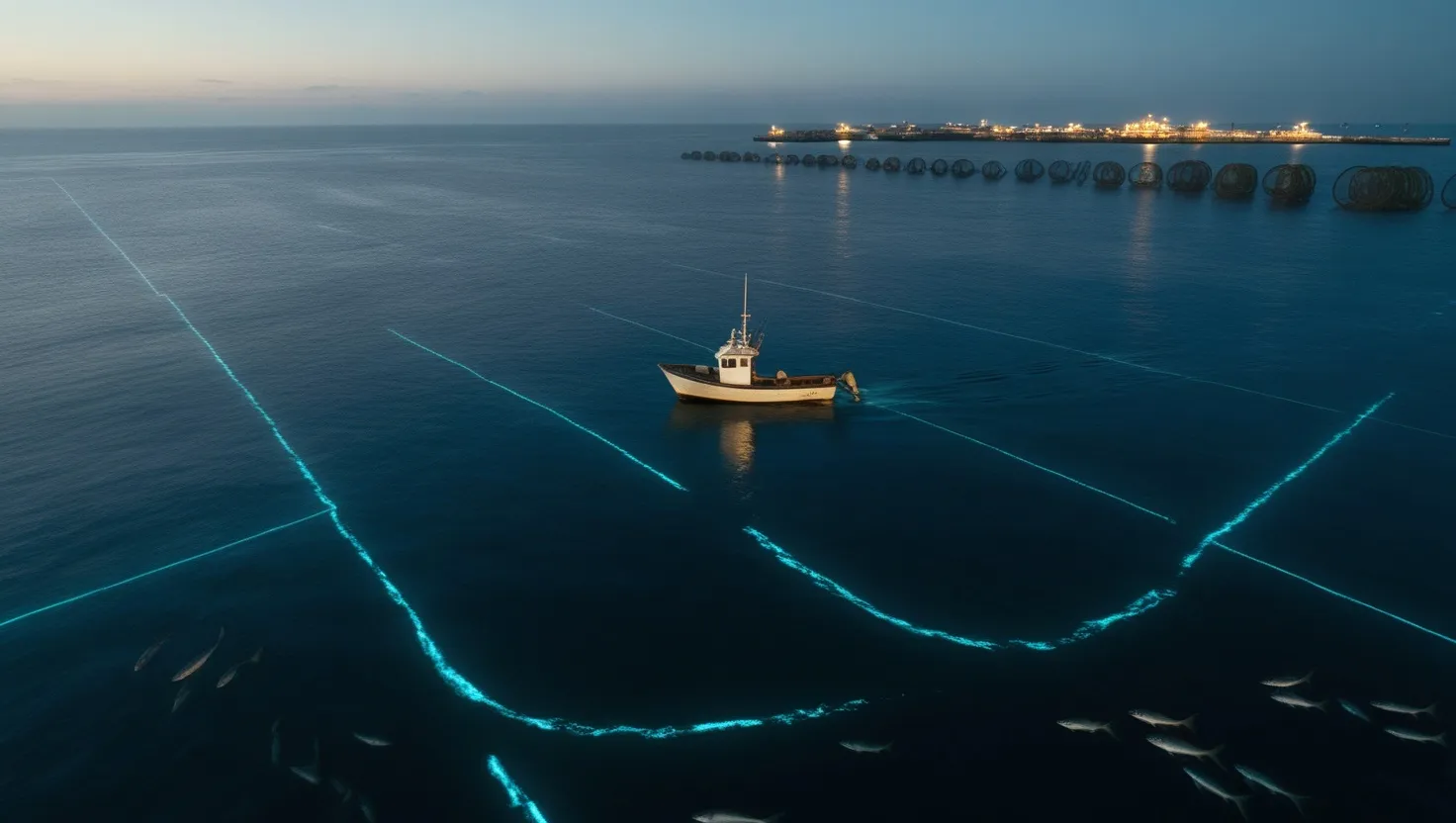
Let me ask you something simple. When you pick up a tin of tuna at the store, do you ever wonder who decided that fish was yours to buy? Someone, somewhere, drew lines in the ocean and wrote rules about who gets to catch what. Those rules are not written by fishermen. They are written by diplomats in rooms far away from any sea. And yet, those papers decide whether a fishing family in Kerala or Senegal eats well this year or goes hungry.
I want to walk you through five agreements that quietly run the business of catching fish across the planet. None of them make headlines like wars or elections do. But skip reading about them, and you miss understanding why fish keeps getting pricier, why some species vanish from menus, and why coastal towns fight over boats and nets.
The Ocean’s Constitution
Start with the big one. The United Nations Convention on the Law of the Sea, signed in 1982, is basically the rulebook for the ocean. Before this treaty, countries argued endlessly about how far their waters stretched. Three miles? Twelve? Two hundred?
This treaty settled it. Every coastal nation got an Exclusive Economic Zone, stretching 200 nautical miles from its shore. Inside that zone, the country controls the fish, the oil, the minerals, everything. Outside it, in what’s called the high seas, no single nation owns the water.
Here’s a fact that surprises most people: nearly two-thirds of the ocean lies outside any single nation’s control. That’s the high seas, free for anyone with a boat and enough fuel to reach it. Imagine owning a farm where only sixty percent of your land has a fence. The rest is open for anyone to walk in and harvest.
As the ocean scientist Sylvia Earle once said, “No water, no life. No blue, no green.” She meant something deeper than poetry. The treaty tries to protect that blue, but enforcement is another story entirely. A rule without a police officer is just a suggestion.
When Tuna Needs a Committee
Fish don’t carry passports. A tuna born near Japan might swim past Fiji, cross into international waters, then end up near Peru before anyone catches it. So how do you manage a creature that ignores every border humans draw?
Regional Fisheries Management Organizations, or RFMOs, exist for exactly this problem. These are groups of countries that agree on how much tuna, cod, or sardine can be pulled from a specific ocean region each year. The Indian Ocean Tuna Commission, the International Commission for the Conservation of Atlantic Tunas, and similar bodies set quotas season after season.
Sounds organized, right? Except here’s the catch. These organizations run on consensus, meaning every member country has to agree. Picture twenty countries trying to agree on a restaurant for dinner. Now imagine the stakes are worth billions of dollars instead of just where to eat tonight.
Scientists often recommend lower catch limits. Fishing nations often push back, wanting bigger numbers for their fleets. The result is usually a compromise that leans toward short-term profit rather than long-term fish survival. Bluefin tuna populations crashed for decades partly because of this exact pattern.
Ask yourself this: if the people setting fishing limits are the same people who profit from fishing, whose interest wins most often?
Stopping Stolen Fish at the Door
Now here’s an agreement I find genuinely clever. The Port State Measures Agreement, which came into force in 2016, attacks the problem from a completely different angle.
Instead of trying to police the entire ocean, which is nearly impossible, this treaty focuses on ports. Think about it this way: a fishing boat can hide in open water for weeks, but eventually it has to dock somewhere to sell its catch. That dock is the choke point.
Under this agreement, countries that sign on agree to inspect foreign fishing vessels before allowing them to unload. If a ship cannot prove its catch was legal, it gets turned away. No paperwork, no fish sold, no profit made.
This single idea has blocked millions of dollars worth of illegally caught fish from entering global markets. It’s a bit like airport security, except instead of checking passengers, officials check fish holds and logbooks.
The catch is participation. Not every country has signed this agreement, and ships simply redirect to ports that ask fewer questions. Illegal fishing operators are remarkably good at finding the weakest link in any system.
Money Talks, So Stop the Talking
For decades, wealthy fishing nations handed out massive subsidies to their fishing industries. Free fuel, cheap loans, payments per ton caught. This sounds helpful until you realize what it actually does: it lets boats travel further, stay longer, and fish harder than natural market forces would ever allow.
The World Trade Organization finally reached an agreement in 2022 to limit these harmful subsidies, particularly ones that support illegal fishing or fishing in already depleted waters.
Here’s a number that should bother you. Governments worldwide spend roughly thirty-five billion dollars annually subsidizing fishing fleets. A chunk of that money goes toward fishing in waters that are already overfished, essentially paying boats to make a bad situation worse.
Economist and ocean policy writer Rashid Sumaila has spent years researching this exact issue. His work shows that without these subsidies, many large industrial fishing operations would not even be profitable. Take away the government cash, and the economics of overfishing simply stop making sense.
Does that surprise you? Many fishing fleets exist not because fish are plentiful, but because taxpayers are footing the bill to chase increasingly scarce fish.
The Agreement That Follows Fish Across Borders
Finally, there’s the UN Fish Stocks Agreement, signed in 1995. This one specifically handles fish that migrate across multiple countries’ waters or swim between national zones and the high seas.
Species like swordfish, certain sharks, and various tuna varieties don’t respect anyone’s maritime borders. This agreement requires countries to cooperate on managing these species rather than each nation doing whatever it wants once the fish crosses into international waters.
It sounds reasonable on paper. The problem, as always, is enforcement. Cooperation requires trust, and trust is hard to maintain when money is involved. A country might agree to limits in a meeting room, then quietly look the other way when its fleet exceeds quotas out at sea.
Marine biologist Daniel Pauly, who has studied fisheries decline for decades, once noted that global fish catches have been declining since the 1990s despite increased fishing effort. Boats are working harder and catching less. That’s not a sign of a healthy system; that’s a system running on fumes.
What You Can Actually Do
Reading about treaties might make you feel powerless, like this is all happening in rooms you’ll never enter. But you do have leverage, just not the kind diplomats use.
Look for certification labels on seafood packaging, such as the Marine Stewardship Council label. These labels aren’t perfect, but they represent independent verification that the fish was caught following specific sustainability rules.
Support organizations and apps that track fishing vessels using satellite data. Global Fishing Watch, for example, makes vessel movements public, letting researchers and even curious citizens spot suspicious activity near protected waters.
Ask questions at the fish counter. Where did this come from? How was it caught? Most staff won’t know, but enough customers asking eventually changes what stores choose to stock.
Why None of This Is Boring
I know treaties and quotas sound like topics reserved for bureaucrats and conference rooms. But consider this: roughly three billion people depend on seafood as a major protein source. Entire coastal economies, from small island nations to Alaskan fishing towns, survive or collapse based on how well these agreements actually work.
The ocean doesn’t send invoices or file complaints when it’s being emptied. It just goes quiet, species by species, until someone notices the nets are coming back empty.
Jacques Cousteau put it simply decades ago: “The sea, once it casts its spell, holds one in its net of wonder forever.” That net works both ways. We’re bound to the ocean’s health whether we notice it or not.
So next time you order fish at a restaurant or toss a can into your shopping cart, remember there’s an entire invisible system of treaties, quotas, and compromises behind that simple choice. Weak governance anywhere in that chain means someone, somewhere, is emptying the water faster than it can refill.
The question isn’t whether these agreements matter. The question is whether enough people will pay attention before the fish run out of places to hide.