Food on our plates looks simple. We go to a shop, pick what we want, and eat. But behind every loaf of bread, every cup of coffee, there is a long, fragile chain that can break in surprising ways. When I say “global food security,” I am really just talking about one basic question: can people, everywhere, get enough safe, nutritious food at prices they can afford?
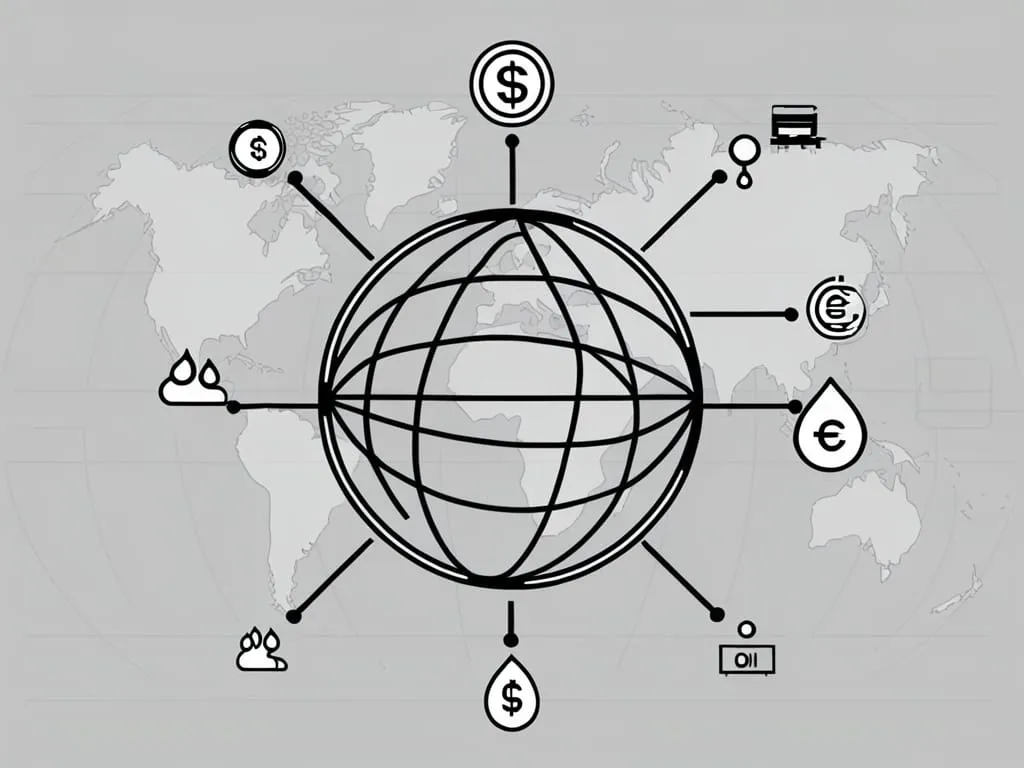
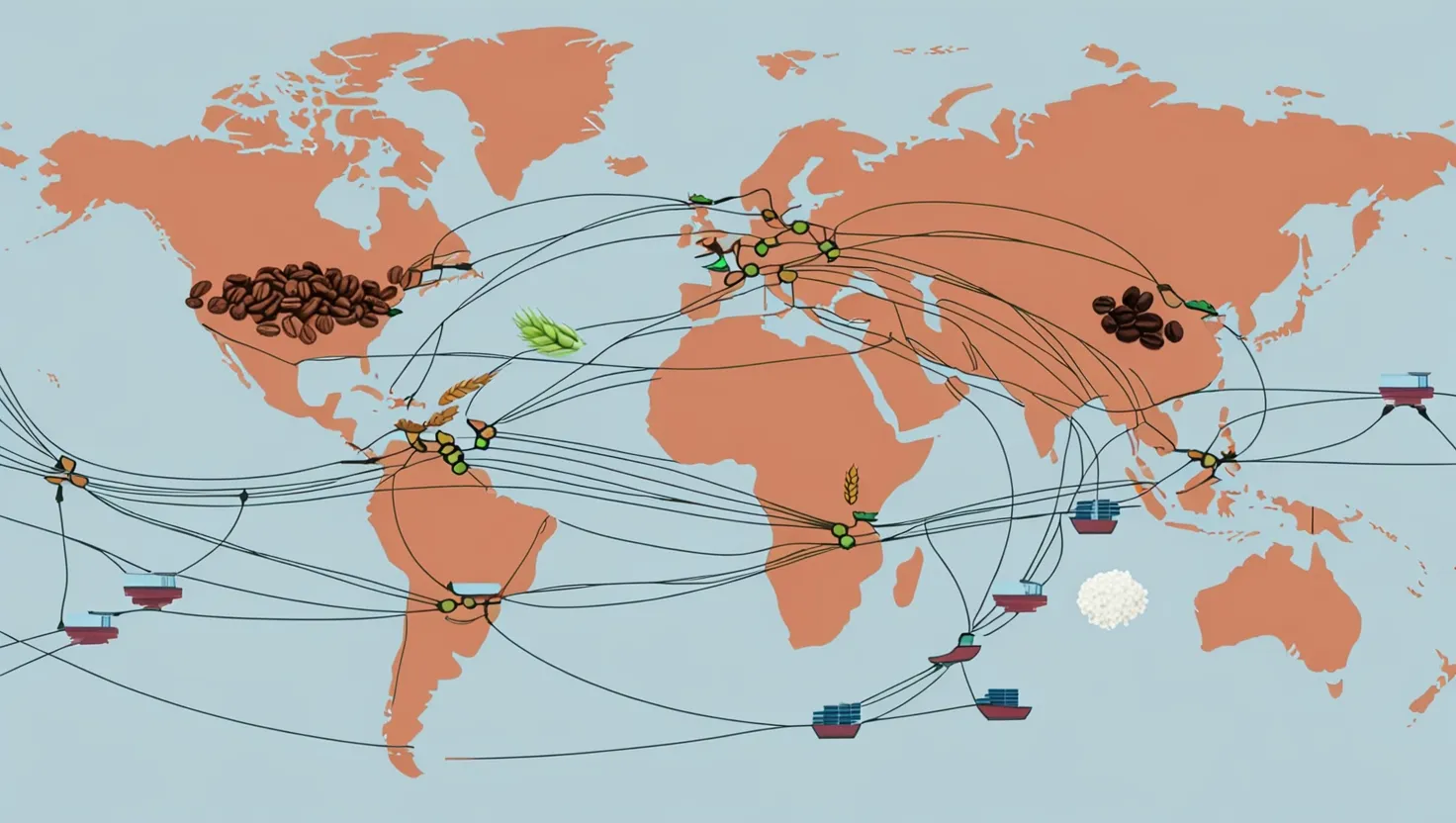
To make this real, I want you to picture something small. Imagine your morning coffee. The beans may be grown in Brazil, processed in Vietnam, shipped through Singapore, roasted in Italy, packed in Germany, and sold in your local store. One bad drought, one blocked sea route, one rule change on exports, and suddenly your simple daily habit becomes more costly or even hard to find. That same pattern, but with rice, wheat, maize, and cooking oil, is what makes food security such a big, delicate issue.
“When tillage begins, other arts follow. The farmers, therefore, are the founders of human civilization.”
— Daniel Webster
Let me walk through five big pressures that are changing how food moves from fields to your fork. I will keep it as simple as possible, but I will also show you angles people rarely talk about.
The first pressure is rising heat. Higher temperatures do not just “make it hotter.” They confuse plants. Many crops depend on clear seasons: a cool period, a warm period, a certain amount of rain over a set number of days. When nights stay warmer than normal, some plants “breathe” more and lose energy. When days are too hot, flowers drop before turning into grains or fruits. I want you to think of crops like very picky machines that only work well within a narrow temperature window. Once we move outside that range, small shifts can cut yields by 5, 10, even 20 percent.
What most people miss is that heat also affects the workers and the soil. Field workers in many tropical countries now face real health risks from working under the midday sun. That can mean shorter work hours, slower harvests, and more crops left to rot. At the same time, higher temperatures break down soil organic matter faster. This sounds fine at first, but it can reduce the soil’s ability to hold water, which then makes droughts hit harder. So one degree of extra heat is not “just one degree.” It changes plant biology, worker safety, and soil behavior all at once.
Another lesser-known effect: some staple crops get more calories but fewer nutrients under high carbon dioxide and heat stress. That means a bowl of rice or wheat might fill your stomach but give you less iron or zinc than before. So even if people eat enough in terms of quantity, they can still be undernourished in terms of quality. Have you ever thought that future hunger might be “hidden” inside full plates?
The second pressure is conflict. When most people think about war and food, they imagine farms destroyed. That does happen. But a much more common problem is that ports, roads, and storage sites become too risky or too expensive to use. Ships avoid certain sea routes. Insurance prices for those ships shoot up. Truck drivers refuse to cross some borders. Suddenly, grain that exists on paper cannot reach the people who need it.
“If you want to eliminate hunger, everybody has to be involved.”
— Bono
Conflict in one key exporting region can reshape prices half a world away. A war in a country that exports wheat or sunflower oil can push up bread and cooking oil prices in countries that do not grow enough of their own. The strange part is that global stocks might still be high, but the fear of shortage and the cost of transport make prices jump anyway. Markets react to risk, not just to physical supply.
Here is a twist many ignore: when conflict happens, richer countries can often “outbid” poorer ones. Big buyers grab what is available by paying more. The poorest importers, often in Africa or parts of Asia, are left waiting, even if they are closer to the exporting region. So war does not just change supply; it changes who gets to buy what is left. Food moves toward whoever can pay the most, not whoever needs it most.
Let me ask you: when you see news about war and sanctions, do you connect it to the price of your bread, noodles, or animal feed? Most people do not, but the link is direct.
The third pressure is trade policy and export limits. Food today is traded like steel, phones, or oil. Countries sell what they are good at growing and import what they cannot grow well. This works fine until governments panic. When prices rise at home, some exporting countries respond by limiting or even banning exports of key crops. From their point of view, they are protecting their citizens from high prices. But for importing countries, especially those that rely heavily on one or two foreign suppliers, these sudden rules can be devastating.
Here is the strange part: when one major exporter restricts sales, other countries often follow, not because they truly need to, but because they fear being left behind. This “copycat protection” can turn a local problem into a global price shock. Even if there is enough food worldwide, the rules can stop it from moving where it needs to go.
“Food is the moral right of all who are born into this world.”
— Norman Borlaug
Another quiet issue is concentration. A few countries dominate exports of key crops. For example, a small group controls most of the world’s wheat, maize, and rice exports. The same goes for fertilizers and some cooking oils. This means that policy shifts in a handful of capitals can shape food prices for billions. It is a bit like having your entire internet run through three or four cables. Any problem with one cable, and millions feel it.
I want you to consider a simple question: if your country could not import its usual grain for six months, what would happen? Supermarket shelves would look very different very fast. Most of us have no idea how dependent we are on decisions made far away.
The fourth pressure is fertilizer and energy. Modern farming is heavily tied to fossil fuels. We use gas to make nitrogen fertilizer. We use fuel to run tractors, pumps, and trucks. We use energy to dry, cool, and process crops. When energy prices jump, fertilizer becomes more expensive, and some farmers use less of it. That can cut yields, especially in places where soils are already poor.
Here is a lesser-known angle: when fertilizer prices get too high, some small farmers shift to growing crops that need less fertilizer or water, even if those crops are less profitable or less nutritious. They are making a survival choice. That change in what farmers plant, multiplied across millions of fields, changes global supply in ways that show up in your grocery store months later.
Energy shocks also hit storage. Cooling systems in grain silos, cold rooms for fruits and vegetables, and chilled transport all depend on steady power. If power is unreliable or costly, more food spoils before it reaches markets. This type of loss does not make headlines the way a big drought does, but it quietly removes a lot of potential meals.
There is also a long-term effect on soil health. When fertilizer is costly, farmers may mine the soil, taking nutrients out year after year without putting much back. This can trap them in a cycle of lower yields and greater vulnerability. So a temporary energy crisis can have lasting effects on land that people depend on for decades.
“He who controls the food supply controls the people.”
— Henry Kissinger
The fifth pressure is logistics and supply chains. Food is perishable. It does not wait politely while ships queue at ports or containers sit in the wrong place. When shipping gets delayed, fresh produce often becomes waste. Even grains and oils, which last longer, are not immune; long waits in humid ports can lead to mold and pests.
Here is something we do not talk about enough: containers and shipping schedules are designed mostly for high-value goods like electronics, clothing, and machinery. Food, especially low-value bulk grains, competes for space. When there is a global shortage of containers or a sudden surge in demand for shipping, food exports can be pushed to the back of the line. The market favors what brings in the highest profit per container, not what feeds the most people.
Think back to moments when you saw empty shelves for certain items. Did you assume “they ran out”? Many times, the food existed somewhere. It was just stuck in the wrong place, at the wrong time, with the wrong paperwork, or with no affordable ship to carry it.
Add to this the rise of extreme weather, which now interrupts transport more often. Floods close roads, storms close ports, heatwaves force limits on rail loads. So climate stress does not only lower yields; it also disrupts the roads and rails we use to move food.
At this point, you might ask: where do I fit into this huge system? What can one person possibly do about global food security? That is a fair question, and I want to answer it in simple, practical ways.
First, supporting diverse local food sources matters more than it seems. When a city or region has a mix of small farms, community gardens, local markets, and some larger suppliers, it is less likely to be cut off completely by a global shock. Even if local sources cannot feed everyone fully, they can act as a buffer. This is like having savings in the bank when your main paycheck is delayed.
Second, wasting less food at home is not a soft, feel‑good idea; it is a real pressure valve. If enough of us reduce waste, overall demand pressure eases. That can smooth price spikes and reduce the need for constant expansion of farmland. Ask yourself: how much food do you throw away in a normal week? What if you cut that in half through better planning, smaller portions, or using leftovers more smartly?
“There is no love sincerer than the love of food.”
— George Bernard Shaw
Third, public pressure can push leaders to act on things like transparent food reserves and clearer trade rules. Many countries keep strategic grain reserves, but details are often hidden. When nobody knows how much is stored or when it will be released, markets react with fear. Simple, public rules about how reserves are managed can calm prices during crises.
The same is true for international trade policies. Clear agreements that limit sudden export bans on key staples can help. You may not be writing those rules yourself, but you can vote for representatives who care about these issues, support groups that work on fair trade and food policy, and ask questions when your government debates farming, energy, or trade.
Let me throw a question back to you: when you think about climate action, do you mainly think about cars and power plants, or do you also think about soil, crops, and diets? Changing what and how we eat can reduce pressure on land and water. Diets that rely less on very resource-intensive foods, and more on plants and diverse grains, can lower the strain on the system, especially when done at scale.
There is also a social piece that often gets ignored. Food insecurity does not just mean hunger. It can lead to protests, migration, and political change. Sharp jumps in bread or fuel prices have helped trigger unrest in many countries. Families that cannot feed their children are more likely to move, either within their own country or across borders. This means that what happens in fields and ports can eventually affect elections, borders, and peace.
So when we talk about “5 pressures reshaping food security,” we are really talking about:
Heat that bends biology and labor.
Conflict that warps trade and risk.
Policies that shift who gets what, not just how much there is.
Energy and fertilizer that tie crops to global fuel markets.
Logistics that turn timing and containers into life‑and‑death issues.
All of these are connected. A drought can reduce yields, push up prices, trigger export limits, and then feed political anger. A war can raise energy prices, which raises fertilizer costs, which lower yields in a totally different region a year later. The system is like a web; pull one strand and the whole thing moves.
“We have the means and capacity to deal with our problems, if only we can find the political will.”
— Kofi Annan
I want you to leave with three simple thoughts.
First, food security is not only about producing more. It is also about where food is grown, how it moves, who controls it, and how much gets wasted along the way.
Second, you are not as far from these issues as it might seem. The price of your bread, rice, or cooking oil carries signals from faraway farms, battles, ships, and boardrooms.
Third, small, steady actions matter when many people take them: buying from diverse sources when you can, wasting less, paying attention to policy debates on farming, energy, and trade, and recognizing that climate stories are also food stories.
Let me ask you one last question: next time you sit down for a meal, will you see just a plate of food, or a global system stretched across weather, war, money, and time? If you can see that system, even a little, you are already part of the solution.