How a Grandmother's Shrinking Bread Loaf Explains Inflation Better Than Any Textbook
Discover how a grandmother's shrinking bread loaf explains inflation better than any textbook. Learn what rising prices really mean — and how to adapt smartly.
The Shrinking Loaf: What a Grandmother’s Bread Taught Me About Inflation
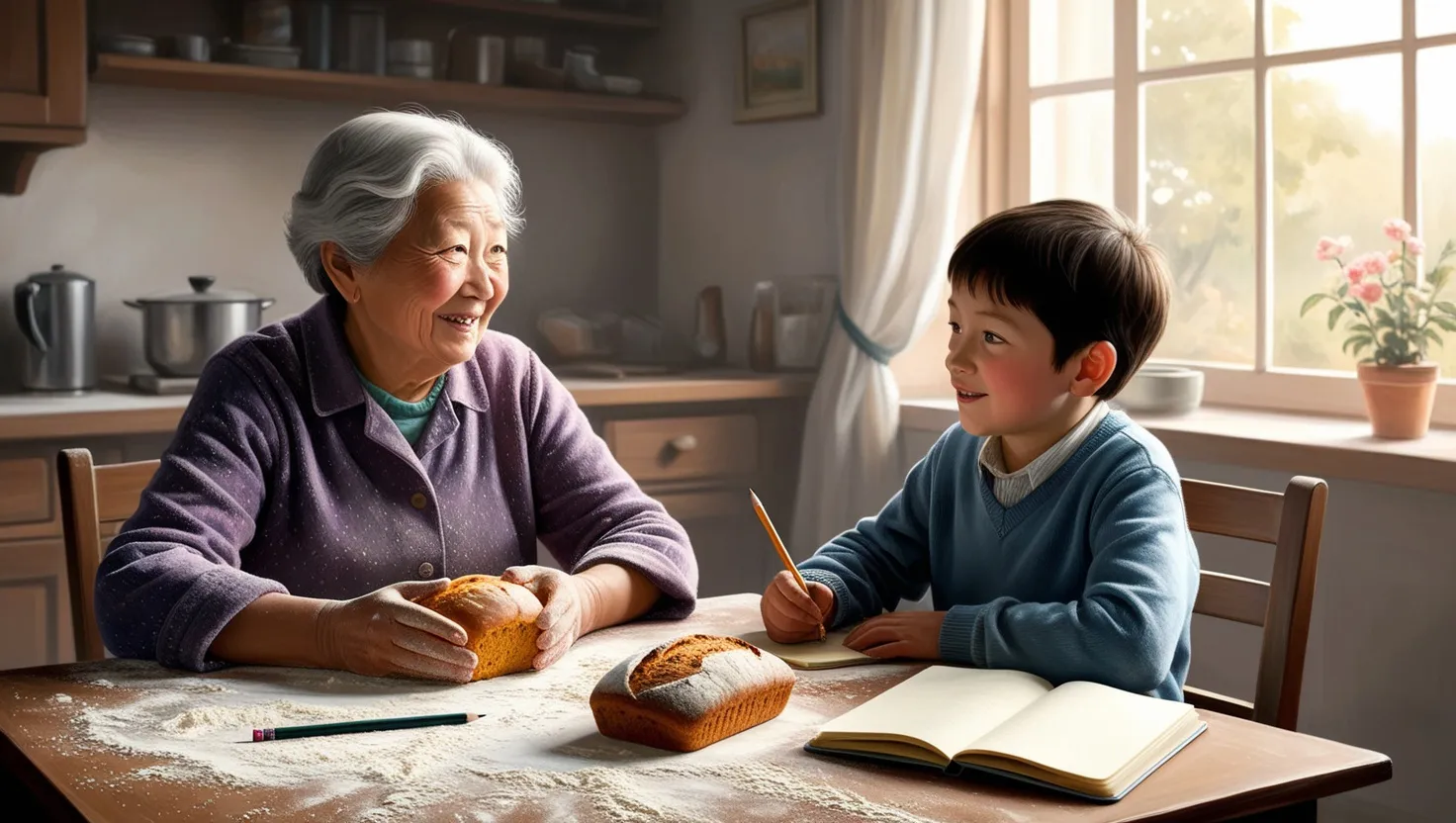
There is a kitchen somewhere in the world — warm, flour-dusted, smelling of yeast and butter — where an old woman and a small boy are solving one of the most complicated problems in economics. They don’t have a whiteboard. They don’t have a degree. They have a bread pan, a pencil, and a notebook with a rooster on the cover.
This is their classroom. And honestly, it might be better than most.
My grandmother used to bake bread every Sunday. Same recipe, same hands, same oven. But somewhere around my tenth birthday, I started noticing that the loaf looked… smaller. I asked her about it. She didn’t say “inflation.” She said, “Flour got expensive, so I used a little less.” That sentence, simple as it was, explained something that textbook chapters couldn’t quite reach.
That’s the heart of this story — a widowed baker named Mara and her grandson Leo, who sit at their kitchen table every week and watch the world’s biggest financial force play out in their bread pan.
What is inflation, really?
Here’s the simplest way to think about it. Imagine you have ten rupees and a samosa costs five rupees. You can buy two samosas. Next year, the same samosa costs seven rupees. Now you can only buy one — and you’ll get three rupees back that you don’t know what to do with. Your money didn’t change. The world around it did.
That’s inflation. Your money buys less. Not because someone stole from you. But because prices moved and your wallet didn’t.
“Inflation is taxation without legislation.” — Milton Friedman
Mara understands this without the fancy word for it. She just calls it “the squeeze.” Every week, the squeeze gets a little tighter.
Here’s something most people don’t know about bread specifically — it has been used as an informal inflation tracker for centuries. Ancient Rome had something called the “bread dole.” When the government couldn’t afford to keep bread prices stable, social unrest followed almost immediately. The French Revolution was partly triggered by bread prices becoming unbearable for common people. Bread isn’t just food. It’s a political and economic thermometer.
Mara, without knowing any of this history, is carrying on a very old tradition. She is measuring the economy one loaf at a time.
So how does Mara’s story actually work week to week?
Each Monday, she buys her ingredients. She writes down every price in Leo’s rooster notebook. Flour. Yeast. Salt. Butter. Eggs. Week one, the loaf is full-sized — tall, golden, generous. Week three, butter has gone up slightly, so she trims a tablespoon. Week seven, flour costs more, so the loaf is narrower. The recipe is the same. The effort is the same. The loaf just keeps getting smaller.
Leo is the one who starts asking questions. Why is the loaf smaller? Because butter costs more. Why does butter cost more? Because the cows need feed. Why does feed cost more? Because fuel prices went up and transport got expensive.
Pull one thread. The whole sweater moves.
Have you ever noticed how one price going up seems to make everything else go up with it?
That’s not a coincidence. It’s called a “price cascade.” When fuel costs rise, everything that moves — food, medicine, clothes — gets more expensive. Economists call this “cost-push inflation.” It starts not with extra money in people’s pockets, but with the cost of making and moving things going up.
There’s another kind too — “demand-pull inflation.” That’s when everyone suddenly wants the same thing at the same time. Think of what happened to hand sanitizer in 2020. Demand exploded. Supply didn’t. Prices shot up. Mara and Leo experience a quieter version of this whenever a festival approaches and everyone starts buying flour and butter at the same time.
“The first panacea for a mismanaged nation is inflation of the currency; the second is war. Both bring a temporary prosperity; both bring a permanent ruin.” — Ernest Hemingway
One of the most interesting things Mara does — without being taught to — is adjust her recipe instead of her expectations. This is actually a smarter response to inflation than most adults manage. She doesn’t go into debt to maintain the size of her loaf. She doesn’t pretend the loaf is the same when it isn’t. She just adapts.
Economists call this kind of adjustment “real-term thinking.” You stop measuring your life in money and start measuring it in what you can actually get. A loaf isn’t worth what it cost last year. It’s worth what it costs you today. And today, it costs more, so you get a little less.
But here’s the thing no one tells you about inflation: it doesn’t hit everyone equally.
If Mara owned the flour mill, inflation would actually help her. Producers — people who make or own things — often benefit from rising prices because they can charge more for what they sell. It’s the buyer, the person at the end of the chain with a fixed amount of money, who feels the squeeze hardest.
Widows on fixed incomes. Retired grandmothers. People on government pensions. They feel every percentage point of inflation in their bones. Their income doesn’t rise with prices. Only their bills do.
This is why Mara’s story matters. She isn’t an abstract statistic. She’s a real person (or close enough) whose Sunday loaf is a weekly report card on how the economy is treating her.
Leo, being a child, asks one question that cuts right through all the complicated theory: “Grandma, are we going to be okay?”
Mara’s answer is quiet and practical. She says they’ll eat smaller slices. They’ll share more carefully. They’ll stop wasting the heel of the loaf. They’ll find a way.
That answer is actually a form of what economists call “demand adjustment.” When people can’t afford the same quantity, they buy less, consume less, or find substitutes. It’s rational. It’s dignified. And it usually works — slowly, uncomfortably, but it works.
“Beware of little expenses. A small leak will sink a great ship.” — Benjamin Franklin
Have you ever looked at a product at the grocery store and thought — wait, this seems smaller than before?
You probably weren’t imagining it. There’s a sneaky cousin of inflation called “shrinkflation.” Instead of raising the price, companies make the product smaller. Same packet. Same price. Less inside. Mara’s loaf isn’t exactly shrinkflation because she’s choosing to use less — but the effect on Leo’s plate is the same. He gets a smaller slice.
Shrinkflation is particularly clever because most people don’t notice it immediately. They see the same price and feel safe. It takes a Leo — someone looking carefully, comparing week to week, writing it down in a rooster notebook — to catch it.
What Mara and Leo are doing together, sitting at that kitchen table with their pencil and their prices, is something called “financial literacy in context.” The best financial education doesn’t happen in a classroom with a projector. It happens when someone you love explains why dinner is a little smaller tonight and trusts you enough to tell you the real reason.
Most children are shielded from money conversations. Parents say “we’re fine” when they’re not, or “it’s adult stuff” when the child is already affected by it. Mara doesn’t do that. She shows Leo the notebook. She explains the math. She makes him part of the solution.
That is worth more than any textbook chapter on monetary policy.
There is something quietly beautiful about the way this grandmother and grandson find warmth in smaller portions. The loaf gets smaller, but the table doesn’t feel emptier. They sit closer. They talk more. They notice more. Leo starts helping Mara track prices at the market. He becomes her research assistant, her co-economist, her partner in the weekly audit of their small life.
“Not everything that can be counted counts, and not everything that counts can be counted.” — William Bruce Cameron
So what does a shrinking loaf of bread actually teach us about inflation?
It teaches us that inflation isn’t an abstraction. It doesn’t live in central bank reports or academic papers. It lives in kitchens. It lives in the gap between what you could afford last month and what you can afford this month. It lives in the moment you decide to use one tablespoon less of butter and call it a recipe adjustment.
It teaches us that the most honest measure of an economy isn’t a GDP number. It’s whether the people at the bottom of the chain — the Maras of the world, the fixed-income widows, the careful bakers — can still make the loaf. Still set the table. Still feed the grandchild looking up at them with big, trusting eyes.
The bread keeps getting smaller. But Mara keeps baking. And every week, Leo writes the prices down in a rooster notebook, learning more about the world than he knows.
That’s not a small thing. That might be the whole thing.