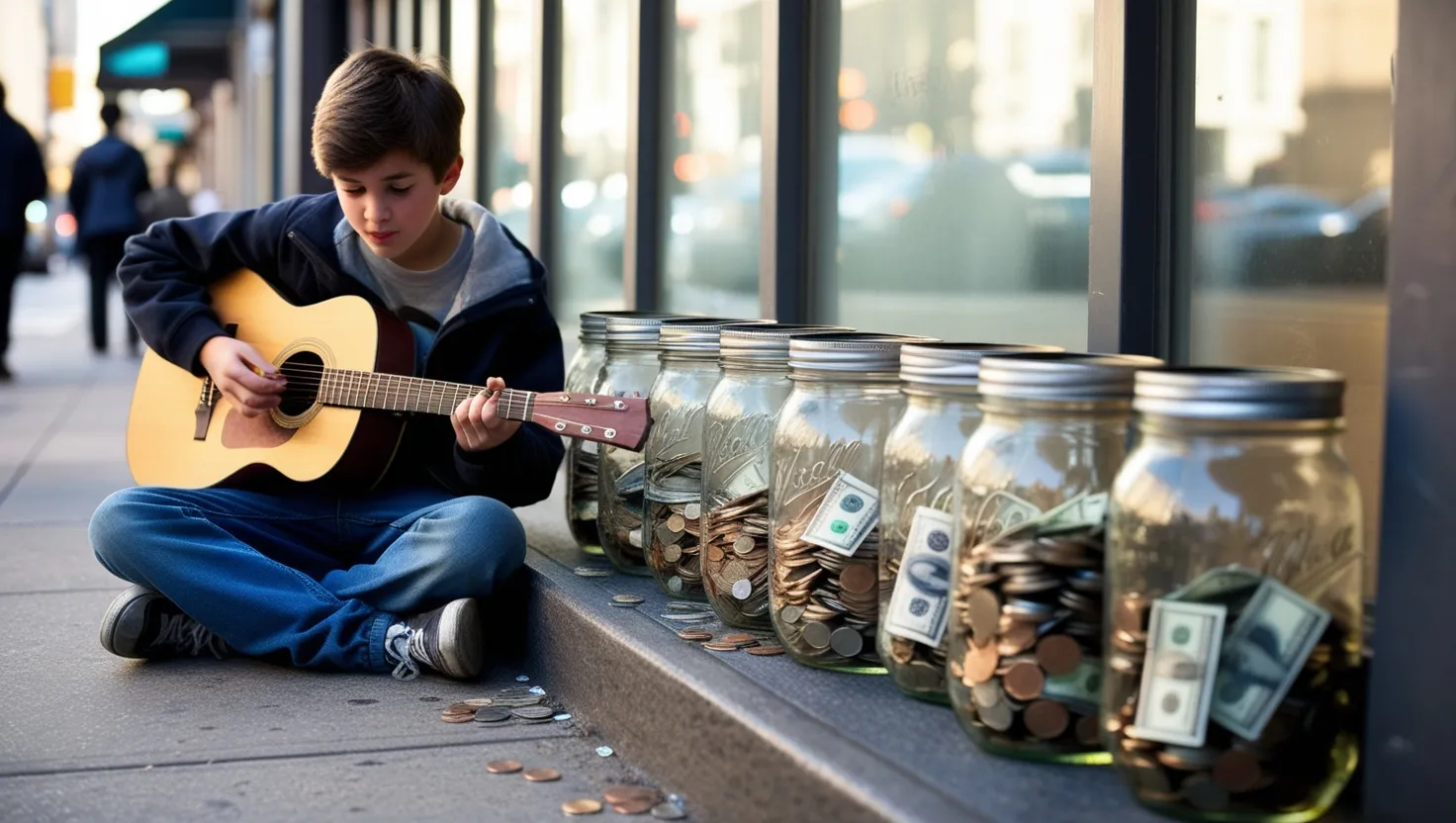
Money for a school trip sounds small, right? A few notes and coins in a jar. But in this episode idea, that small habit quietly teaches one of the most powerful money skills there is: planning for what is coming, instead of panicking when it arrives. I want to walk you through this father and daughter story like you are sitting at the kitchen table with them, so you can see exactly how a “trip fund” becomes a simple, friendly way to learn about sinking funds, peace of mind, and even love.
Picture this: every Sunday evening, a dad and his young daughter sit at the table with a cheap notebook, a couple of colored pens, and a little container labeled “Trip Fund.” Nothing fancy. No apps, no spreadsheets. Just the two of them, the jar, and a goal. The school has sent a note home: in three months, there’s a class trip that costs more than the family can pay in one go without stress. Instead of saying, “We’ll see” or secretly worrying, the dad says, “Let’s plan for it together.” Right there, a money lesson is born without a lecture.
At this point, you might be thinking, “Why not just pay it when the time comes?” That is exactly why so many people feel broke all the time. Big costs show up like surprise visitors, even when they were clearly invited months before. A school trip. Car insurance. Holiday gifts. They don’t appear out of nowhere, yet they always feel sudden if the money has not been set aside ahead of time. The dad in this story is doing something different. He is turning a future problem into a weekly ritual.
There is a simple idea at the heart of this: sinking funds. That phrase sounds technical and boring, but it is actually just a fancy name for this trip jar. You decide on a future expense, you break it into small weekly amounts, and you “sink” money into a separate little pile until you are ready. If the trip will cost 120 and you have 12 weeks, you need 10 each week. That is all. No magic. No advanced math. Just divide, set aside, repeat.
Now, here is where it becomes more than math. The daughter sees money not as a mysterious thing that randomly appears and disappears, but as something she can prepare for. Each week, she adds a coin or two from her pocket money. The dad adds some from his paycheck. They count together. They write the new total in the notebook. They cross one more week off. That small act says, “We are not victims of money. We are planners.” Have you ever noticed how different you feel when you are the one in control of the plan, even if the numbers are small?
One of the most underrated parts of this story is the feeling they both get. Most people think saving is all about sacrifice, about saying no to fun. But with a clear, exciting goal, saving can feel like a countdown to something good. Instead of anxiety, there is anticipation. Instead of, “How will we ever pay for this?” they ask, “How many weeks left until we hit our goal?” Those are two very different questions, and they shape how a child thinks about money for years.
In a way, the jar is just a physical form of hope. Each coin whispers, “We’re getting closer.” For a child, this is powerful. Many kids only see adults stressed about money: angry talks, bills, and “We can’t afford it.” This trip fund flips the script. The message becomes, “We can’t pay all at once, but we know what to do. We start early. We go step by step.” That is financial confidence built at home, not in a classroom.
Now, let’s talk about the bond between the father and daughter. Money talk in most homes is secret or tense. But in this episode, money talk becomes quality time. They might turn it into a tiny ceremony: “Trip Fund Time!” every Sunday after dinner. Maybe the daughter decorates the jar with stickers from old trips they took. Maybe she draws a little thermometer on a page and colors in another level each week. Have you ever noticed that the simple routines you repeat with someone often become your best memories?
Here is a famous line that fits this moment well:
“Wealth consists not in having great possessions, but in having few wants.” – Epictetus
The father is not promising his daughter endless money. He is showing her how to want something, plan for it, and wait. That waiting is training. In a world of “buy now, pay later,” this quiet patience is almost rebellious. It says, “We don’t have to swipe a card and worry later. We can take our time and arrive ready.”
There is also a hidden lesson here about numbers and emotions. The daughter learns that big prices become less scary when you break them down. Imagine she looks at the school letter and sees “120.” To her, that might feel huge. But when Dad helps her see it as “10 a week,” it becomes something they can actually do. Have you ever faced a bill, felt your chest tighten, and then relaxed when someone helped you split it into smaller parts?
Sinking funds might sound like a trick only adults with extra money can use, but this story shows the opposite. It is more important for families who feel tight. When money is limited, surprise expenses hurt more. A broken phone, a school uniform, a birthday party gift. By slowly feeding small amounts into separate jars or digital pockets, families can soften the shock. The trip fund is just one episode, but the principle quietly applies to everything.
This is where the episode can add an unconventional twist. Maybe the father doesn’t only talk about the numbers. He also asks his daughter small reflection questions each week: “What else in life could work this way? What if we saved for something kind for someone else? What if we created a ‘kindness fund’ or a ‘dream fund’?” The trip fund then becomes a doorway into intentional living, not just budgeting.
We can also show how this trip fund changes their conversations around spending. Say the daughter wants a toy at the supermarket. Instead of just saying “no,” the dad might ask, “Do you want that toy more than you want your trip?” She might think for a moment and say, “No, I’d rather put the money in the jar.” That decision is priceless. Nobody forced her. She linked a small sacrifice today to something bigger tomorrow. How often do adults still struggle with that exact choice?
Another great quote fits perfectly here:
“Do not save what is left after spending, but spend what is left after saving.” – Warren Buffett
This dad is living that idea on a tiny scale. Trip money goes in first each week, then they think about the rest. The daughter learns that saving is not an afterthought; it is the first move. Over time, this simple order can change the whole financial story of a person’s life.
There is also an emotional safety net growing in the background. Imagine the dad loses a few work hours one month and money becomes tight. Because they planned early, they are not scrambling at the last minute to find the full trip amount. They might slow down extra spending, but the core plan is safe. The daughter sees that planning ahead is not just about getting nice things; it is about feeling secure when life throws small problems at you.
Have you ever noticed that money fights often come from surprise, not from lack? Two people can handle low income better than high income with chaos. By normalizing these little weekly check-ins, the father is teaching: “We face money together. We plan together. We adjust together.” That sense of team is a quiet protection against shame and secrecy later in life.
Now, let’s zoom out. The idea of sinking funds can feel abstract in a standard financial lesson. In this story, it is concrete, even childlike. A labeled jar. A fun ritual. A countdown. That is the magic of storytelling in personal finance: it turns cold terms into warm images. You remember the label on the jar, not the definition in the textbook. You remember the feeling of dropping in the coin, not a graph in a report.
To keep the episode engaging, the father might share tiny stories from his own past with money. Maybe he once missed a school trip himself because the money was not there. Maybe he bought something too quickly and regretted it. He can turn those past mistakes into guidance, without shame. Would you rather your child learns about saving from a credit card bill at 25, or from a safe little jar at 8?
Another quote can deepen this moment:
“Someone is sitting in the shade today because someone planted a tree a long time ago.” – Warren Buffett
The trip fund is a tiny tree. The shade is the calm they feel months later when the payment deadline arrives and they simply say, “It’s covered.” The daughter might not fully realize it yet, but this is her first tree.
There is also a subtle point many people miss: the trip fund creates shared anticipation. It is not only the daughter looking forward to the trip. The dad is too, not just because she will have fun, but because they built it together. Each week, they imagine what she will see, what she will do, who she will sit with on the bus. The money they save is tied to specific, vivid images, not just numbers on a page. Have you ever noticed how much easier it is to save when you can picture the goal clearly?
This emotional link matters for behavior. When saving feels like taking money away from “today you” for some vague “future you,” it is easy to give up. In this story, “future you” is not vague. It is the version of the daughter laughing on the trip, sending Dad a photo, coming home with stories. Every coin in the jar becomes a small “yes” to that future moment.
Now, how can this episode sneak in even more learning without sounding like school? The dad might gently introduce the idea that they could have not saved and instead borrowed. Maybe he says, “Some people would put this on a card and then pay it back slowly, plus extra.” Then he shows her how that “extra” (interest) means the trip actually costs more. He does not need to scare her, just show a clear comparison: “We pay a bit now each week, or we pay more later with stress. Which sounds better to you?”
This way, the trip fund is not just about saving; it is about avoiding unnecessary debt. The daughter learns that planning is not only about getting what you want, but also about dodging traps. many adults never get taught that distinction clearly.
Another quote supports this lesson well:
“A budget is telling your money where to go instead of wondering where it went.” – John C. Maxwell
In the simplest form, their weekly ritual is a tiny budget meeting. They are telling a small slice of their money, “You will go to this trip, not to random snacks or toys.” The daughter sees money as something she can direct, not just something that vanishes.
As the episode nears the trip date, there is a beautiful scene to show. The jar is full. The notebook line for the final week is checked off. They sit together, count the total one last time, and realize they have enough—maybe even a little more. What do they do with the extra? This is another chance to shape values. Do they keep a few notes as “souvenir money” for the daughter to spend on the trip? Do they start a tiny “next goal” fund right away? Do they donate a small part? Each choice sends a quiet message about what money is for.
Let’s turn this back on you for a second. If you had a small sinking fund running right now for just one thing—a bill, a treat, a gift—what would it be? How would you feel if, instead of dreading that cost, you were watching it get easier each week? You do not need to be good at math. You do not need a big salary. You just need a jar, a decision, and a habit.
One last quote ties the whole spirit of this story together:
“The way we spend our money is a reflection of our values.” – Unknown
In this episode, the father is quietly teaching his daughter that their family values preparation over panic, teamwork over secrecy, and patience over instant gratification. The trip fund is just the stage. The real story is the character being built behind the scenes.
So, when you think of sinking funds, do not picture charts and complex plans. Picture a dad and his daughter at the table, counting coins and dreaming about a school trip. Picture stress slowly replaced by certainty. Picture a child growing up thinking, “If I start early and stay consistent, I can handle big things.” That is the kind of financial story worth telling, and retelling, in every home—even the ones that feel like they have very little to start with.