India's Air Pollution Crisis: 5 Government Policies That Can Actually Protect You
Discover India's top 5 air pollution policies — from NCAP to GRAP — and learn how to protect your health, claim EV subsidies, and hold authorities accountable.
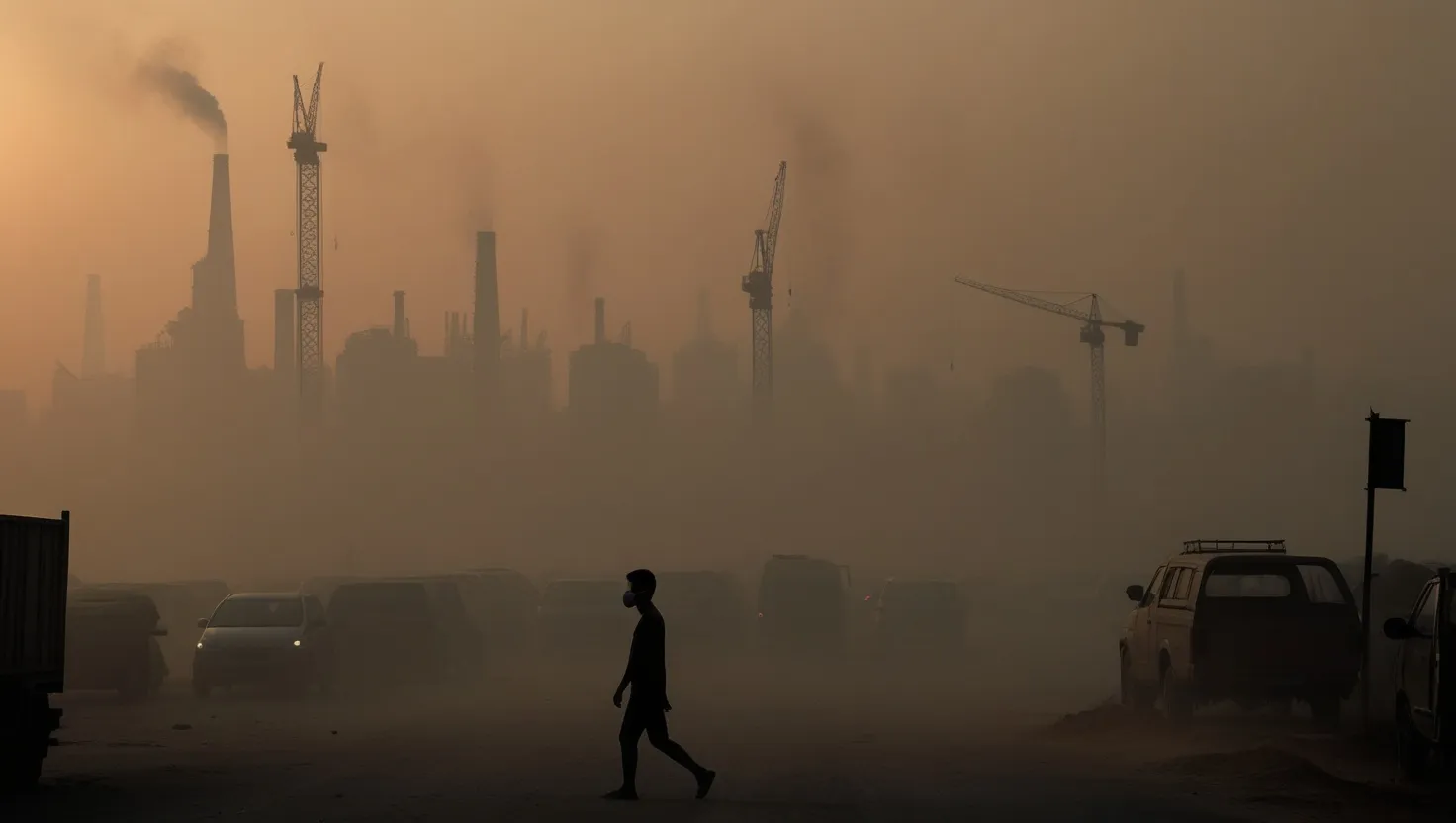
India’s air is in trouble. If you’ve ever stepped outside on a winter morning in Delhi, Kanpur, or Patna and felt that sharp sting in your throat, you already know what I’m talking about. That haze sitting over the city isn’t fog. It’s a cocktail of vehicle exhaust, factory smoke, burning fields, and construction dust. And millions of people breathe it every single day without a second thought.
But here’s something most people don’t know — the Indian government has actually put in place some serious policies to fight this problem. The issue isn’t always the absence of rules. Sometimes it’s awareness. Most people have no idea these policies even exist, let alone how to use them to protect themselves or hold authorities accountable.
So let me walk you through five of the most important ones, what they actually mean in plain language, and what you personally can do with that information.
“The air is the most important thing in life. You can go days without food or water but you can’t go minutes without air.” — Unknown Environmental Advocate
Think of the National Clean Air Programme, or NCAP, as India’s official promise to clean up its act. Launched in 2019, it set a target to reduce particulate matter — specifically PM2.5 and PM10 — by 40% in 132 of the most polluted cities by 2026. PM2.5 particles are tiny. We’re talking about particles 30 times smaller than a human hair that go straight into your lungs and bloodstream.
What makes NCAP different from older environmental plans is that it actually names specific cities and holds local governments responsible for results. Cities like Lucknow, Agra, and Varanasi have city-specific action plans under this programme. Money was allocated — over 4,400 crore rupees — to fund everything from real-time air quality monitoring stations to mechanised road sweeping machines.
Here’s what you can do with this: check whether your city is on the NCAP list. If it is, your municipal corporation is legally required to report air quality improvements. You can file a Right to Information request asking what actions have been taken under NCAP in your ward. Most people don’t know this option exists.
Have you ever wondered why your car from 2003 and a brand-new one from 2022 look similar on the outside but are completely different on the inside in terms of pollution?
That’s where BS-VI emission norms come in. BS stands for Bharat Stage — India’s version of vehicle emission standards. Think of it like a pollution report card for engines. BS-I was the first standard introduced in 2000. Each stage got stricter. BS-VI, which kicked in across India from April 2020, is the strictest yet and is roughly equivalent to the Euro-6 standards used in Europe.
BS-VI vehicles emit up to 80% less nitrogen oxide and almost eliminate sulphur particles compared to BS-IV vehicles. That’s not a small difference. That’s the difference between breathing relatively cleaner air and breathing what’s essentially slow poison on a traffic-heavy road.
“We do not inherit the earth from our ancestors; we borrow it from our children.” — Antoine de Saint-Exupéry
Here’s something most people miss: if you’re buying a used vehicle, always ask for the Registration Certificate and check which BS standard the vehicle is registered under. If you live in a city and someone is trying to sell you a BS-III vehicle, you should know that these vehicles are banned from operating in many urban areas. You’re not just making an environmental choice — you’re also protecting yourself from a legal and financial headache.
And if you drive an older vehicle, get it checked for pollution under control certificates regularly. Many cities now have roadside emission testing. Don’t wait to be caught.
Now let’s talk about electric vehicles, because this is where things get genuinely interesting — and where real money is sitting unclaimed.
The FAME-II scheme — Faster Adoption and Manufacturing of Electric and Hybrid Vehicles — is the Indian government’s second phase of push to get people off petrol and diesel. It was launched in 2019 with a budget of around 10,000 crore rupees and extended multiple times because it was genuinely working. Under this scheme, if you buy an electric two-wheeler, three-wheeler, or electric bus, you get a direct subsidy that reduces the purchase price.
For example, electric two-wheeler buyers were getting subsidies of up to 15,000 rupees per kilowatt-hour of battery capacity. On a practical level, this meant the price of many electric scooters dropped by 20,000 to 40,000 rupees at the point of purchase. Not a coupon you redeem later — the price you see at the showroom is already reduced.
What most buyers don’t do is check whether the specific model they’re buying is approved under FAME-II. Not all electric vehicles qualify. The government maintains an updated list of approved models. Before you walk into any showroom, go to the FAME India portal or ask the dealer specifically: “Is this model FAME-II approved?” If they hesitate or seem unsure, that’s a red flag.
Also check your state government’s additional EV subsidies. States like Maharashtra, Delhi, and Tamil Nadu offer subsidies on top of the central scheme. In some cases, you can stack both and get a very significant reduction.
“What we are doing to the forests of the world is but a mirror reflection of what we are doing to ourselves and to one another.” — Mahatma Gandhi
Now let’s talk about the one policy that actually gets activated when the air becomes an emergency. It’s called GRAP — the Graded Response Action Plan — and it’s one of the most specific, structured pollution-response systems in the country.
GRAP divides Delhi-NCR’s air quality into four stages based on AQI levels. Stage 1 kicks in when AQI is between 201 and 300. Stage 4, the most severe, activates when AQI crosses 450. Each stage has a specific list of actions — banning construction, stopping certain industries, closing schools, restricting trucks from entering Delhi, halting coal use in small factories.
The reason GRAP matters to you directly is simple. When Stage 3 or Stage 4 is declared, you have legal grounds to demand that your employer allow work-from-home arrangements. Schools are required to shift to online mode. And you can report violations — a truck running in Delhi during a GRAP Stage 4 ban, a construction site operating when it shouldn’t — using the SAMEER app or the 311 app in Delhi.
Most people see the GRAP announcement as background noise. Treat it as a personal health alert instead. Download the SAFAR app or the AQI India app. Set alerts for your city. When AQI crosses 300, wear an N95 mask outside — not a cloth mask, which blocks almost nothing for PM2.5. Plan outdoor activities like morning walks or children’s outdoor sports around real-time AQI data, not just how clear the sky looks.
The last policy is the one that starts outside the city but ends up in everyone’s lungs inside it. Stubble burning — farmers setting fire to crop residue after the harvest season in Punjab and Haryana — contributes significantly to Delhi’s winter pollution spikes. This is not a small contributor. During October and November, satellite images literally show smoke drifting hundreds of kilometres south.
The government launched the crop residue management scheme to address this by subsidising machines like Happy Seeders and paddy straw choppers that let farmers deal with leftover crop material without burning it. These machines are expensive for a small farmer. The scheme provides up to 50% subsidy for individual farmers and 80% for farmer groups or cooperatives.
Here’s the uncomfortable truth most city-dwellers don’t know: a huge part of Delhi’s worst air days are directly tied to decisions made by farmers hundreds of kilometres away. And those farmers burn because burning is cheap and fast — not because they enjoy it.
“In every walk with nature, one receives far more than he seeks.” — John Muir
If you care about clean air and live in a city, one of the most impactful things you can do is support organisations working on agricultural transition — groups that help farmers access the subsidised equipment or connect to markets that buy paddy straw as raw material for paper or bio-CNG production. Your 500-rupee donation to such an organisation may do more for your city’s winter air than anything else.
Here’s my final point, and it’s a simple one.
Policies only work when people know about them and use them. The NCAP exists, but few people file RTI requests demanding accountability. FAME-II subsidies exist, but buyers don’t verify model eligibility. GRAP stages are declared, but people still walk outside during Stage 4 days without masks. Stubble management machines are subsidised, but awareness among farmer communities remains limited.
You don’t need to be an expert or an activist. You just need to know what’s available and use it. Check your city’s AQI before you step out tomorrow. Ask your vehicle dealer the right questions before you sign anything. Look up whether your city is in the NCAP list. And next time pollution is all anyone is talking about, you’ll actually have something real to say about what’s being done — and what still needs to happen.