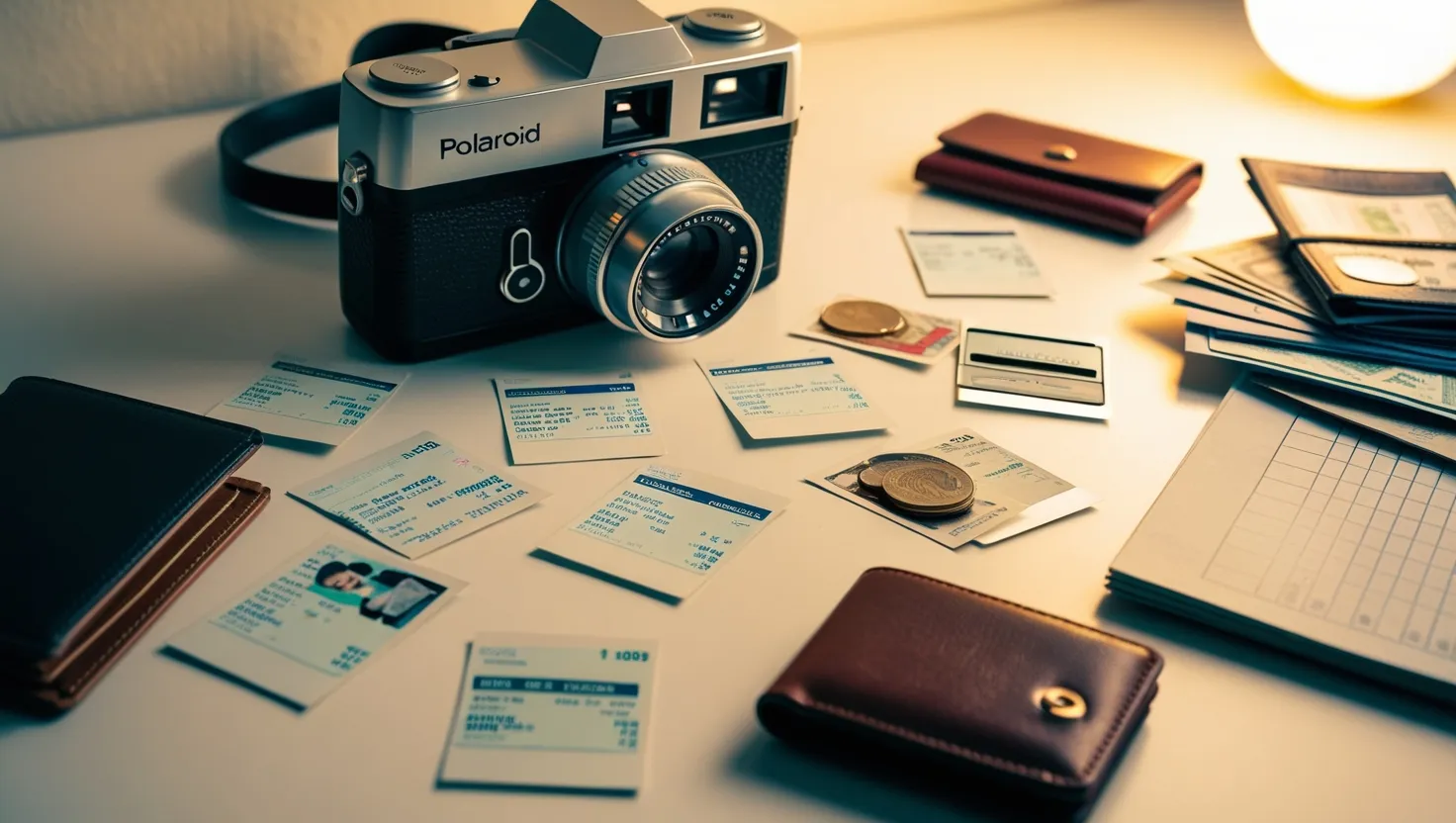
Imagine waking up one day and realizing that yesterday is a blur. You can’t remember where you put your wallet, how much money you spent, or even if you paid your bills. This is the reality for many people living with memory loss. For a young man named Alex, this was his daily struggle. But instead of letting it consume him, he found a unique way to navigate his financial life—using Polaroid photos. Each snapshot became a key to his forgotten world, teaching him the power of financial record-keeping while helping him piece together his identity.
The story begins with Alex, a 32-year-old graphic designer, who was diagnosed with early-onset memory loss. Simple tasks like balancing his checkbook or remembering his monthly expenses became overwhelming. He felt like he was losing control, not just of his finances, but of his life. One day, while cleaning out his attic, he stumbled upon an old Polaroid camera. Intrigued, he decided to put it to use. He started taking pictures of everything related to his finances—receipts, bank statements, and even the physical bills he paid. At first, it seemed like a quirky experiment. But soon, those Polaroids became his lifeline.
“It’s funny how a single photo can hold so much meaning,” Alex said. “Each one is a snapshot of a moment I would have otherwise forgotten.”
The process was simple yet profound. Every time Alex made a financial decision, he documented it with a Polaroid. He’d write a note on the back, describing what the image meant. Over time, these photos created a visual journal of his financial life. He could flip through them and see patterns—where he spent too much, where he saved, and even moments of financial missteps that taught him valuable lessons. It wasn’t just about the money; it was about reclaiming his sense of self.
“The camera became my second brain,” he explained. “It’s like I’m rebuilding myself, one photo at a time.”
What’s fascinating about this approach is how it taps into the power of visual memory. Studies have shown that images can trigger recall in ways that words alone cannot. For Alex, the Polaroids weren’t just records of transactions; they were anchors to his past. A photo of a coffee shop receipt reminded him of a conversation with a friend. A snapshot of a grocery store checkout brought back memories of cooking meals for his family. Each image told a story, and those stories helped him reconnect with the person he used to be.
But it wasn’t just about the past. The Polaroids also helped Alex plan for the future. By reviewing his photos, he could identify spending habits and make adjustments. For instance, he noticed he was spending too much on takeout and decided to start meal prepping instead. He also discovered that he had a tendency to overspend during emotional moments, so he started setting aside a small “emotional budget” for those times. The photos gave him a clear, tangible way to track his progress and make better decisions.
“I used to feel like my life was slipping through my fingers,” he said. “Now, I have something to hold onto.”
Another unexpected benefit of this method was its emotional impact. Memory loss can be isolating, but the Polaroids gave Alex a way to share his experiences with others. He started showing the photos to his family and friends, explaining the stories behind them. It opened up conversations about his condition and helped them understand what he was going through. In a way, the photos became a bridge between his inner world and the people who cared about him.
“It’s like I’m showing them a part of myself that I couldn’t put into words,” he said.
Of course, the process wasn’t without its challenges. There were times when Alex forgot to take a photo, or when he couldn’t remember what a particular image meant. But he didn’t let those moments discourage him. Instead, he saw them as opportunities to learn and adapt. He started setting reminders on his phone to take photos and carrying a small notebook to jot down additional details. Over time, the system became second nature.
“It’s not perfect, but nothing in life is,” he said. “What matters is that it works for me.”
As Alex continued his journey, he began to see his memory loss in a new light. It wasn’t just a limitation; it was an opportunity to reimagine his relationship with money and identity. The Polaroids taught him to be more mindful, to live in the moment, and to appreciate the small details that make up a life. They also gave him a sense of control in a situation that often felt chaotic.
“Memory loss is like a puzzle with missing pieces,” he said. “But every photo I take is a piece I can put back into place.”
In the end, Alex’s story is a testament to the power of creativity and resilience. When faced with a challenge, he didn’t give up; he found a unique solution that worked for him. His Polaroid project is more than just a financial tool—it’s a way of reclaiming his narrative, one photo at a time.
So, what can we learn from Alex’s experience? Perhaps it’s that even in the face of adversity, there’s always a way forward. Sometimes, all it takes is a little creativity, a lot of patience, and the willingness to see things from a different perspective. And who knows? Maybe there’s a Polaroid camera waiting in your attic, ready to help you tell your own story.
“Every picture is a reminder that I’m still here, still living, still growing,” Alex said. “And that’s something worth holding onto.”