The Hidden Power of Shipping Containers: How a Steel Box Secretly Controls Global Trade and Prices
Discover how shipping containers secretly control prices, supply chains, and global trade. Learn what smart businesses know about freight logistics today.
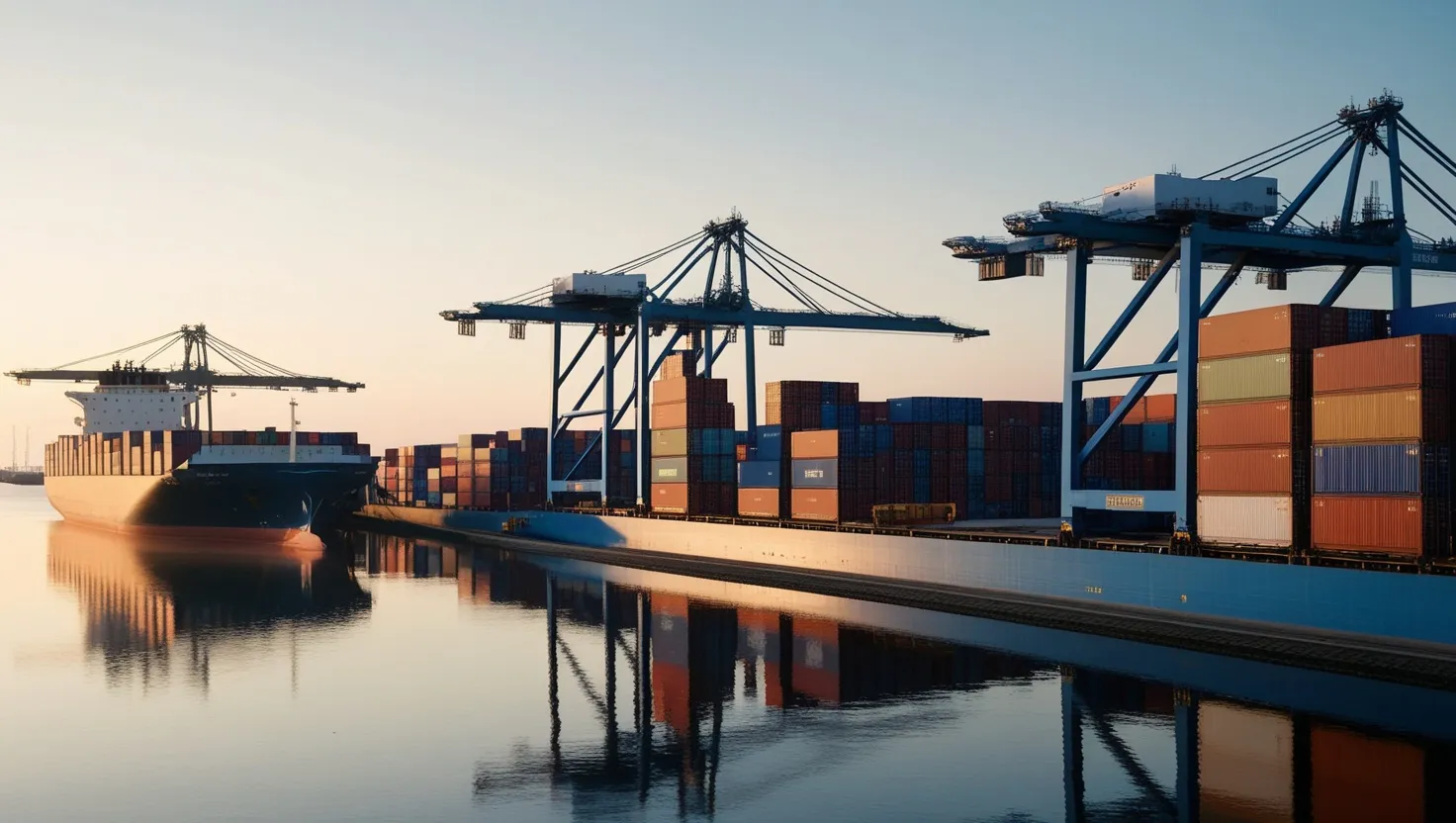
Let me ask you something. What do a sofa from IKEA, a banana from Ecuador, and your new phone have in common? They all spent weeks locked inside a steel box that you’ve probably never thought about twice. That box is the shipping container, and it quietly runs the entire global economy. Most people picture world trade as planes, satellites, or some digital cloud moving goods around. Actually, it’s a rusty metal rectangle, roughly the size of a school bus, that decides who wins and loses in business.
I want to walk you through five ways this unglamorous box still writes the rules of commerce today. Stick with me, because once you see this, you can’t unsee it.
The Box That Decides Your Prices
Here’s something that surprises people: the price you pay for sneakers or a blender has less to do with the cost of materials and more to do with the cost of moving a container across the ocean. Freight rates on containers swing wildly. In 2021, the cost to ship a container from Asia to the US west coast jumped from around $2,000 to over $20,000. That’s a tenfold jump, and companies had to either eat the cost or pass it to you.
Malcolm McLean, the trucking entrepreneur who invented the modern shipping container in 1956, once said, “Nobody wants to carry freight; what they want is to move the freight from where it comes from to where it has to go.” That simple idea, that nobody cares about the box itself but everyone cares about what happens because of it, explains why container rates quietly fuel inflation across the world. Have you ever noticed a price hike on something totally unrelated to shortages? Check the shipping lanes first.
Hidden Costs Nobody Talks About: Chassis and Congestion
Everyone talks about ships and ports, but almost nobody talks about chassis, the wheeled frames that carry containers on trucks after they leave the port. Sounds boring, right? But a shortage of chassis can leave a $40,000 container sitting idle at a port for days, racking up fees and delaying everything behind it.
Port congestion works the same way. When ships stack up outside Los Angeles or Rotterdam, waiting weeks to dock, it’s not just annoying, it’s expensive. Every extra day a ship waits costs companies real money, and that cost eventually lands in your shopping cart.
Here’s the interesting twist though: smart companies turn this chaos into opportunity. Firms that understand container flow details, like which ports have chassis shortages or which routes have less congestion, can route around problems that cripple their slower competitors. This is not glamorous knowledge. It’s logistics nerdery. But it works.
Isn’t it strange that the companies who win are often not the ones with the best product, but the ones who understand the boring plumbing of global trade better than anyone else?
Why Factories Are Moving Closer to Home
For decades, the rule was simple: manufacture wherever labor is cheapest, usually somewhere far away, then ship it to customers. But container costs and delays have changed that math. Nearshoring, the practice of moving production closer to the end customer, is growing fast because the container math no longer always favors going halfway around the world.
Mexico’s manufacturing sector has seen huge growth in recent years, partly because US companies realized that saving a few dollars on labor in Asia doesn’t matter if shipping costs eat up those savings and then some. Container economics are rewriting the map of where factories exist, not glossy marketing campaigns or trade agreements.
Peter Drucker, the famous management thinker, once wrote, “Supply chain management is, above all, the management of interfaces.” He said that decades before nearshoring became trendy, but it’s exactly what’s happening now. Companies are redrawing their entire interfaces, closer, shorter, simpler, because the container box made long-distance shipping unpredictable.
Bananas, Flowers, and the Rise of Containerized Agriculture
Here’s a fact that might blow your mind: refrigerated containers, called “reefers,” have quietly created entire industries. Without them, you wouldn’t have fresh flowers from Kenya sitting in your local grocery store, or avocados from Peru showing up ripe in February.
Containerized agriculture lets farmers in developing countries access global markets they never could before. A flower farm in Ethiopia can now compete with Dutch greenhouses because reefer containers keep products fresh for the three-week voyage. This has opened niche markets worth billions of dollars, all riding on a technology that barely gets any attention outside shipping circles.
Doesn’t it seem odd that a piece of insulated steel changed what ends up on your dinner table? Next time you eat an out-of-season fruit, thank a container engineer, not a farmer.
How Giants Like IKEA and Amazon Turned Boxes Into Weapons
IKEA figured out something brilliant decades ago: flat-pack furniture isn’t just about saving you assembly headaches, it’s about fitting more product into every single container. More furniture per box means lower shipping cost per item, which means IKEA can price products lower than competitors who ship bulky pre-assembled furniture. Their entire design philosophy was shaped around container math.
Amazon has taken this even further. The company has chartered its own ships and leased its own containers to avoid depending on carriers during chaotic periods like the pandemic shipping crisis. While smaller competitors were stuck waiting months for available container space, Amazon simply built its own fleet-like capability. This gave them a 15 to 20 percent cost advantage over competitors who were still playing by old container-leasing rules.
Here’s a quote that captures this well. Sun Tzu wrote, “In the midst of chaos, there is also opportunity.” Replace “chaos” with “container shortage,” and you’ve got a perfect summary of how Amazon dominated supply chains while everyone else panicked.
What You Can Actually Do With This Information
So maybe you’re thinking, that’s great for billion-dollar companies, but what does this mean for smaller businesses or even just regular people trying to understand global trade? Start small. Pick one product, literally any product your business sells or buys, and trace its container journey. Where was it made? What ports did it pass through? How many times did it change hands?
This exercise sounds simple, but it reveals hidden costs and delays that most business owners never bother to check. Charles Darwin once said, “It is not the strongest of the species that survives, but the one most responsive to change.” In container logistics, that’s painfully true. Businesses that track and adapt to shipping realities outperform those that assume shipping is just a fixed background cost.
The Box Nobody Notices, Yet Everyone Depends On
Here’s a final thought to leave you with. We live in a time obsessed with digital technology, apps, algorithms, and artificial intelligence. Yet one of the most powerful forces shaping global business remains a boring steel box invented almost 70 years ago. It doesn’t have an app. It doesn’t have a flashy interface. It just sits there, stacked ten high on a cargo ship, quietly determining whether your coffee costs $4 or $8, whether your job exists in Ohio or Vietnam, and whether that gift you ordered arrives on time or three weeks late.
Next time you see a stack of containers at a port, or even just pictured on a news report about supply chains, take a second look. That ordinary box has more influence over your daily life than most headlines you’ll read this year. The companies who understand this, who map their container journeys and treat logistics as strategy rather than background noise, consistently outperform those who treat shipping as an afterthought.
So here’s my question for you: now that you know this, will you still see shipping containers as boring steel boxes, or will you start noticing the hidden war being fought over freight rates, chassis shortages, and ocean routes every single day? Because whether you notice it or not, that steel box is still writing the rules of the global economy, one voyage at a time.