The Hidden Rules That Separate the Next Pandemic From Global Catastrophe
Explore how the IHR, COVAX, and global health treaties shape pandemic response. Learn why transparency saves lives — and what happens when it fails.
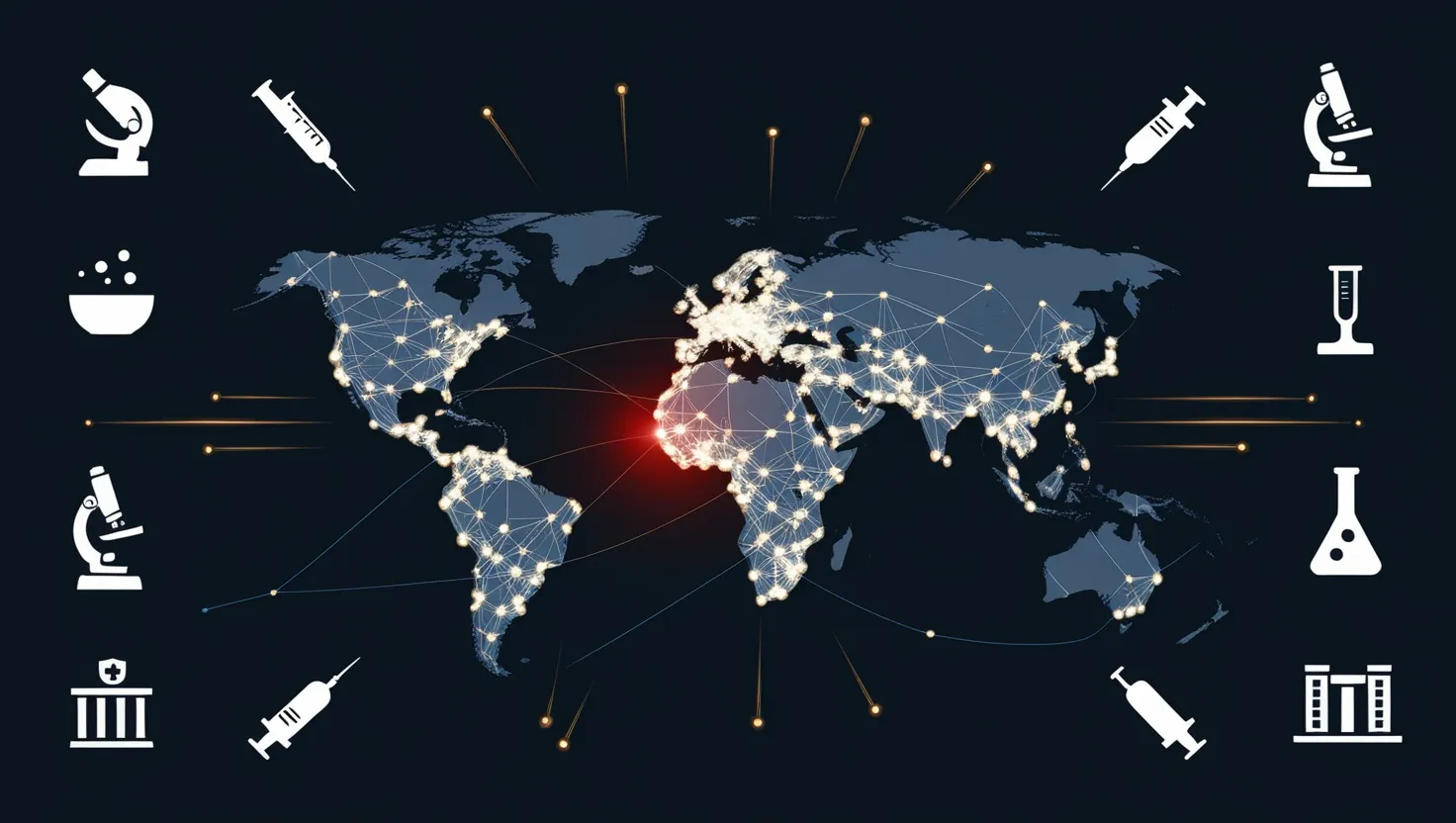
When a new disease appears in a remote village somewhere in Southeast Asia, most people assume it stays there. It doesn’t. Within hours, infected travelers board planes. Within days, hospitals in three continents start seeing unusual cases. Within weeks, governments are scrambling. The difference between a local outbreak and a global catastrophe often comes down to a handful of rules most people have never heard of — rules written in conference rooms, negotiated by diplomats, and enforced by nothing more powerful than trust and phone calls.
That should scare you a little. And understanding it should make you pay attention.
The Rulebook Nobody Reads
The International Health Regulations, commonly called the IHR, are a legally binding agreement signed by 196 countries. That’s more countries than are members of the United Nations. Every single one of them agreed to report unusual disease events to the World Health Organization quickly and honestly.
Think of it like a neighborhood watch, except the neighborhood is the entire planet, and some neighbors routinely forget to call in when something suspicious happens.
The IHR was first drafted in the 1960s, but the version countries follow today was adopted in 2005 after the SARS outbreak revealed just how badly the old system worked. SARS spread from China to 29 countries in weeks. The old rules required reporting only four specific diseases. SARS wasn’t on the list.
“Preparedness is not a destination. It is a continuous journey that demands constant vigilance.” — Laurie Garrett, The Coming Plague
So what changed? The 2005 revision introduced something called a Public Health Emergency of International Concern, or PHEIC — pronounced “fake,” which some find darkly appropriate. A PHEIC is the WHO’s highest alarm level. It triggers coordinated international response, temporary recommendations on travel and trade, and enormous political pressure on countries to act.
Here’s the part most people miss: WHO cannot declare a PHEIC on its own whim. A committee of independent experts reviews the evidence, and even then, the Director-General makes the final call. That’s one person making a decision that affects eight billion people. COVID-19 was declared a PHEIC on January 30, 2020. By then, it had already spread silently for weeks.
Why Countries Lie — And Why That’s Predictable
Ask yourself this honestly: if you were the president of a small country and you discovered a new mysterious illness, would you immediately tell the world? Think about what follows. Tourism collapses overnight. Trade partners stop buying your exports. Airlines cancel routes. Investors flee.
This is exactly why countries delay reporting. It’s not always malice. Sometimes it’s panic. Sometimes it’s political pressure. Sometimes the local health system genuinely doesn’t know what it’s looking at.
The IHR rules require countries to build their own disease surveillance systems — labs, trained staff, reporting chains — but they don’t fund it. Low-income countries signed the agreement without the money to actually implement it. Many still report diseases through systems that rely on paper forms, slow mail, and overworked public health officers working from their personal phones.
“The single biggest threat to man’s continued dominance on the planet is the virus.” — Joshua Lederberg, Nobel Laureate
When Ebola appeared in Guinea in late 2013, the first cases were misdiagnosed as cholera. By the time anyone realized it was Ebola, the virus had crossed into Sierra Leone and Liberia. The delay wasn’t deliberate deception. It was a surveillance system with giant holes in it.
COVAX: The Vaccine Experiment That Taught Us Hard Lessons
When COVID vaccines arrived, there were roughly 7.9 billion people on Earth and nowhere near enough doses. Rich countries had already locked up most of the supply through bilateral deals made months before clinical trials were finished. COVAX was the attempt to fix that.
COVAX, run jointly by WHO, GAVI, and CEPI, was designed as a pooled purchasing mechanism. Countries paid in, COVAX bought vaccines in bulk, and lower-income nations got access at reduced or no cost. The idea was elegant. The execution was messier.
Wealthy countries that had invested in COVAX also separately purchased vaccines from manufacturers directly. When doses were scarce, they prioritized their own populations first. Some donated surplus doses, but often close to expiry dates, with short notice, and in quantities that overwhelmed the cold-chain logistics of recipient countries.
Millions of doses were wasted. Some nations received vaccines they couldn’t store, couldn’t distribute fast enough, or couldn’t get communities to accept. Meanwhile, healthcare workers in high-income countries were getting booster doses while frontline workers in Sub-Saharan Africa had never received a first shot.
Does that sound like a functioning global health system to you?
The Agreement That Might Change Everything — Or Might Not
After COVID, WHO member states started negotiating what’s commonly called the Pandemic Agreement or Pandemic Treaty. The goal was simple on paper: agree in advance who gets what, when, and on what terms during the next pandemic.
One of the biggest fights is over pathogen data. When a new virus is identified, the country that finds it shares the genetic sequence with the world. Scientists everywhere use that data to design vaccines and diagnostics. But the country that shared the sequence rarely gets early access to those vaccines. Indonesia raised this issue formally after the H5N1 bird flu outbreak in 2007 and temporarily stopped sharing samples with WHO in protest.
The proposed agreement wants to create a system where sharing samples comes with guaranteed access to medical tools developed from those samples. It sounds fair. Getting countries to agree on the specifics is another matter entirely.
“In the long history of humankind, those who learned to collaborate and improvise most effectively have prevailed.” — Charles Darwin
The treaty is also trying to address something called the One Health approach — recognizing that human health, animal health, and environmental health are connected. Most pandemics in the last century started in animals before jumping to humans. HIV came from chimpanzees. Influenza cycles through birds and pigs. SARS-CoV-2 most likely originated in bats. If we only watch human hospitals for signs of disease, we’re watching the wrong place.
The Global Fund’s Quiet, Unglamorous Work
While the IHR and COVAX get media attention during emergencies, the Global Fund for AIDS, Tuberculosis and Malaria does something less dramatic but arguably more important — it keeps existing pandemics from getting worse.
Tuberculosis kills more than a million people a year. AIDS has killed around 40 million since the 1980s. Malaria kills a child every two minutes. These aren’t historical diseases. They are active, ongoing, and perfectly capable of amplifying when systems break down.
The Global Fund has disbursed over 60 billion dollars since 2002. It works by giving money directly to countries, which design their own programs, then report back. It’s not perfect. There have been cases of misuse and corruption. But the alternative — doing nothing — costs millions of lives.
What’s interesting is that countries with strong Global Fund-supported health programs handled COVID better than those without. When you already have community health workers tracking disease, cold chains for vaccines, and functioning clinics, you have infrastructure to redirect during a new emergency.
What Any of This Has To Do With You
You probably don’t run a government. But you live in one. And the way these systems work depends partly on whether ordinary people push for transparency and speed.
Local disease surveillance means that your city, your district, your neighborhood should have a way to spot unusual clusters of illness and report them fast. That’s not a federal government function exclusively — it’s a local one. It means supporting public health funding in local budgets, which is usually the first thing cut when money gets tight.
Fast official communication means not waiting until something is confirmed to say something is suspected. The old instinct — don’t cause panic — kills people. Transparent early communication, even when information is incomplete, gives people the chance to protect themselves.
“What we do not talk about, we cannot fix.” — Paul Farmer, Infections and Inequalities
The other thing worth knowing: conspiracy theories spread faster than viruses during emergencies, and they do measurable damage. When people stop trusting official health communication, they stop cooperating with containment measures. This is not a small problem. It changes the outcome of outbreaks.
The world’s pandemic rules are not written in stone. They are political agreements between governments that can cooperate or defect depending on what’s convenient. The IHR creates obligations but lacks enforcement teeth. COVAX showed what global cooperation can attempt and where it breaks down. The Pandemic Agreement is still being negotiated. The Global Fund keeps working quietly while the headlines look elsewhere.
The next outbreak is not a hypothetical. It’s a scheduled event on a timeline nobody knows. What changes the outcome isn’t luck — it’s whether the systems built to catch it early actually work, and whether the people running countries decide honesty is better than delay.
That decision, frustratingly, is made in the first 72 hours. Usually by someone under enormous political pressure. Usually with incomplete information. Usually in a room with no cameras.
You’d want them to tell the truth. Make sure they know that’s what you expect.