What a Storm Taught One Mother and Daughter About Saving vs. Investing
Discover how a storm, a money tree, and a piggy bank taught an 8-year-old the difference between saving and investing. Read the lesson that changes how you think about money.
When the Storm Came, So Did the Lesson
There is a particular kind of quiet that follows a storm. The air smells different. Things that were standing are no longer standing. And sometimes, the things you were counting on — the ones you watered, watched, and whispered hopes to — are lying sideways in the mud.
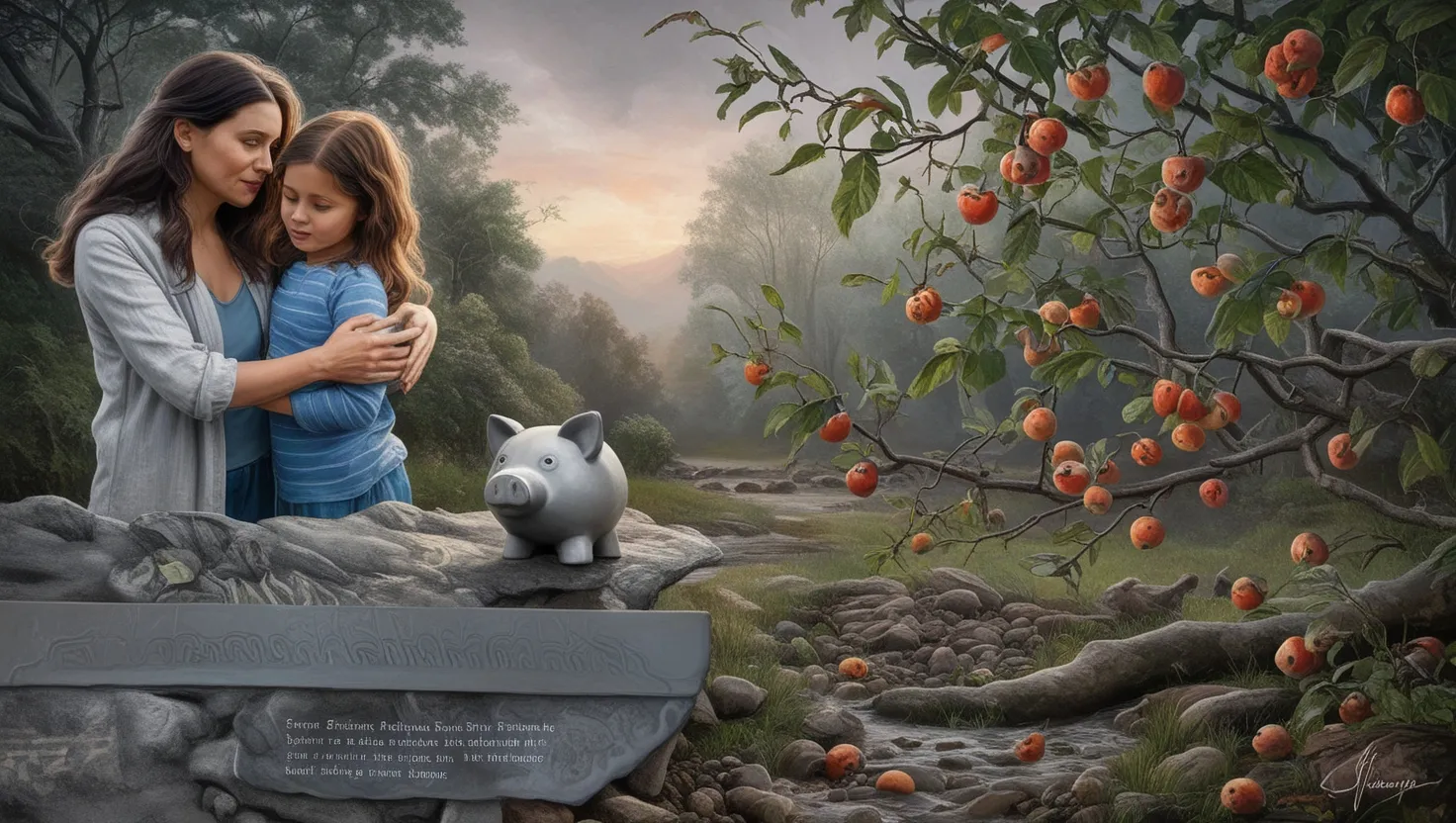
That is exactly where Maya and her eight-year-old daughter, Priya, found themselves one Tuesday morning. Standing in their backyard, staring at a money tree that had dropped almost every single one of its fruit overnight. Not because the tree was bad. Not because they did something wrong. Because a storm came, and storms don’t ask permission.
This is a story about a tree, a piggy bank, and two people learning one of the most honest lessons money has to offer.
Let’s go back to where it started. Six months earlier, Maya had decided she wanted to teach Priya something real about money. Not the cartoon version where coins magically multiply. Not the fairy tale where saving is always safe and investing always wins. Something true.
So they did two things. First, they planted a money tree — a Pachira aquatica, the kind you find in financial offices and feng shui books, symbolising prosperity and good fortune. They treated it like an investment. They researched its needs, bought good soil, chose a sunny spot, and committed to caring for it. Second, Priya decorated a clay piggy bank and they agreed to drop a fixed amount of coins into it every single week, no matter what.
Two choices. One symbolic, one literal. Both intentional.
“Do not save what is left after spending, but spend what is left after saving.” — Warren Buffett
The tree became their metaphor for investing. The piggy bank became their metaphor for saving. And for five months, everything felt wonderful. The tree grew tall. The fruit appeared. Priya checked on it every morning like it owed her something, which, in a way, she felt it did. She had put in the effort. She had done the work. The return felt guaranteed.
That is the first thing worth knowing about investing — and stop me if you have heard a simpler version of this — nothing is guaranteed. Not the stock market, not real estate, not a thriving money tree in a well-tended backyard. Risk is not a warning label on the packaging. Risk is the packaging.
Have you ever watched a child experience their first real financial disappointment? It is not like adult disappointment. Adults have learned to numb themselves with practicality. Children feel it in their whole bodies. Priya sat down on the wet grass and stared at the dropped fruit for a long time. Then she asked Maya the most important question of the entire morning.
“Why did it fall?”
Maya could have given the weather report. She could have talked about wind speed and root depth and the particular fragility of fruit on the verge of ripeness. Instead, she said something much more useful.
“Because we took a risk, and sometimes risk means losing.”
“Risk comes from not knowing what you are doing.” — Warren Buffett
Here is what most people get wrong about teaching children — or even themselves — about money. They treat risk like something to be afraid of. They describe it as dangerous, reckless, something only gamblers and fools chase. But risk is not the villain. Misunderstanding risk is the villain.
Maya explained it this way. When they planted the tree, they were making a bet. A calculated one, sure. But still a bet. The tree might grow beautifully and produce more fruit than they could eat. Or a storm might come. Both possibilities lived inside the same decision.
The piggy bank, on the other hand, was different. Every coin they dropped in was still there. No storm could touch it. No bad season, no market crash, no unexpected Tuesday morning could reduce what was inside that clay pig. The trade-off? The piggy bank would never produce more than they put in. There was no fruit. There was no growth. Just safety.
So which one is better? The tree or the piggy bank?
This is the question Maya wanted Priya to sit with, because the honest answer is neither — and both.
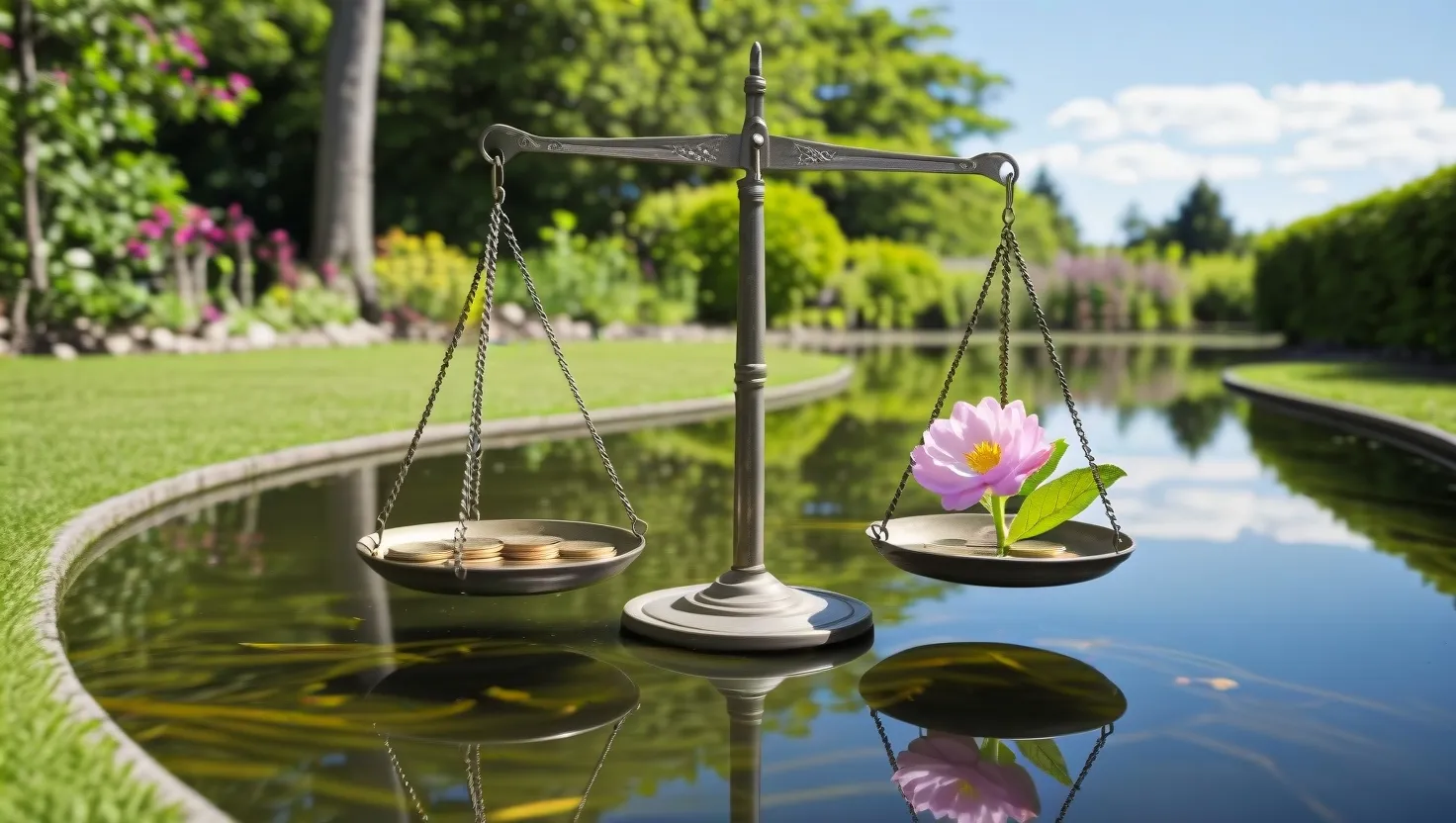
Think of it this way. Imagine you need water in a desert. You have two choices. One is a bottle of water in your hand, sealed, reliable, not going anywhere. The other is a water source a mile away — bigger, more than enough to survive on — but you have to walk through uncertain terrain to get there.
The bottle in your hand is your savings. It is certain, accessible, immediate. The water source in the distance is your investment. Bigger potential, but the walk carries risk.
A person who refuses to move and only drinks from the bottle will eventually run out. A person who throws away the bottle and runs toward the distant source might collapse before they get there. The person who sips carefully from the bottle while walking steadily toward the source? That person has a real strategy.
“The individual investor should act consistently as an investor and not as a speculator.” — Benjamin Graham
Here is a lesser-known fact that most financial education skips entirely. The original concept of a “piggy bank” has nothing to do with pigs. In medieval Europe, people stored coins in clay pots made from a type of orange clay called “pygg.” Over centuries, as the word evolved and craftsmen started making the pots pig-shaped as a visual joke on the name, the pig stuck. The meaning — a safe, physical place to store your money — stayed exactly the same.
Savings, at their core, have always been about protection. Not growth. Protection.
Investing, on the other hand, has always been about accepting uncertainty in exchange for the possibility of more. Every investment instrument — stocks, bonds, property, even a money tree — carries the same invisible fine print: this might not work.
What Maya did brilliantly that morning — standing in wet grass with a disappointed eight-year-old — was not console Priya with false promises. She did not say “the tree will grow back, it will be fine.” She said something better.
“Let’s check the piggy bank.”
They went inside. They opened the clay pig. They counted every coin. Every single one was there. And Priya — because children understand metaphor better than adults give them credit for — felt something shift.
“So the piggy bank didn’t lose anything,” she said.
“No,” said Maya. “But it also didn’t give us extra.”
Priya thought about this for a moment. Then, with the blunt logic of an eight-year-old who has just experienced her first lesson in portfolio theory, she said: “So we need both.”
“It’s not how much money you make, but how much money you keep, how hard it works for you, and how many generations you keep it for.” — Robert Kiyosaki
The balance Priya stumbled onto that morning is something most adults spend decades trying to find. Financial advisors call it asset allocation. Economists call it diversification. Maya and Priya called it “tree and pig money,” which, honestly, is a more memorable way to remember it.
The principle is simple. Keep some money safe, even if it does not grow. Put some money to work, even if it might shrink. Do not put everything in one place. Do not love the growth so much that you forget the safety. Do not love the safety so much that you give up on the growth.
The storm was not the enemy. The storm was the teacher.
After the storm, Maya and Priya pruned the money tree carefully. They talked about which branches looked like they could produce again next season. They dropped coins into the piggy bank that same afternoon, same as they always did, without drama or fanfare. Two rituals. Two different kinds of courage.
One takes the courage to wait for growth while accepting the possibility of loss. The other takes the quieter, less glamorous courage of consistency — doing the small thing, the safe thing, the boring thing, week after week, rain or shine.
Does your money live in just one place right now? Is it all in the tree, all in the pig? Or have you found the wet grass moment that made you rethink the whole arrangement?
The storm already came for Maya and Priya. For most of us, it is either already here or already on its way. The question is never whether you have a tree and a piggy bank. The real question is whether you remember, when the fruit is on the ground, that the pig is still full.