What Grandma's Garden Taught Me About Diversification That No Business School Ever Could
Discover the powerful life and business lesson hidden in a grandmother's garden — why spreading your bets beats perfection every time. Read the full story.
When Grandma’s Garden Taught Me More Than Any Business School Could
There is a particular kind of wisdom that does not come wrapped in a certificate. It arrives on a Tuesday morning, barefoot in the soil, with dirt under the fingernails and a weathered hand guiding yours toward a small hole in the earth. My grandmother never used the word “diversification.” She probably would have laughed if you said it to her. But she practiced it every single season, with the quiet confidence of someone who had watched enough harvests — and enough failures — to know exactly what she was doing.
She did not plant just tomatoes. She never had.
Ask yourself this: if you put all your money in one bank account and that bank collapsed, what would you have left? Nothing. Now replace “bank account” with “tomato plant” and “bank collapse” with “aphid infestation.” The math is exactly the same.
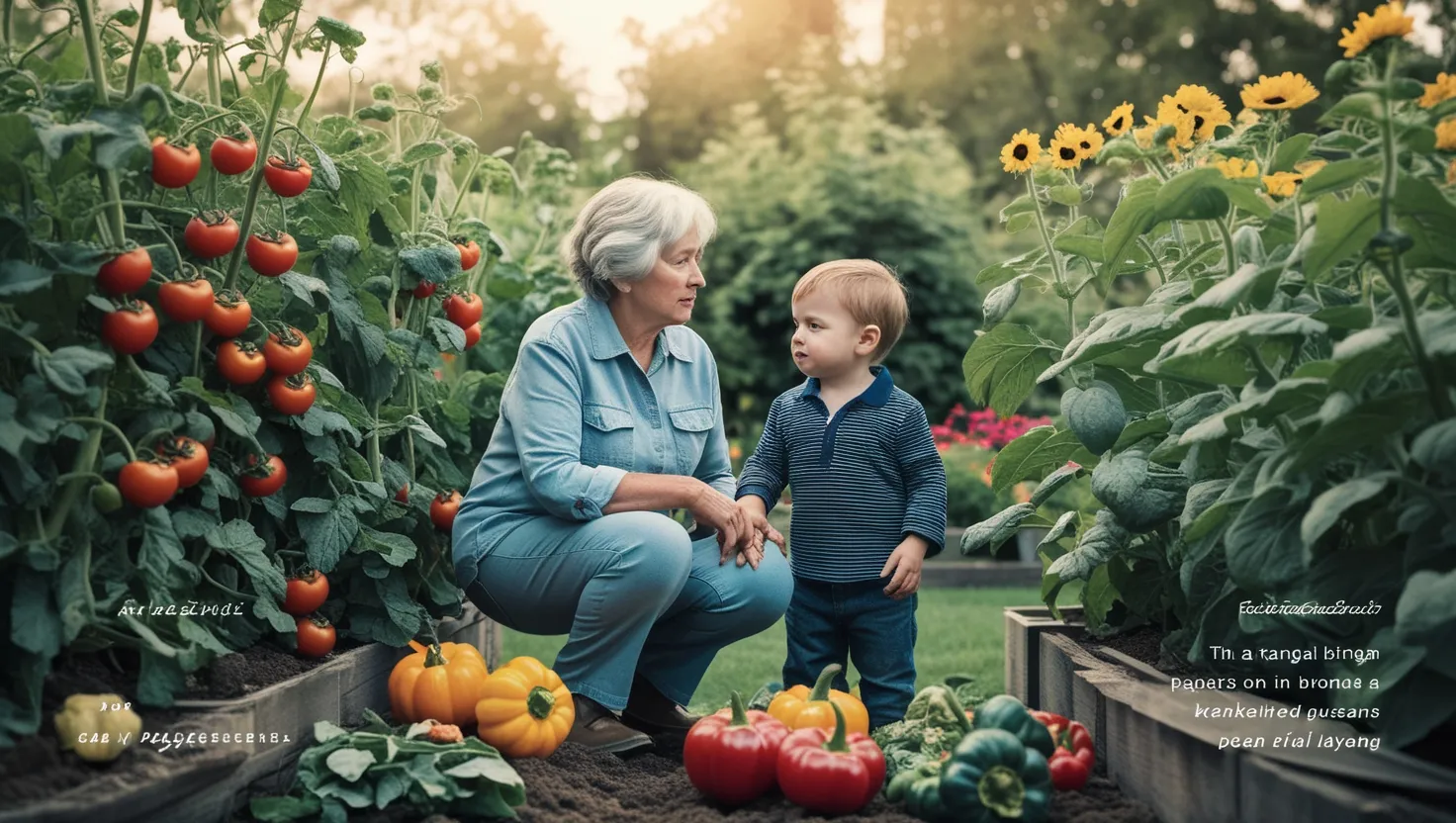
My grandmother’s garden was small by most standards — maybe thirty feet long, fifteen feet wide. But inside that rectangle of earth, she managed to grow tomatoes, beans, squash, basil, marigolds, peppers, carrots, and a stubborn little patch of sunflowers that she insisted had no practical purpose but made her happy. When I was about eight years old, I asked her why she bothered with all of it. Why not just grow more tomatoes since we ate them the most?
She looked at me for a long moment before answering. “Because tomatoes don’t know when to stop getting sick.”
“The poetry of the earth is never dead.” — John Keats
That summer, she was right. A wave of blight swept through the neighborhood. You could smell it — that sour, damp rot that settles over a garden like a bad mood. Every single tomato plant on our street went dark and shriveled within two weeks. The neighbors who had planted rows and rows of tomatoes stood in their backyards with their hands on their hips, looking at what amounted to a season of wasted effort.
Our garden? The tomatoes suffered too. But the beans were fine. The squash was enormous. The peppers had no idea anything was wrong. We ate well that summer, not because we had more of one thing, but because we had enough of many things.
This is the quiet power of spreading your bets. Not flashy. Not complicated. Just sensible.
Here is something most people do not know: the Irish Potato Famine of the 1840s was not just a food disaster — it was a diversification disaster. Almost the entire country had shifted to a single variety of potato, the Irish Lumper. When a water mold called Phytophthora infestans arrived, it did not need to try hard. One crop, one disease, one catastrophe. Over a million people died. Another million emigrated. A single point of failure, repeated across an entire country, became one of the deadliest agricultural events in modern history.
My grandmother had never studied the Irish Potato Famine. But she understood the lesson instinctively.
What exactly makes a garden — or any system — vulnerable? Uniformity. When everything is the same, everything shares the same weakness. Pests that eat tomatoes do not eat squash. Diseases that attack legumes leave peppers alone. The very differences between plants are what protect the whole garden. A varied garden essentially uses its own chaos as a defense mechanism.
There is a name for this in ecology: polyculture. The opposite of monoculture. Farmers in ancient Mesoamerica used it for thousands of years through a planting system called the Three Sisters — corn, beans, and squash grown together. The corn gave the beans something to climb. The beans fed nitrogen back into the soil. The squash spread wide leaves that blocked weeds and kept moisture in. Three completely different plants, all taking care of each other without any human intervention beyond the original decision to plant them together.
No fertilizer bag required. No expert consultation. Just variety doing what variety does.
“It is not the strongest of the species that survives, nor the most intelligent. It is the one most adaptable to change.” — Charles Darwin
Now think about how this principle shows up in your own life. Do you have one source of income? One skill set? One relationship that you rely on for all your emotional support? One investment? One plan? If any of those single points fails, what happens to the rest of your life?
This is not a scare tactic. It is just the garden logic again.
My grandmother would say it plainly: “Don’t let your whole meal depend on one pot.” She said that so often it stopped sounding like advice and started sounding like a proverb. But strip away the folksy phrasing and what you have is a principle that applies to personal finance, business strategy, mental health, relationships, career planning, and yes, gardens.
One of the most interesting things about diversification is that it feels inefficient in the short term. When the tomatoes are doing beautifully, why bother tending the beans? When the economy is booming, why keep money in low-yield savings? When your job is secure, why spend evenings building a side skill?
Because the season always changes.
My grandmother never once looked panicked during a bad harvest. While neighbors rushed to replant or complained loudly about the weather, she moved calmly between what was thriving and what was not, adjusting her attention without drama. She had built slack into her system. The failing crop was never the whole story because it was never the whole garden.
Slack — the buffer that comes from having more than one option — is one of the most undervalued things in modern life. We are trained to optimize, to focus, to double down on what works. And focus is valuable. But focus without any backup is just fragility wearing the mask of discipline.
“The man who moves a mountain begins by carrying away small stones.” — Confucius
There is also something emotionally important about a varied garden that rarely gets mentioned. When one crop fails, it is still a loss. My grandmother never pretended otherwise. She would stand among the damaged plants and acknowledge it plainly — “Those are gone” — and then she would turn and look at what remained. The loss was real. The grief was brief. The recovery was fast, not because she suppressed the disappointment, but because there was always something else to turn toward.
Psychologists sometimes call this “psychological diversification” — having enough different sources of meaning, joy, and identity that the loss of one does not collapse the whole structure of your sense of self. People who find all their identity in one role — their career, their relationship, their sport — tend to suffer more catastrophically when that one thing disappears. The person who is a parent, a friend, a gardener, a reader, a colleague, and a community member weathers loss differently than the person who is only ever one thing.
My grandmother was many things. The garden was a reflection of that.
Does variety mean chaos? Not at all. Her garden was organized. She knew where everything was, what it needed, and when to harvest it. Variety is not the same as randomness. You can be deliberate about spreading your efforts without losing structure. The goal is intentional variety, not accidental clutter.
She would plan the layout each spring on a piece of paper, thinking about which plants helped each other and which competed for the same nutrients. It was strategic. Unhurried. Patient. She was not just throwing seeds in and hoping — she was designing resilience.
“In every walk with nature, one receives far more than he seeks.” — John Muir
The summer I turned twelve, I finally asked her to teach me properly. We spent three weekends together, and by the end of it I could identify most of her plants, understood which ones to put next to each other, and had planted my own small row of mixed vegetables in the corner she gave me.
That row had three tomato plants, two pepper plants, a zucchini, and some basil. A miniature version of the larger lesson. By August, the zucchini had gotten too big and slightly taken over, the tomatoes were decent, and one pepper plant had done nothing at all. But I had something to eat and something to learn from.
That is the deal with diversification. Not everything thrives. Not everything needs to.
The point is that something always does.