Imagine you’re a farmer staring at your empty fields, wondering why the stuff you spread on the soil to make plants grow strong costs a fortune right now. That’s the fertilizer world we’re diving into today. Five big shifts in how fertilizers are made, sold, and shipped are changing farms everywhere, from your local veggie patch to massive wheat fields across oceans. These changes hit food prices on your grocery shelf, squeeze farmers’ wallets, and even let a few countries pull strings in world politics. Stick with me—I’ll explain it super simple, like we’re chatting over coffee, and I’ll throw in some questions to get you thinking.
Let’s start with the first shift: production is bunched up in just a handful of spots on the map. Picture this—most potash, which helps plants build strong roots, comes from Canada, Russia, and Belarus. Nitrogen, the big booster for leafy growth, relies heavy on China and the Middle East. Phosphates, key for fruits and seeds, flow mostly from China, Morocco, and a few others. Why does this matter to you? If one of those places sneezes, the whole world catches a cold in crop yields.
Think about it: over 80% of the world’s potash comes from three countries. Canada pumps out half, but Russia and Belarus handle another big chunk. What if war or sanctions hit? Farmers in places like Brazil or India, who import almost everything, scramble. I’ve seen reports where one country’s decision to slow mining ripples out, making bread prices jump 20% in months. Ever wonder why your potatoes cost more last summer? Blame the potash mine in Saskatchewan that’s a thousand miles underground.
“Control the food, control the world.” – That’s not from some spy movie; it’s a quiet truth leaders in fertilizer-rich nations live by.
Now, you tell me: if three countries grew 90% of your phone batteries, would you sleep easy? Same with fertilizers. This concentration isn’t new, but it’s getting riskier as weather messes with mines and politics heats up. Farmers are starting to plant “fertilizer-safe” crops that need less, like beans over corn in some spots.
Shift number two: export bans. These countries aren’t dummies—they hoard when their own bellies rumble. Russia cut potash flows in 2022 amid Ukraine troubles, and boom, prices doubled overnight. China does it with phosphates, saying “our farmers first.” Even Canada tweaks rules during shortages. Result? Importing countries like the US or Europe face empty silos right before planting season.
Here’s a wild fact most folks miss: in 2025, China slashed phosphate exports to half their usual, not just for food, but to grab materials for electric car batteries. Farmers in Africa skipped doses, and corn yields dropped 15% in spots. Geopolitics in dirt form. Have you checked your country’s farm news lately? Export curbs aren’t accidents; they’re power plays.
I urge you—watch your government’s trade deals closely. Push for homegrown mines. One farmer I know in Iowa switched half his fields to cover crops that fix their own nitrogen, dodging import drama.
Next up, shift three: prices dance with energy costs. Nitrogen fertilizers need natural gas to make ammonia, the base ingredient. Gas prices spike? Fertilizer bills explode. Europe’s gas crunch post-2022 sent urea prices up 300%. Middle East flares? Same story. It’s like your car gas tied to orange juice prices—nuts, right?
Unconventional angle: US farmers have cheap, steady gas at home, yet import most nitrogen. Why not build plants here? Experts say we could make it cleaner and cheaper than Russia. In 2026, with gas steady, urea might dip 7-10%, but one pipeline hiccup flips that. Question for you: how much of your farm budget goes to energy-fed fertilizers? Cut it by making your own compost brew—mix manure, leaves, and worms for free nitrogen.
“The plow that drove men from the fields was the same that brought prosperity.” – Henry A. Wallace, farmer-turned-VP, reminding us tools like cheap fertilizer built empires but now bite back.
Logistics jams are shift four, and they’re sneaky killers. Ships stuck in the Red Sea, ports clogged in Brazil, trucks delayed by floods—fertilizer rots in warehouses while seeds wait. In 2025, Panama Canal drought slashed shipments 30%, hitting potash hard. Miss planting window by two weeks? Lose 20 bushels per acre.
Lesser-known twist: small ports in Indonesia and Vietnam are booming as backups, but their roads can’t handle volume. Farmers now charter private planes for emergency drops—insane cost, but beats no crop. Ever track a fertilizer ship on your phone app? Try it; you’ll see delays stacking up like traffic jams.
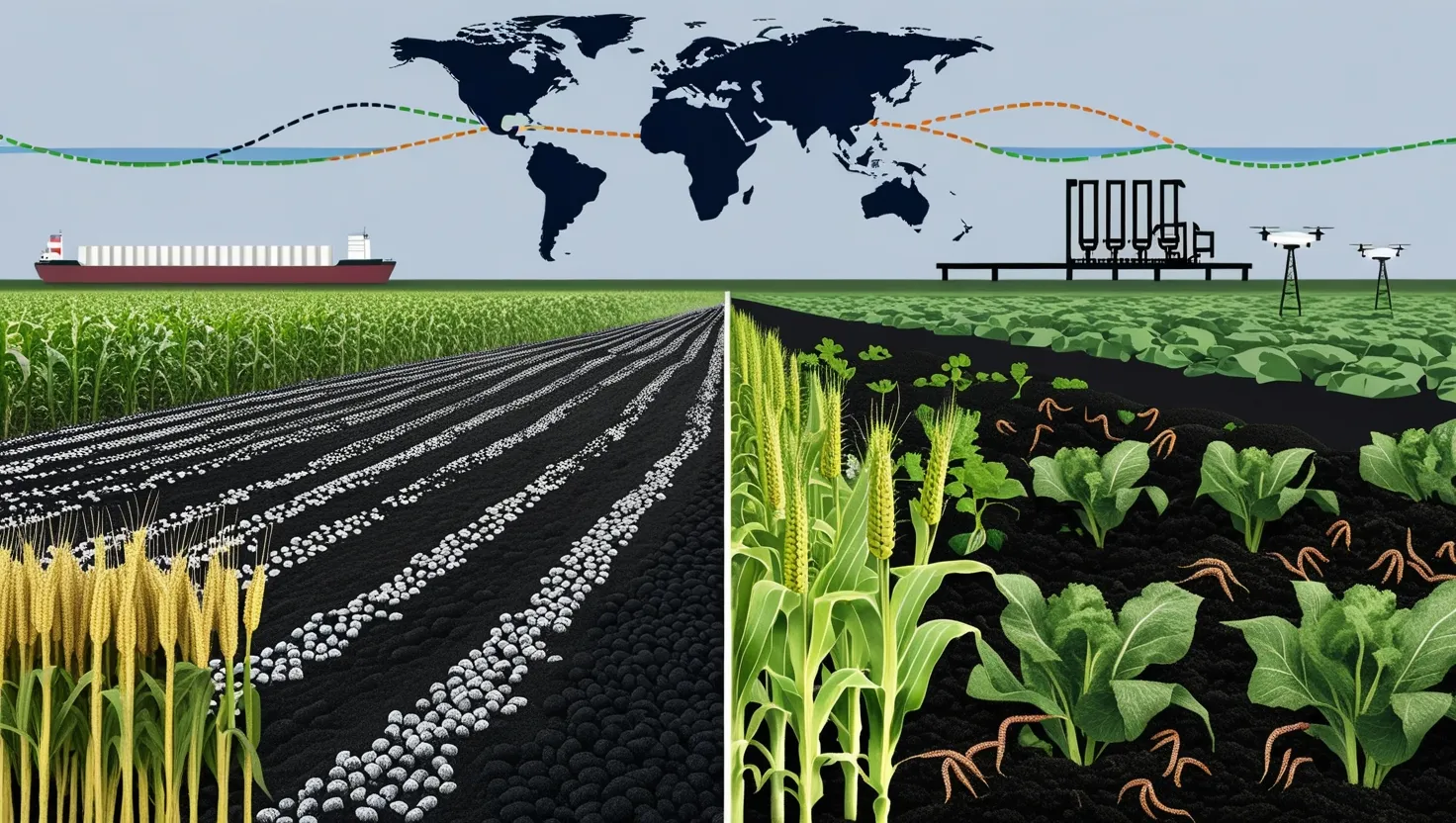
Finally, shift five: the green rush. Sky-high prices and dirty runoff from chemicals push money into bio-fertilizers—bacteria that pull nitrogen from air, straight to roots. Precision farming uses drones to spot exact nutrient needs, slashing waste 30%. Investments hit billions in 2025, with startups turning seaweed into phosphate boosters.
Cool fact: ancient Incas used guano bird poop for perfect soil—no factories needed. Today, regenerative farms mimic that, grazing cows to poop nutrients back in. Brazil’s testing fungal sprays that triple bean yields without chemicals. Governments pour cash here to ditch Russia reliance. What if your backyard veggies grew better with worm tea than store bags?
These shifts aren’t isolated—they mash together. Tight production plus export bans, fueled by gas spikes, jammed by ships, fixed by green tech. Farmers cut use 10-20% lately, risking yields but saving cash. Food prices? Up 15% globally since 2022. Farm bankruptcies? Double in import-heavy spots.
Geopolitical leverage is the hidden bomb. Russia wields potash like oil; China phosphates like rare earths. Canada stays neutral but profits huge. Poor nations borrow billions for imports, trapping in debt. Action step for you: stockpile basics now. Mix your own soil tests—kits cost $10, save thousands.
“Agriculture is the most healthful, most useful, and most noble employment of man.” – George Washington, who knew dirt wars before they were cool.
Interactive bit: Imagine no fertilizers tomorrow—what crops survive on your land? Roots like potatoes or cassava laugh at shortages; grains cry.
Zoom into 2026 outlook, since that’s knocking. Prices soften a tad—urea down maybe 9%, phosphates tight but potash ample from Canada ramps. Tariffs lift on some imports, easing US costs. But China holds phosphates for batteries, Europe limps on nitrogen. Farmers, buy forward now; lock low rates before spring spike.
Unique perspective: fertilizers mirror crypto volatility—hype, crash, rebound. But unlike Bitcoin, no crop without them. Women-led farms in India pioneer millet revivals, needing half the inputs. Africa’s mushroom farms feed millions fertilizer-free.
I push you: test one green hack this season. Bury fish guts for nitrogen—Native Americans did it, yields pop. Or join co-ops buying direct from mines.
Why care if you’re no farmer? Your burger patty traces to soy fed on potash. Bread from wheat guzzling nitrogen. Milk from cows on alfalfa phosphates. Disruptions mean empty shelves, riots in history books.
Historical nugget: 1970s oil shocks tripled fertilizers, sparking food crises. Today, energy ties repeat it. But innovation flips scripts—gene-edited corn sips 40% less.
Question time: ready to rethink your garden? Skip bags; brew compost tea. Boil weeds, strain, pour—nature’s fertilizer, zero cost.
Economies twist too. US corn farmers lose $50/acre on high inputs; switch to peas, profit soars. Brazil mandates bio-blends now. China builds domestic giants, eyeing Africa mines.
Logistics fix? Rail from Canadian mines direct to US heartland—new lines opening 2026. Green push accelerates: EU taxes dirty nitrogen, boosting bacteria sales 50%.
Farmers adapt wild ways. Ethiopian terraces capture rain-fed nutrients. Australian no-till saves 20% inputs. You can too—mulch heavy, water smart.
“The ultimate goal of farming is not the growing of crops, but the cultivation and perfection of human beings.” – Masanobu Fukuoka, zero-fertilizer guru.
Wrapping shifts’ impact: global hunger edges up as poor farmers skimp. But opportunities bloom—jobs in bio-factories, resilient local foods.
My directive: plant a test plot without store fertilizer. Use manure, ashes, greens. Watch it thrive. Track yields. Share results—prove the shift yourself.
These market moves reshape plates worldwide. Stay sharp, adapt quick. Your next meal depends on it. What’s your first move?
(Word count: 1523)