A car breaking down is not a lesson in finance. It is loud, scary, and expensive. It smells like burnt rubber and panic. Let me walk you through this story in simple words, and then we will pull out the money lessons that hide inside it, especially about one quiet hero: liquidity.
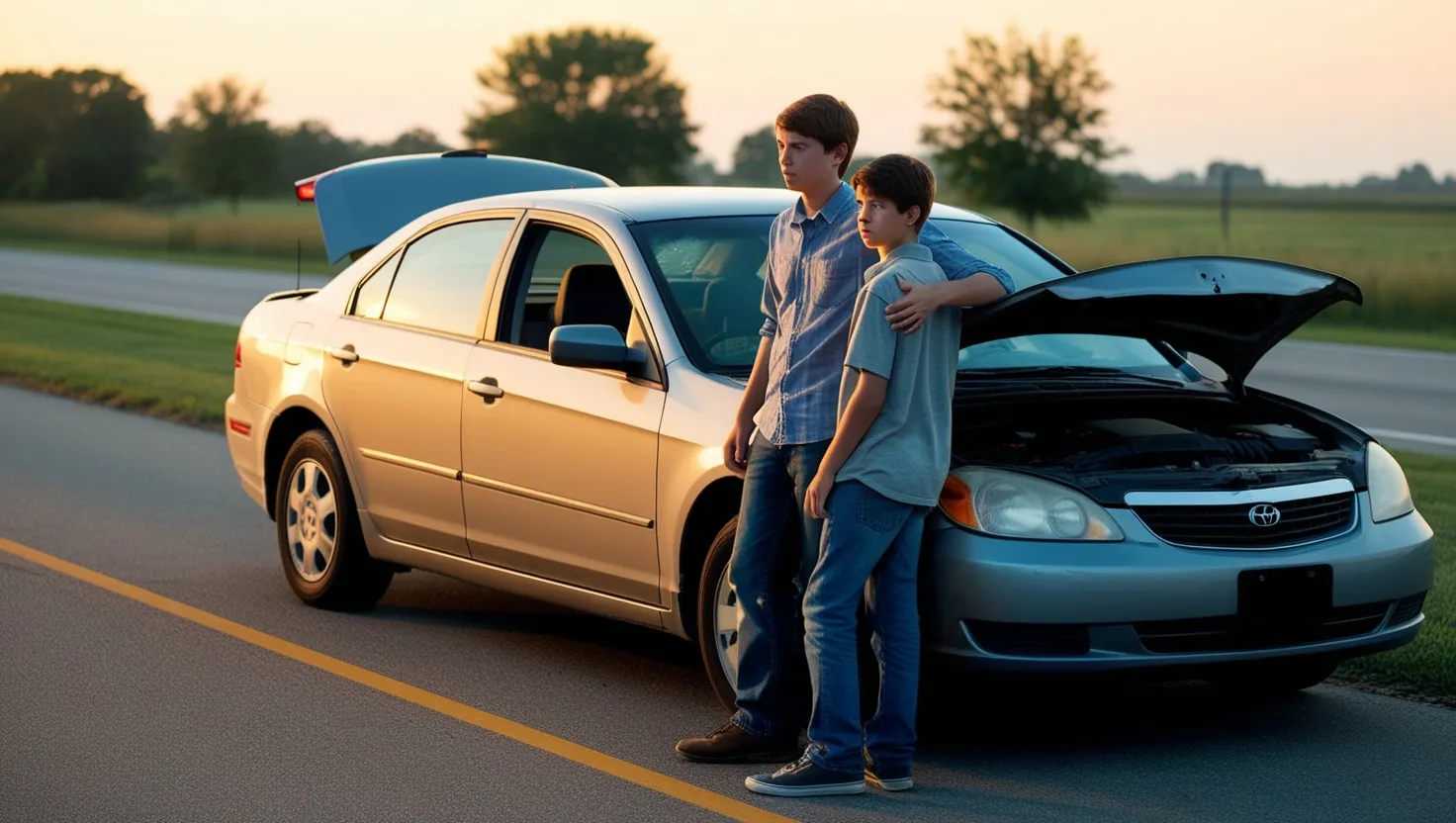
So imagine this. A father is driving his teenage son home from a football game. They are laughing, maybe arguing about who played worse, when suddenly the engine light comes on. The car starts to shake. The steering feels heavy. The father’s hands tighten on the wheel. The son goes quiet.
The car crawls to the side of the road and dies.
In that first minute, you are not thinking about budgets, savings, or interest rates. You are thinking: “We are stuck. At night. On the road. What now?” Have you ever had that kind of moment where your brain jumps straight to the worst possible outcome?
The son looks at his dad.
“Are we in trouble?”
Notice that question. It is not just about the car. It is about money. It is about safety. It is about trust. In a family, money and safety often sit in the same box.
The father takes a slow breath. His heart is racing too, but he remembers something boring he did months ago that suddenly matters a lot: he set up an emergency fund.
A small pile of cash. Easy to reach. Sitting in a simple savings account. Not invested. Not “working harder.” Just…waiting.
Not very exciting, right?
But right now, that sleepy little fund is more useful than any fancy investment.
There is a tow truck to pay for. There is a repair bill coming. There might be a rental car. There might be lost work time. There might even be more surprises. The unknown is what makes people afraid. When you do not know how bad the damage will be, your mind writes its own horror movie.
So the father does something powerful in that moment. He tells the truth.
“We’re not in trouble,” he says. “It’s annoying. It will cost us. But we planned for this. This is exactly why we saved that emergency money.”
The son looks at him like he’s speaking another language.
“You saved…for this?”
“Yes. For stuff like this. Not this exact thing. But for any ‘oh no’ moment.”
Have you ever thought of money not as “more stuff later” but as “less panic now”?
Most people grow up learning money rules in pieces. “Save money.” “Don’t waste.” “Pay your bills.” But they often miss the feeling side of money: stress, fear, shame, pride. In this little scene, the father is teaching the son about a quiet money tool that reduces those heavy feelings: liquidity.
Liquidity just means how fast you can use your money when you need it.
Cash in your wallet? Very liquid.
Money in a simple savings account you can move in minutes? Also very liquid.
Money in a house? Not so liquid.
Money in a long-term investment with penalties to take it out? Also not so liquid.
Here is the strange thing: most of the time, people only talk about growing money. Higher returns. Bigger gains. Smarter investments. But in real life, when your car dies or your job is at risk or your kid needs medicine today, growth is not the first thing you care about.
You care about speed.
You care about access.
You care about not having to sell something at the worst possible time or borrow money at a painful interest rate.
Now picture the next phase of the story. The car gets towed. The mechanic calls the next day with the number nobody wants to hear.
“It’s going to be about 1,200.”
The son’s eyes widen. In his head, 1,200 is a mountain. Maybe it is more than he has ever held at once.
He watches his father’s face very closely. Does he flinch? Does he snap? Does he sigh from that deep place of “I always knew life would punch me in the face”?
Instead, the father pauses, nods slowly, and says, “Okay. Do it. We’ll use our emergency fund.”
Notice something important: the emergency fund is not there to protect the car. It is there to protect the people. Their mood. Their sleep. Their sense that they are not one breakdown away from total chaos.
Have you ever seen an adult explode over a bill that, on paper, is not impossible to pay? Often the bill is not the whole problem. The shock is. The lack of a plan is. The feeling that life is always in control and they are not.
Liquidity is like emotional shock absorbers for your wallet.
Let’s add a famous line here that fits this moment.
“Do not save what is left after spending; instead spend what is left after saving.” — Warren Buffett
The father in our story did exactly that, even if he never heard that quote. He treated saving as a bill he had to pay to himself. Over time, that turned into an emergency fund. And in this tense moment, that habit pays him back, not in interest, but in calm.
Now, let’s focus on the son.
From his point of view, this is not just a car repair. This is his first real lesson in what “being prepared” feels like.
He might have heard adults throw around phrases like “rainy day fund” or “just in case money.” But words do not always stick. Real events do.
So the father does one more smart thing: he lets the son into the process.
“Come sit with me,” he says when they get home. “I want to show you something.”
He opens his banking app.
“See this account? This is our emergency fund. We don’t touch it for holidays. Not for gadgets. Not for fun. Only for moments like today. See the balance? Now see what happens when we move the repair money out.”
They move the 1,200.
“You see that?” the father says. “We’re going to feel this. Our number went down. But we’re not going into debt. We’re not putting this on a card we can’t pay. And next month, we start filling this back up again.”
The son watches the numbers change on the screen.
For the first time, “saving” is not just a command. It is a story with a beginning, a middle, and an end.
“Dad,” he asks, “why don’t we invest all of this instead so it can grow faster?”
That is a fair question. You might even be asking yourself the same thing. If money can grow, why leave some of it in a boring place?
This is where a deeper lesson comes in.
Because liquidity is not about making the most money.
It is about avoiding the worst situations.
Here is another strong line that fits:
“Wealth is not about having a lot of money; it’s about having a lot of options.” — Chris Rock
The emergency fund is pure options.
You do not have to panic-sell investments when the market is down.
You do not have to put car repairs on a high-interest credit card.
You do not have to borrow from friends and feel awkward later.
You do not have to skip needed repairs and drive an unsafe car.
You do not have to pretend it’s fine while your chest feels tight at night.
So the father answers:
“We do invest, but not this part. This money’s job is not to grow. Its job is to be ready. Just like you wouldn’t ask a fire extinguisher to make you money. You just want it full and close by in case your kitchen catches fire.”
Does that picture make liquidity clearer?
In simple words: some money should be fast, not fancy.
The son nods slowly. He still likes the idea of “fast growth.” But now he sees the use of “fast access.”
A strange thing happens over the next few days. The car is still at the shop. The family still has to share rides and deal with delay and frustration. But there is no big fight. There are no whispered arguments at night about “how will we pay for this?” The son does not feel like he has to hide in his room when money comes up.
Instead, he is pulled into the planning.
“Okay,” the father says, “let’s talk about how we refill the emergency fund. I’m going to cut back on ordering food for a while. What could you do?”
“I could put half of my weekend job money in there,” the son says, surprising even himself. “Since it helped us, I kind of want to help it back.”
That small sentence shows a big shift. The emergency fund is no longer an abstract adult thing. It is now a shared shield. A family project. A team effort.
Here is another quote that quietly sits behind this moment:
“The best time to repair the roof is when the sun is shining.” — John F. Kennedy
Most people only think about money when it is raining. Bills, breakdowns, emergencies. But the father started this fund on sunny days. He decided in advance that surprises are normal, not rare. He did not wait for life to punch him to start lifting his guard.
Now, let me ask you something directly.
If your car broke down today, or your phone died for good, or your pet needed the vet, what would you use to pay?
Would it be cash?
A card?
A favor?
A prayer?
Be honest with yourself. There is no shame in your answer. But your answer tells you how much stress is baked into your current setup.
We often treat calm as a personality trait. “He’s just a calm person.” “She’s always anxious.” But very often, calm is also a system. If you have some liquid money set aside, your future self is less likely to panic.
Back to our father and son. Days later, they pick up the repaired car. The son notices something new. When they get in, his father pats the dashboard and jokes, “Don’t scare us like that again.” But the joke has a layered meaning. It is not just at the car. It is at life itself.
The father knows more surprises are coming.
He also knows they have a plan now.
The son, sitting there, has learned three surprising things about money that most adults do not talk about clearly.
First, money has different jobs. Some money should grow. Some should protect.
Second, boring money can be heroic. The quiet cash that just sits there can save you from sleepless nights.
Third, planning is not just about numbers. It is about trust. Between you and your future self. Between you and your family.
Have you ever thought of involving someone younger in your money thinking, like this father did? Not just saying “We can’t afford that,” but actually showing them how you prepare for shocks?
Most parents try to protect their kids from money stress by never talking about it. But silence often creates more fear, not less. Kids feel the tension anyway. They hear the sighs. They see the bills on the table. They just do not see the plan.
When you invite them into the planning, at a simple level they can understand, you do two things at once. You lower their fear. And you train the next adult.
Here is another line that captures that teaching spirit:
“Someone’s sitting in the shade today because someone planted a tree a long time ago.” — Warren Buffett
The emergency fund is that tree.
The father planted it with small, regular amounts. No big drama. No hero moment. Just small, repeated choices.
Now his son is sitting in that shade with him, literally, in the car that still works and the home that is still calm.
So, how does this all tie into the idea of “Fintales,” a series about money stories?
Because money is not just numbers and charts. It is scenes like this:
A boy’s eyes scanning his dad’s face when the mechanic says the price.
A hand hovering over a “Transfer” button and not shaking.
Two people choosing to refill a fund together instead of blaming each other.
These are the real places where financial ideas either matter or don’t.
If I were to turn this into a full episode, I would lean hard into the feelings.
We would show the fear in the breakdown.
We would show the son’s quiet terror that they “can’t afford this.”
We would show the moment of relief when the father calmly says, “We planned for this.”
We would show the screen with the emergency fund balance dropping, and the boy understanding, “Oh, that number protected us.”
We would show them later working together to fill it back, turning a bad event into a shared project instead of a shared wound.
And we would end not on a lecture, but on a simple question for the viewer, much like I asked you:
“If your car broke down tomorrow, what would you want Future You to have done today?”
That is the heart of the lesson.
Liquidity is not a fancy word for bankers. It is the simple idea that some of your money should be easy to grab, boring on purpose, and waiting to catch you when life slips.
If even one person watches that episode and thinks, “I want that feeling of calm when something goes wrong,” and then starts a tiny emergency fund, even with a few dollars a week, then the story did its job.
Because in the end, this is not about the car.
It is about rewriting the usual story of “panic, blame, debt” into a new one: “shock, plan, relief, and trust.”