How a Grandmother's Violin Taught the Most Honest Financial Lesson About Liquidity
Discover how a grandmother's sacrifice of her beloved violin teaches one of finance's most powerful concepts — liquidity. Read the story and see money differently.
When a Violin Teaches More Than Music
There is a particular kind of silence that fills a room when something precious leaves it. Not the silence of emptiness, but the silence of sacrifice — heavy, warm, and full of meaning. This is the story of a grandmother, a violin, and a granddaughter who learned something that most MBA graduates spend years trying to understand.
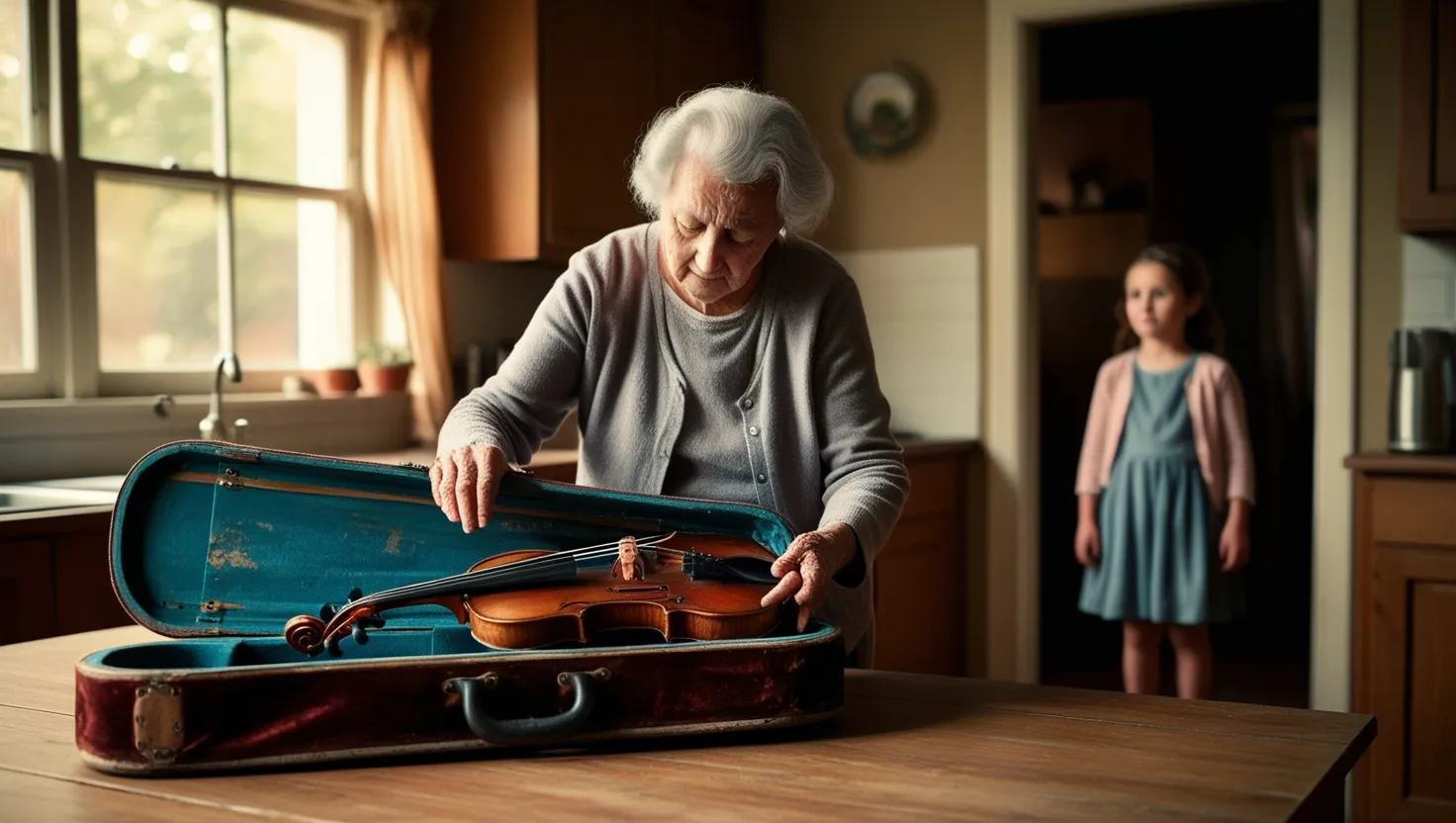
Let me paint you a simple picture. An old woman opens a worn velvet case. Inside sits a violin — not just any violin, but one that has absorbed decades of Sunday afternoons, wedding dances, and quiet evenings by a window. She picks it up one last time. Then she sells it.
Not because she has to. Because her granddaughter has music in her hands and no money to shape it.
What that granddaughter received was not just music lessons. She received the most honest financial education a young person can get — a living lesson in what economists call liquidity, dressed up in the clothes of love.
Most people hear the word “liquidity” and immediately imagine bank statements or stock portfolios. But liquidity is far simpler than that. It is just the answer to one question: How quickly can you turn what you own into what you need?
A house is not liquid. You cannot sell half a bedroom to pay a tuition bill. A savings account is liquid. You can pull money out on a Tuesday afternoon and pay for something on Wednesday morning. The grandmother’s violin sat somewhere in between — valuable, yes, but only useful if someone was willing to buy it and if the grandmother was willing to let it go.
“The hardest thing in the world is to simplify your life. It’s so easy to make it complex.” — Elaine St. James
Here is what most people miss about liquidity: it is not only about money. It is about readiness. The grandmother was ready. She had already done the math in her head — not the financial math, but the emotional math. She had weighed the violin’s past against her granddaughter’s future and decided the future was heavier.
That is a decision millions of people never make. They hold on to things — objects, habits, old identities — because letting go feels like losing. But the grandmother understood something quietly profound: holding the violin while her granddaughter’s talent went untrained was its own kind of loss. A slower, quieter one.
Ask yourself honestly — what are you holding onto right now that is keeping something else from growing?
The concept of liquidity dates back centuries, long before economists gave it a name. Farmers understood it intuitively. If a drought came, you did not hold onto your grain hoping prices would rise. You sold what you could, when you could, to survive the season and plant again. The ancient silk road traders knew that a bolt of silk in Persia was valuable, but only if you could find a buyer. Value and liquidity are not the same thing. Value is what something is worth. Liquidity is what you can actually do with it, right now, today.
The grandmother’s violin had immense sentimental value. To the right buyer — a collector, a musician, an antique dealer — it had monetary value too. But neither of those values meant anything until the exchange happened. Until she made the choice.
“There are two ways to be rich: one is by acquiring much, and the other is by desiring little.” — Jackie French Koller
Here is an unconventional angle that most people overlook: the granddaughter’s music lessons were themselves an investment in a different kind of liquidity. Skills are one of the most liquid assets a human being can own. You carry them everywhere. They cannot be repossessed. They do not depreciate in the way that physical objects do. In fact, a well-practiced skill often appreciates — it becomes more refined, more valuable, more adaptable over time.
The violin was a store of past value. The music lessons were a generator of future value. The grandmother, without ever reading an economics textbook, performed a classic asset reallocation. She moved capital from a static form into a dynamic one.
Do you see how a kitchen-table decision made out of love mirrors the decisions that fund managers wrestle with every day?
There is another layer here worth sitting with. The grandmother could not make this trade if she had already spent the violin’s value — if she had mortgaged it, lost it, or let it decay in a damp attic. The fact that she had something to give meant that she had, at some point in the past, made choices to preserve it. Liquidity requires stewardship. You cannot spend what you did not protect.
This is the quiet financial wisdom that older generations carry in their bones. They saved things. They kept things. Not out of hoarding instinct, but out of an understanding — often unconscious — that you do not know what tomorrow will ask of you, and it is good to have something to answer with.
“Do not save what is left after spending, but spend what is left after saving.” — Warren Buffett
Now think about the granddaughter for a moment. She is sitting in a music lesson, learning to hold a bow, learning to listen to her own mistakes and correct them. She does not yet know the full cost of what she is receiving. Children rarely do. But at some point — maybe at sixteen, maybe at forty — she will learn what her grandmother sold, and why.
That knowledge will teach her something no school curriculum offers: that someone believed her future was worth more than their past. And that belief is a form of capital too. Psychologists who study motivation and achievement consistently find that people who know someone sacrificed for them carry a particular kind of drive — not guilt, but purpose. A sense that the investment must not be wasted.
What would you do differently if you truly felt someone had given up something precious for you to be where you are?
The mechanics of liquidity also reveal something uncomfortable: not everything can be converted when you need it most. Markets for antique violins are not like supermarkets. You cannot walk in and instantly find a buyer. The grandmother may have waited weeks. She may have accepted less than the violin’s true worth because she needed the money before the next lesson payment was due. This is called a liquidity discount — the price you pay for needing to sell quickly rather than waiting for the perfect offer.
Life charges this discount constantly. The person who needs a job right now takes a lower salary than the person who can afford to wait. The person who must sell a car this week accepts a lower price than the person who can list it for a month. Patience, when you have it, is worth money. The grandmother likely knew this and sold anyway. That is not financial ignorance. That is prioritization.
“The price of anything is the amount of life you exchange for it.” — Henry David Thoreau
There is also something worth understanding about what the violin represented in the family’s history. Antique instruments carry stories the way old houses carry warmth — absorbed into the wood, invisible but present. When the grandmother handed it over, she was not just transferring an object. She was choosing which story mattered more: the one the violin had already told, or the one her granddaughter had yet to play.
Most financial decisions, when you strip away the numbers, are exactly this kind of choice. Which chapter do you invest in? The one behind you or the one ahead?
The granddaughter learns music. She also learns, without being told directly, that love sometimes looks like an empty velvet case. That real support is not always comfortable or convenient — sometimes it costs the supporter something they genuinely loved.
And she learns liquidity the right way: not as a dry financial term, but as a living principle. Some things must be released for other things to begin. Assets are only meaningful if you are willing to use them when it counts. Value locked in sentiment, never spent on anything real, eventually just gathers dust.
The grandmother knew this. She had lived long enough to understand that the most beautiful things we own are not the objects in our care but the people in our lives — and that sometimes, caring for those people means opening the velvet case, playing one last silent note, and letting go.