Why Your Grandmother's Boring Investment Strategy Is Beating Yours
Invest consistently, ignore the noise. Discover how dollar-cost averaging and patience outperform market timing — and why doing less often earns more.

The Grandmother Who Never Checked Stock Prices
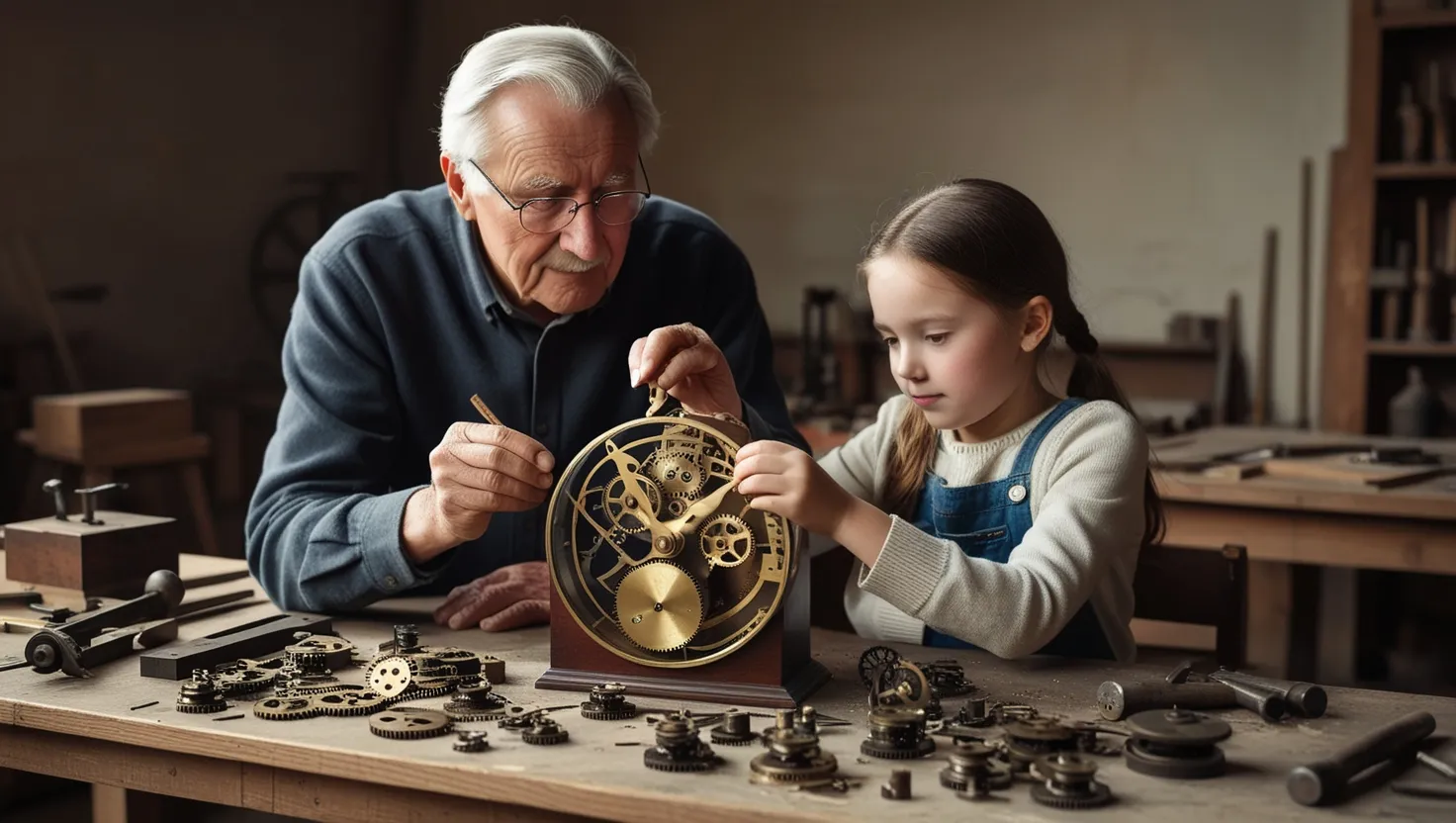
There is a grandmother sitting somewhere right now, probably drinking tea, completely unbothered by whatever the stock market did today. Her grandson, on the other hand, has refreshed his brokerage app fourteen times before lunch. They both invest the same amount every month. And here is the twist — she is winning.
Not because she is smarter. Not because she has better tools or a financial advisor on speed dial. She is winning because she simply does not care enough to mess it up.
That sounds like an insult. It is actually the highest compliment you can give an investor.
Let me paint you a picture. Every month, on the 5th, a fixed amount leaves both their bank accounts automatically and buys into a simple index fund. It does not matter if markets are up. It does not matter if markets are down. It does not matter if some economist on television is sweating through his shirt about a recession. The money moves. The shares get bought. Life continues.
This is called dollar-cost averaging. But forget the fancy name. Think of it as buying groceries every week regardless of whether chicken is on sale or not. Sometimes you pay more. Sometimes you pay less. Over years, you paid a fair average price and you always had food on the table.
“The stock market is a device for transferring money from the impatient to the patient.” — Warren Buffett
The grandson knows this strategy intellectually. He read about it. He watched YouTube videos. He nodded along. But then February came, and the market dropped 11% in three weeks, and suddenly all that knowledge evaporated like water on a hot pan.
He did not sell, to his credit. But he did pause his automatic investment. He told himself he would “wait for the dust to settle.” He wanted to buy at the bottom. He wanted to time it perfectly.
Do you know what happened? The market recovered faster than he expected. He missed buying shares at the lowest prices of the year because he was waiting for an even lower price that never came.
His grandmother? She bought in February, March, and April. She bought during the fear. Not because she is brave. Because she forgot to be afraid. Her automatic transfer just kept running.
Here is something most people do not know: the best days in the stock market tend to happen very close to the worst days. Not months later — days later. If you pulled your money out during the panic and waited on the sidelines, you likely missed the recovery entirely.
A study looking at 20-year market periods found that missing just the 10 best days in the market reduced returns by roughly half. Ten days. Out of roughly 5,000 trading days. The people who missed those ten days were usually the ones who tried to be clever about timing.
Ask yourself honestly — do you think you can predict which ten days those will be?
“Time in the market beats timing the market.” — Ken Fisher
The grandmother does not think about this. She has a different relationship with money and time, shaped partly by age and partly by experience. She watched markets crash in 1987, in 2001, in 2008, and again in 2020. Each time, people screamed that this time was different, that the whole system was broken, that money would never recover. Each time, it did.
She is not naively optimistic. She is historically informed. There is a difference.
The grandson is not stupid. He is just new. He has only seen one or two major crashes, and they feel enormous and final because he has no reference point that shows him what comes after. His grandmother carries that reference point in her body like a scar that no longer hurts.
Let us talk numbers for a moment, because they tell a story better than words can.
Imagine both of them invest $200 every month. Nothing more, nothing less. They do this for 30 years into an index fund that averages 8% annual returns — which is a conservative estimate for a diversified global fund over long periods.
By the end of 30 years, they have each put in $72,000 of their own money. But the account? It grows to roughly $298,000. That extra $226,000 came from time and compounding alone. No luck. No genius. No perfect timing.
Now imagine the grandson skips just six months of contributions during market downturns over those 30 years. Just six months — maybe $1,200 total he did not invest. Because he missed those purchases during low prices, the long-term impact could easily cost him $15,000 to $20,000 in final value. Fear is expensive.
“The individual investor should act consistently as an investor and not as a speculator.” — Benjamin Graham
What does the grandmother actually feel when markets fall? Probably mild annoyance, like hearing that it will rain on a day she planned to garden. Not panic. Not existential dread.
Part of this is psychological distance. She set her investments up and largely forgot about them. She does not track the daily price. She does not have notifications turned on. The money leaves her account, and she considers it gone — it belongs to future her, and current her has no business disturbing that arrangement.
The grandson checks prices daily. Sometimes twice. Every red number feels personal, like the market is specifically targeting him. This is called loss aversion, and it is one of the most well-documented quirks of human psychology. Losses feel roughly twice as painful as equivalent gains feel good. So even though his portfolio is up 40% overall, one bad week feels catastrophic.
The fix is not to feel differently. The fix is to look less.
Have you ever tried not looking at your investment account for three months? Try it. You might be surprised how little changes except your mood.
Here is an angle that almost nobody talks about: when markets fall, your monthly contribution buys more shares. This is not a silver lining or a consolation prize. It is genuinely one of the best things that can happen to someone in the accumulation phase — meaning someone who is still building wealth rather than spending it.
Think of it this way. You want to own 1,000 shares of something. Would you rather buy them when they cost $50 each or $30 each? A falling market, for a steady monthly investor, is a sale. It is the store marking down exactly the thing you were already going to buy.
The grandmother understands this not from theory but from lived experience. She has bought through enough downturns to see with her own eyes how the account value surged after each one. The grandson is still learning this lesson. It takes a few cycles before it stops feeling like theory and starts feeling like truth.
“In investing, what is comfortable is rarely profitable.” — Robert Arnott
There is also something worth considering about what this whole approach does to your relationship with money in general. When you stop trying to predict and outsmart the market, something relaxes. You stop treating your investment account like a scoreboard and start treating it like a slow cooker. You put the ingredients in, you set the temperature, and you walk away. You do not lift the lid every ten minutes.
The grandmother has a word for this, though she would not call it an investment strategy. She would call it patience. Or maybe just common sense. She has other things to think about.
The grandson is getting there. He has not paused his automatic contributions again since that February. He still checks the app too often, but he catches himself now. He thinks about his grandmother, unbothered and on track, and he puts the phone down.
The simplest investing strategy in the world is also one of the hardest to follow emotionally: pick something sensible, invest a fixed amount regularly, and leave it alone. You do not need to be brilliant. You do not need to be fearless. You just need to be consistent.
One of them learned that from decades of experience. The other one is learning it now, one steady monthly purchase at a time, trying very hard to be just a little more like his grandmother.