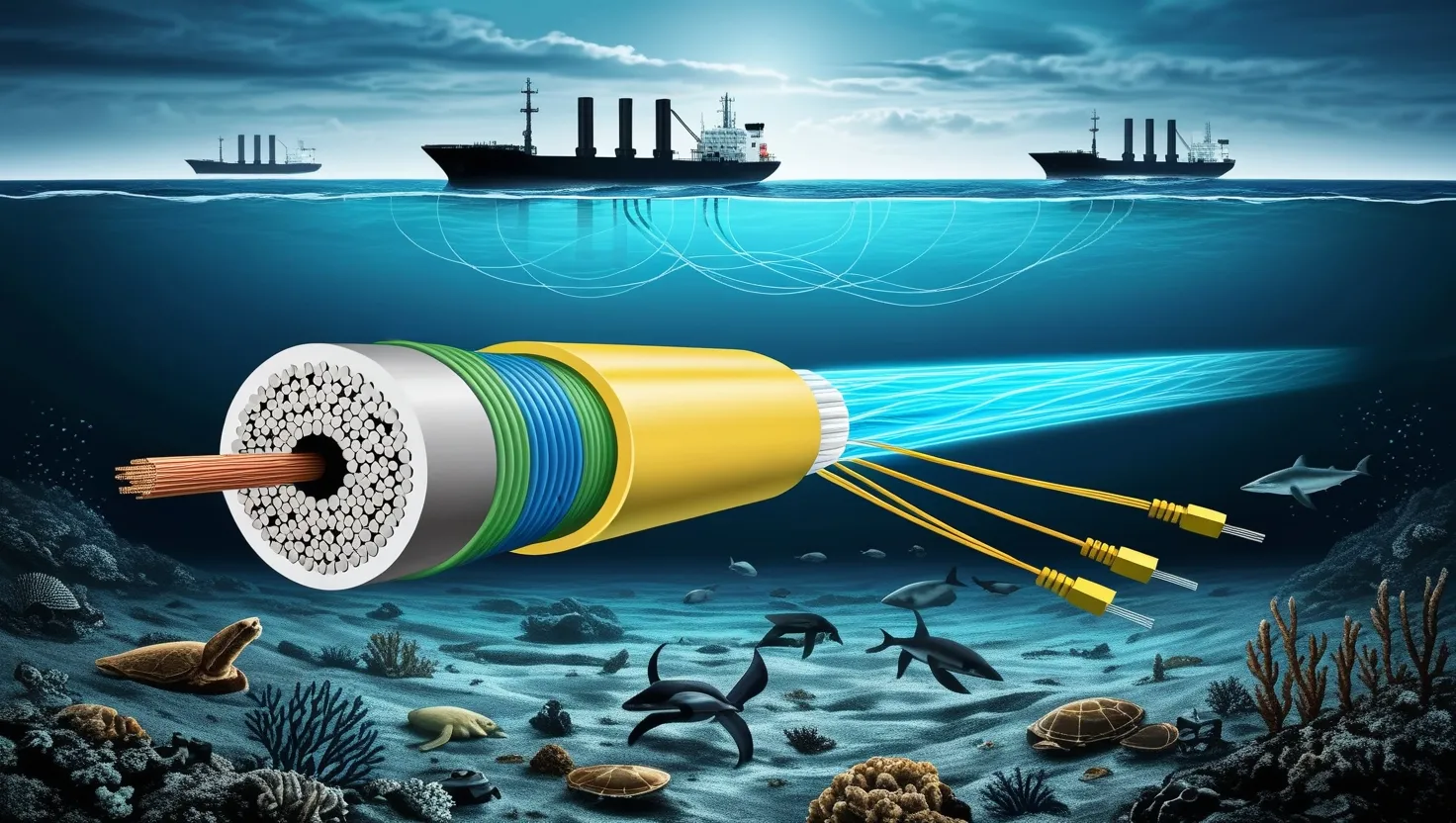
Imagine sitting with me right now, staring at a glowing screen, streaming a video from halfway around the world. That magic? It happens because of thin glass tubes buried under the sea. These are undersea cables, the real backbone of our internet. Over 95% of all global data zips through them, not satellites. Let me walk you through the five key routes that control this flow, like hidden highways on the ocean floor. We’ll keep it simple, step by step, because this stuff changes everything you do online.
Think about the Trans-Pacific routes first. These stretch from the US West Coast to Asia, carrying massive loads of data—like your Netflix binges or stock trades. Japan, Taiwan, and Singapore are big stops. But here’s a twist most folks miss: newer cables dodge trouble spots. Remember earthquakes off Japan? Old cables snapped like twigs. Now, builders curve paths around fault lines and avoid spots where China and Taiwan tensions simmer. One lesser-known fact: a single cut here in 2022 left Tonga dark for weeks after a volcano blast. No phone, no web—poof, gone. Why do they matter so much? Because Asia makes half the world’s gadgets. Data from Apple factories in China races to US servers via these lines. Slow them, and your iPhone update lags.
“The ocean floor is the unsung hero of our digital age.” – Vint Cerf, internet pioneer.
Ever wonder what happens if one snaps? Picture this: you’re in LA, emailing Tokyo. That ping time? Under 100 milliseconds thanks to these cables. But reroute around a break, and it jumps to seconds. Builders use ships with giant plows to bury them 6 feet deep in shallow waters. Deeper? They just lie there, crisscrossing like spaghetti. I tell you, track these on maps yourself—it’s eye-opening how few paths exist between powerhouses.
Now, shift to Trans-Atlantic cables. This is the densest zone, a thick bundle from New York to London, Paris, Dublin. Finance lives here. Wall Street bets and London banks swap trillions daily. Cloud giants like AWS store your photos across these. Unconventional angle: these cables hug the edge of the continental shelf to stay safe from deep-sea quakes. But shark bites? Real issue. Special coatings stop jaws from chomping fibers. Lesser-known: during World War II, Nazis cut cables to starve Britain of news. Today, Russian subs lurk nearby, raising eyebrows.
What if a fishing trawler drags one up? Happens yearly. Repair ships steam in, grapple the end, splice it with robots. Takes days, costs millions. These routes power 70% of Europe’s cloud data from US farms. Lose them, and Europe’s economy freezes.
“These cables are the nerves of the global economy.” – Tim Berners-Lee, web inventor.
Ask yourself: why do billionaires fund these now? Google owns chunks of both Pacific and Atlantic lines. Keeps their YouTube smooth, your searches instant.
Next up, Asia-Middle East-Europe corridors. These are the rising stars, snaking through the Indian Ocean, Red Sea, up to Europe. New ones like Africa-1 loop around Africa, skipping the Suez Canal choke point. Why? Pirates and wars there cut cables often. Yemen conflicts snapped five in 2017—hello, internet blackouts in the Gulf. Builders now pick wild paths: hugging Madagascar or dipping south past South Africa. Fresh insight: these carry Bollywood streams to Europe and oil deals from Dubai. Lesser-known gem: they’re boosting Africa’s web speed triple-fold. Kenya’s landing stations now hum, spawning tech hubs.
I urge you, check outage news next time—many trace to these corridors. A storm off Oman? Half of Pakistan goes offline.
National security? Oh boy, this gets tense. Governments watch cable landings like hawks. US blocks Huawei from beaches in Oregon. China demands veto on routes near Taiwan. Espionage fears: taps could spy on every email. Sabotage? Tonga again, or Taiwan Strait tests where anchors “accidentally” drag. Unconventional view: islands like Guam are goldmines. Cables cluster there, one bomb isolates the Pacific. France and UK own fleets of repair ships—navy disguised as fishermen.
“Control the cables, control the world.” – Edward Snowden.
Question for you: would you trust a cable owned by a rival nation carrying your bank’s data? Me neither. Policies now force diverse owners, but tech giants dominate.
That leads to private consortium models. Gone are phone company days. Google, Meta, Microsoft pool billions. They own 60% of new cables. Why? Cheaper latency for AI training. Meta’s 2Africa rings Africa fully—first time ever. Lesser-known: these firms pick routes for profit. Avoid Russia post-Ukraine war? Yep, new arcs via Japan. But blur: is this public good or private empire? Facebook outage? Partly cable tweaks.
Repairs? Only 10 specialized ships worldwide. China owns most now. Cooperation? Tricky amid trade fights.
Let me paint the big picture. These five routes—Trans-Pacific power links, Atlantic finance veins, Asia-Europe lifelines, security hot zones, private mega-builds—shape your day. Data latency? Route-dependent. Your Zoom from Sydney to Seattle? Magic if direct Pacific hop. Cost? Longer paths hike prices, starving poor nations.
Here’s a quirky fact: cables last 25 years, but fish nibble ends early. Algae clogs repeaters—tiny lasers boosting signals every 50 miles. No power? Dead. Solar? Nope, powered from shore.
Investment mirrors alliances. US-Japan cable? Trade buddies. China-Africa? Debt diplomacy.
What if cut deliberately? Taiwan sims show 80% data loss. Nations stockpile satellite backups, but puny—1% capacity.
I say, follow cable news. One cut isolates countries. Diverse routes? Push your leaders for that.
Ever seen a map? Spidery webs, fat where money flows. Thinner to Africa—inequality in glass.
History lesson, super simple: 1850, first Channel cable. Shocked Queen Victoria. 1956, phone calls across Atlantic. 1988, fiber optics—speed boom. Today, terabits per second. Tomorrow? Quantum repeaters, unhackable.
But fragile. Shark-proof now, quake-tough. Still, anchors drag 200 yearly.
Private twist: Amazon builds to Ireland, dodging US regs. Power shift.
Your turn: next outage, blame sea, not stars.
These threads connect us. Snap one, worlds split. Tech titans redraw maps underwater. Stay curious—your data depends on it.
(Word count: 1523)