The Hidden International Systems That Keep Your Food Safe Every Day
Discover the 5 global food safety frameworks quietly protecting every meal you eat — from Codex standards to INFOSAN alerts. Learn how they work and why they matter.
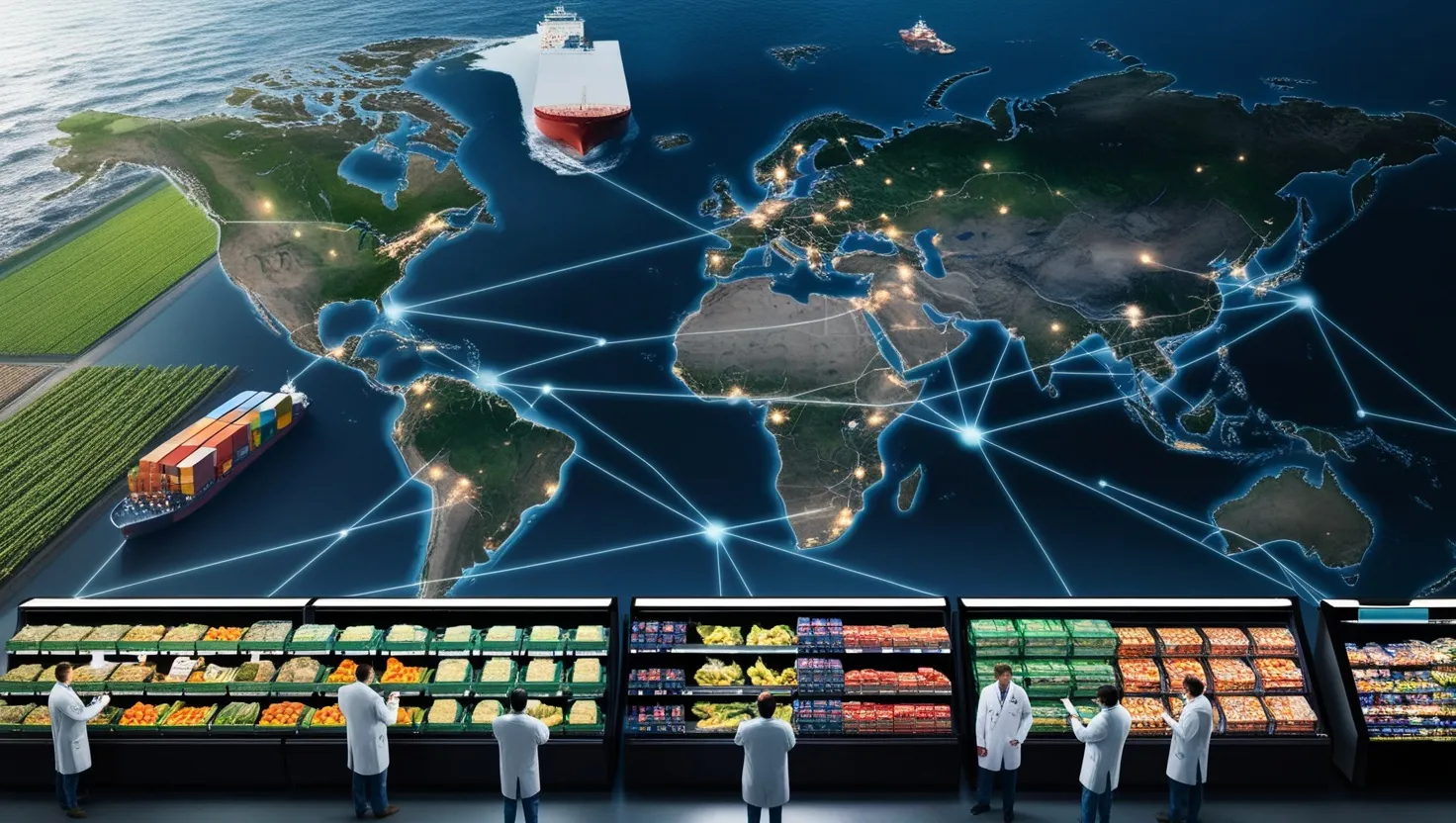
You pick up a jar of peanut butter at your local grocery store. You check the price, maybe glance at the calories, and toss it in the cart. What you probably never think about is the invisible web of international rules, scientific negotiations, and emergency alert systems that made sure that jar didn’t poison you. Food safety is one of those things that only makes the news when it fails — a contaminated spinach outbreak, a salmonella recall, a foreign country’s exports getting banned. But behind every uneventful grocery run is a system that most people have never heard of, quietly doing its job.
Let me walk you through five real frameworks that actually protect your food, and I promise to keep it simple.
The Codex Alimentarius — The Food Bible Nobody Talks About
“Tell me what you eat, and I will tell you what you are.” — Jean Anthelme Brillat-Savarin
The Codex Alimentarius is Latin for “food code,” and it is exactly that — a massive, constantly updated collection of international food standards. It was created jointly by the Food and Agriculture Organization and the World Health Organization back in 1963, and it covers everything from how much pesticide residue is allowed on your strawberries to what counts as “safe” in canned fish.
Here is where it gets interesting: the Codex doesn’t just set hygiene rules. It sets the scientific baseline that governments use when they write their own national food laws. So when your country says a certain pesticide level is acceptable on apples, there’s a reasonable chance that number traces back to a Codex committee meeting in Rome.
What most people don’t know is that Codex standards are set through a voting and negotiation process involving member countries, scientific experts, and yes — industry representatives too. That last part makes some food policy experts uncomfortable. The system is transparent by design, but the politics of who gets a seat at the table shapes what ends up in your food supply.
The Codex covers over 200 food commodities and has set more than 5,000 standards. If you’ve ever eaten imported food — and you almost certainly have — Codex standards were part of why it was allowed into your country.
The WTO’s SPS Agreement — Where Trade and Safety Collide
Have you ever wondered why some countries ban certain food imports while others don’t? That’s not always about safety. Sometimes it’s about politics dressed up as science. The WTO’s Agreement on Sanitary and Phytosanitary Measures, or SPS Agreement, was designed to stop governments from using fake safety concerns as an excuse to block foreign competition.
The rule is straightforward: if you want to restrict a food import for health reasons, you need to back it up with science. You can set your own standards if you want, but they need to be based on actual risk assessment — not fear, not trade protectionism, not political pressure from domestic farmers.
“Food safety is not a barrier to trade. It is a condition of trade.” — Gro Harlem Brundtland
This matters more than people realize. Before the SPS Agreement came into force in 1995, countries could essentially make up food safety rules to block imports they didn’t like. The Agreement changed that. It made scientific evidence the required currency of food safety policy at the international trade level.
The tension here is genuinely interesting. Developing countries often struggle to meet SPS requirements set by wealthier nations, not because their food is actually unsafe, but because they lack the laboratory infrastructure and documentation systems to prove it’s safe. That’s a trade barrier hiding behind a scientific standard, and it’s a problem the system hasn’t fully solved.
The Global Food Safety Initiative — The Retail World’s Private Rulebook
Here’s something that surprises most people: some of the most powerful food safety standards in the world weren’t written by governments. They were written by retailers.
The Global Food Safety Initiative, known as GFSI, is a private organization run by major food retailers — think supermarket chains — that benchmarks and recognizes food safety certification schemes. If a manufacturer wants to sell to Walmart, Costco, or Tesco, they often need to be certified under a GFSI-recognized scheme. The most common ones are BRC, SQF, and IFS.
So while governments set the legal minimums, retailers have effectively created a parallel system of private standards that go further. This is both good and a little bit unnerving.
The good part: GFSI-recognized standards are often stricter and more consistent than national regulations. A food factory in Vietnam that wants to supply a European supermarket chain has to meet requirements that go well beyond what Vietnamese law requires.
The less comfortable part: this system is driven by commercial relationships, not democratic accountability. The standards are written by committees that include industry players, and smaller producers — especially in developing countries — can find themselves locked out of international retail markets because certification costs too much.
The FAO/WHO Joint Program — Helping Countries Actually Do This
“The world is not dangerous because of those who do harm but because of those who look at it without doing anything.” — Albert Einstein
Setting international standards is one thing. Getting a country with limited lab equipment, underpaid food inspectors, and patchy cold chain infrastructure to actually meet those standards is something else entirely.
The FAO/WHO joint program on food safety is specifically focused on technical capacity building — meaning it helps developing countries build the actual systems they need to implement food safety standards. This includes training food inspectors, improving laboratory networks, updating food legislation, and helping countries design their own national food control systems.
Why does this matter to you personally? Because a significant portion of the food on your supermarket shelves comes from countries that are still building these systems. Fruits, vegetables, seafood, spices, nuts — much of this comes from places where food safety infrastructure is a work in progress. The FAO/WHO program is the unglamorous, underfunded piece of the puzzle that tries to make sure that progress actually happens.
One underreported fact: many food safety failures in international trade trace back not to deliberate negligence, but to a lack of technical knowledge. Farmers using pesticides incorrectly because nobody trained them. Processors not understanding cold chain requirements. The joint program tries to fix that at the source.
INFOSAN — The Emergency Network You’ve Never Heard Of
Think about how fast a foodborne illness outbreak can cross borders. A contaminated batch of frozen berries gets exported to fifteen countries before anyone notices people are getting sick. That’s the scenario INFOSAN exists to handle.
The International Food Safety Authorities Network is a WHO-managed system that connects food safety agencies in over 190 countries. When a contamination event happens — whether it’s a pathogen, a chemical contaminant, or an undeclared allergen — INFOSAN lets food safety agencies send rapid alerts to each other so they can pull the same products off shelves simultaneously, across borders.
“The greatest threat to our planet is the belief that someone else will save it.” — Robert Swan
This matters because food contamination moves at the speed of global supply chains. A recall that takes three weeks to communicate internationally can mean thousands of additional cases of illness. INFOSAN is designed to close that gap.
What’s genuinely fascinating about INFOSAN is how it revealed something uncomfortable: many countries’ food safety agencies didn’t have clear internal procedures for communicating with each other even within their own borders, let alone internationally. Building INFOSAN forced a kind of internal organizational reform in food safety agencies worldwide that nobody planned for but everyone needed.
So what can you actually do with all of this information?
Start by supporting transparent food labeling. The more specific label information you demand — country of origin, certification marks, pesticide residue testing results — the more pressure you put on the supply chain to maintain those standards honestly.
Ask your elected representatives whether your country’s food safety agency publishes import inspection data publicly. Many don’t, and they should. Public access to food import testing data is one of the most effective tools for holding both governments and private companies accountable.
Pay attention to food recalls. They are not a sign of a broken system. They are often a sign of a working one. The real concern is when recalls don’t happen despite known risks, which is more common than it should be.
The food on your plate has traveled through a system that is genuinely complex, genuinely imperfect, and genuinely worth paying attention to. The next time you walk down a supermarket aisle, you’re looking at the output of five overlapping international frameworks, thousands of regulatory decisions, and a global network of scientists, inspectors, and food safety officials. Most of them are doing the job well. Some of them are doing it very badly. Knowing which is which starts with knowing they exist.